
Qurbani Donations for Africa 2026: Fighting Hunger and Providing Care
Published Date:
Eid ul-Adha 2026 is right around the corner. In communities across sub-Saharan Africa, families are wondering whether they will eat that day, not because of indifference from the world, but because the hunger crisis gripping the continent has never been more acute.
According to the WFP's 2026 Global Outlook, 318 million people were already facing crisis levels of hunger or worse in 2026, with conflict in East, Central and West Africa among the primary drivers. Meanwhile, FAO's January 2026 analysis warned that 52.8 million people in West Africa alone could face acute food insecurity during the lean season from June to August 2026. This is the world into which your Qurbani donation lands.
This blog walks you through what Qurbani means in 2026, how your Eid ul-Adha charity for Africa reaches the people who need it most, and why partnering with a trusted organisation like Africa Relief and Community Development (ARCD) ensures your sacrifice creates real, lasting change on the ground.
What Is Qurbani and Why Does Africa Need It?
Qurbani is the act of slaughtering a livestock animal during Eid ul-Adha to honour the obedience of Prophet Ibrahim (AS). The meat is divided into three equal parts: one for the family, one for friends and neighbours, and one for those in need.
The Qurbani sacrifice must be completed within three days (the 10th, 11th and 12th) of Dhul Hijjah. In wealthy nations, this obligation is relatively easy to fulfil. But across Africa, where more than one in five people on the continent already face hunger, according to the 2025 State of Food Security and Nutrition Report, a family receiving Qurbani meat may be enjoying their only substantial meal in weeks. The UN projects that if current trends continue, 512 million people could face chronic hunger by 2030 with nearly 60% of them being in Africa.
The Scale of Hunger in Africa: Key Facts for 2026
Before we explore how your Qurbani donation is distributed, it's important to understand the scale of what we're dealing with:
- 87 million+ people are facing hunger in East and Southern Africa
- 52.8 million people in West Africa and the Sahel are projected to face acute food insecurity during June–August 2026
- 13 million children across West and Central Africa are expected to suffer malnutrition this year, while over three million people will face emergency levels of food insecurity
- 55 million people in West and Central Africa will suffer crisis-level hunger or worse during the lean season
- 98 million children are out of school in Sub-Saharan Africa - communities where food insecurity and educational exclusion compound each other daily
How Qurbani Donations for Africa Work on the Ground
One of the biggest questions donors ask is: "How does my Qurbani actually get distributed?" It's a fair question, and the answer should make you feel confident about every penny you give.
ARCD's Food and Nutrition Programme (a core component of its relief portfolio) facilitates what the organisation calls 'Udhiya (Qurbani/Laya) Meat Distribution' - the Islamic ritual of sacrifice during Eid al-Adha with fresh meat distributed to impoverished families. Here is the step-by-step process:
- Donor contributes: You select your Qurbani type and make your donation online through ARCD's secure platform.
- Animal procured locally: Animals are sourced locally in the country of distribution, supporting local economies while ensuring fresh, quality meat.
- Shariah-compliant slaughter: Slaughter is conducted by trained local professionals following Islamic guidelines within the Qurbani window.
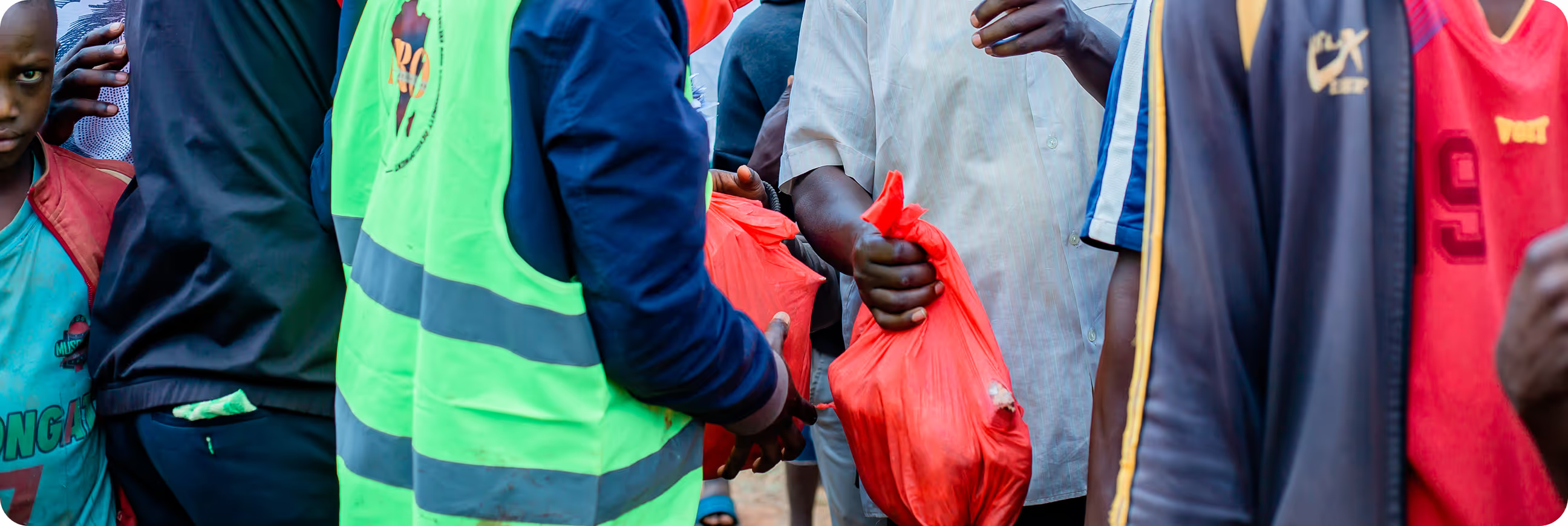
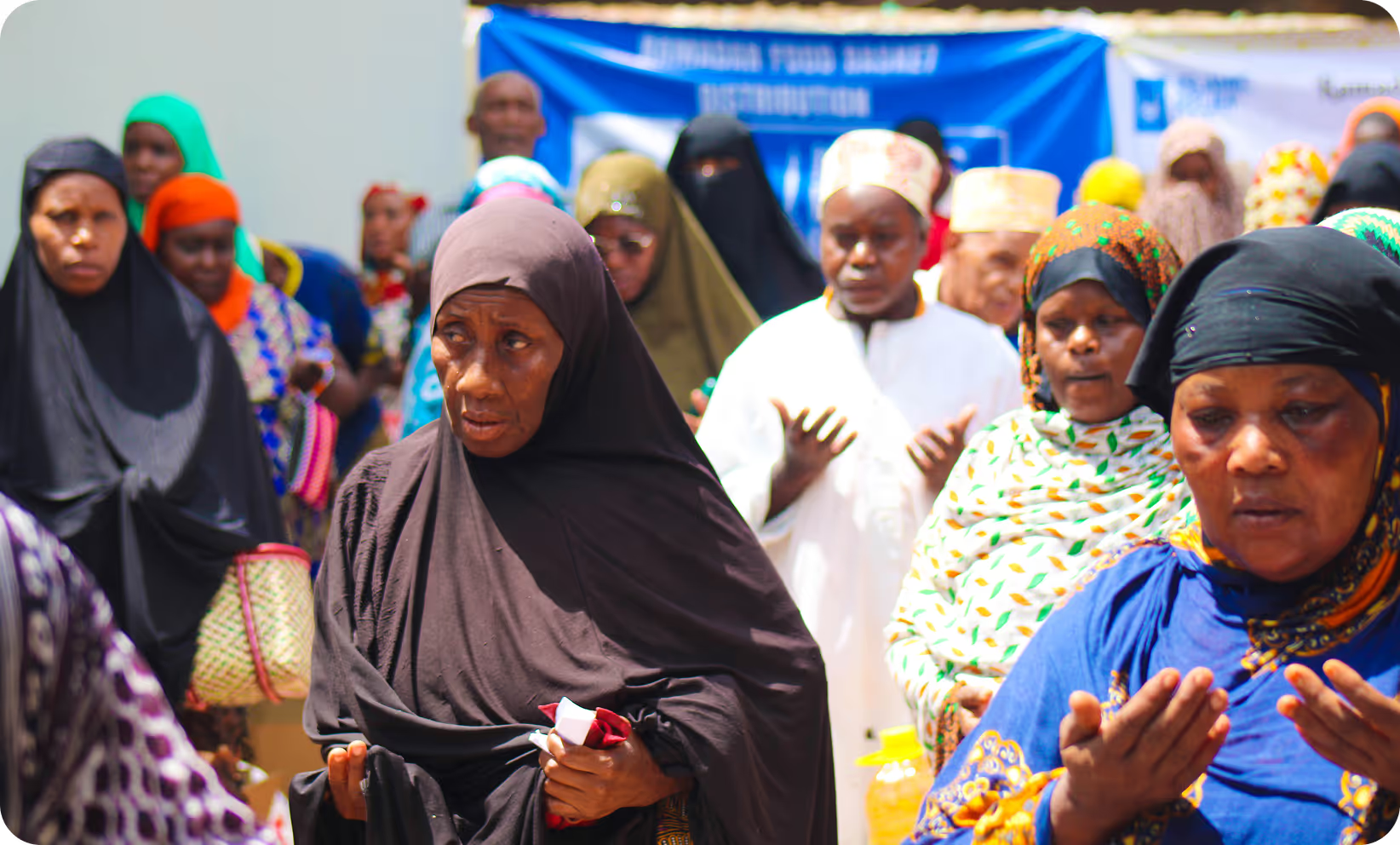
- Distribution to beneficiaries: Fresh meat is packaged and distributed to the most vulnerable households including, widows, orphans, displaced families, and the elderly.
- Field reporting: ARCD's regional teams document distributions and provide transparency reports, so you know your Qurbani reached its destination.
Give Qurbani Africa 2026: How Africa Relief (ARCD) Makes It Happen
If you are looking for a trusted, transparent, and faith-aligned organisation to channel your Qurbani donations for Africa, Africa Relief and Community Development (ARCD) stands in a category of its own.
Who Is ARCD?
Africa Relief and Community Development (ARCD) is a New Jersey-based 501(c)(3) non-profit organisation founded in 2019. Operating across 32 African countries from five regional offices, ARCD sits at the intersection of immediate humanitarian relief and long-term community development. Its mission is clear: "Facilitating Dignity to Vulnerable African Communities."
What makes ARCD distinctive is its philosophical grounding. Its programmes are guided by the Fiq-ul-Ihya framework (an implementation model rooted in the Maqasid Al-Shariah (the higher objectives of Islamic law), developed in partnership with Powersim Solutions). This framework positions the Preservation of Life (Hifz al-Nafs) at the centre of all interventions, ensuring that every programme is ethically grounded and culturally respectful.
ARCD's Impact (As of 2025)
The numbers speak for themselves:
- 6,078,834+ people reached in Africa and global crisis zones
- 2,300+ water wells constructed across the continent
- 150+ educational centres established in underserved communities
- 3,000+ orphans sponsored with holistic care
- $7 million+ in in-kind donations facilitated
- 32 African countries served through five regional offices
ARCD's Qurbani work is underpinned by its alignment to Hifz al-Nafs (Preservation of Life) as the primary Maqasid objective, with Hifz al-Din (Preservation of Faith) and Hifz al-Nasl (Preservation of Progeny and Family) as secondary objectives, meaning your sacrifice is understood as an act of worship that protects human life, nurtures faith, and holds families together.
FAQs
1. Why should I give my Qurbani donation to Africa?
Africa is one of the most severely food-insecure regions in the world. According to FAO's 2026 analysis, 52.8 million people in West Africa alone could face acute food insecurity during the June–August lean season, which falls directly over Eid ul-Adha. For many families, Qurbani meat is the only substantial source of protein they will receive for weeks.
2. Is ARCD a legitimate and trustworthy charity?
Yes. Africa Relief and Community Development (ARCD) is a 501(c)(3) registered non-profit based in New Jersey, USA. It operates under a rigorous governance structure with an annually reviewed programme framework (most recently updated and approved in March 2026). Donations are tax-deductible to the extent allowed by US law, and ARCD provides field documentation of all distributions.
3. Which African countries does ARCD distribute Qurbani in?
ARCD operates across 32 African countries through five regional offices. Distributions are directed to communities with the highest need, particularly those affected by conflict, drought, and displacement.
4. Is my Qurbani donation Shariah-compliant when given through ARCD?
Yes. ARCD's Qurbani distributions follow Islamic principles, including local sourcing of animals, slaughter by trained local professionals in the name of Allah, and distribution of fresh meat to the most vulnerable. The organisation's faith-based framework ensures all religious conditions are met.
5. What other programmes can I support alongside my Qurbani donation?
Alongside your Qurbani, consider supporting ARCD's Orphan Sponsorship Programme, Clean Water projects, or Islamic Giving programmes for Ramadan and Eid. Every contribution works in synergy to protect life, dignity, and faith.
6. What is the difference between Qurbani and Udhiya?
Qurbani (Arabic) and Udhiya (also Arabic, but more formally used in jurisprudence) refer to the same act, the ritual sacrifice of an animal during Eid ul-Adha. In parts of Africa, particularly East Africa, the term 'Laya' is also used. ARCD uses all three terms interchangeably in its programme documentation to ensure inclusivity across communities.
7. Can a single Qurbani donation feed an entire family?
Yes, and then some. A single sheep or goat typically provides 15–20 kg of meat, enough for multiple meals for an entire household. In communities where protein is scarce, a Qurbani share can represent a week or more of nutritional support. When scaled across thousands of ARCD distributions, the cumulative impact on community health and food security is significant.


