

Best Qurbani/Udhiyah Charities to Donate to in Africa in 2026
Published Date:
Every Eid ul Adha, Muslims around the world fulfill one of the most powerful acts of worship in the Islamic calendar i.e. Qurbani, also known as Udhiyah. It is more than a ritual; it is a lifeline. For millions of families across Africa, the Qurbani meat your donation provides may be the only protein-rich meal they receive all year.
The numbers tell a sobering story. A staggering 318 million people are already facing crisis levels of hunger or worse in 2026, according to the WFP 2026 Global Outlook. Africa bears a disproportionate share of that burden. More than 87 million people are facing hunger in East and Southern Africa, and 52 million are projected to be acutely food insecure in West and Central Africa by mid-2026. And the situation is worsening: WFP warns that nearly 45 million more people could fall into acute food insecurity if conflict continues, with nearly two-thirds of those people living in Africa and Asia.
This is why choosing the right qurbani charity matters so deeply this year. Not all organizations operate with the same reach, transparency, or impact in Africa. This guide walks you through what makes a good Udhiyah charity, highlights the best Qurbani non-profits and organizations operating across the continent, features Africa Relief and Community Development (ARCD) as a standout choice, and answers the questions you are probably already asking. Let's get into it.
What Makes a Good Udhiyah Charity to Donate To?
Before you commit your Qurbani to any organization, it is worth asking a few honest questions. The best Qurbani charities to donate to are not necessarily the biggest or the most advertised. They are the ones that handle your trust (Amanah) with integrity and deliver real, verifiable impact.
Here is what to look for:
- Shariah Compliance: A credible qurbani charity must follow proper Islamic guidelines for the sacrifice including, the right animal, the correct age, slaughtered according to Shariah, and distributed within the three days of Eid. The best Muslim charities will have a published Zakat and Qurbani policy, often audited by a board of qualified Islamic scholars.
- Transparent Reporting: Donors in 2026 are no longer satisfied with just a "thank you" email. They want to see the food packs being delivered, the wells being dug, and the orphans being schooled. Look for charities that provide video updates, on-the-ground reports, and annual impact statements.
- Geographic Reach in Africa: Africa is a continent of 54 countries with vastly different humanitarian landscapes. A good Qurbani organization should have established local networks, vetted partners, and a proven track record of reaching remote or conflict-affected areas.
- A 100% Donation Policy (or Close to It): Many donors prefer charities that have a 100% donation policy, where operational and staff costs are covered by other types of non-Zakat donations, ensuring that every penny of Qurbani funds goes directly to the beneficiaries.
- Financial Accountability: Audited accounts, published annual reports, and clear breakdowns of how funds are spent should be publicly available.
The 4 Best Qurbani Charities to Donate to in Africa in 2026
1. Africa Relief and Community Development (ARCD)
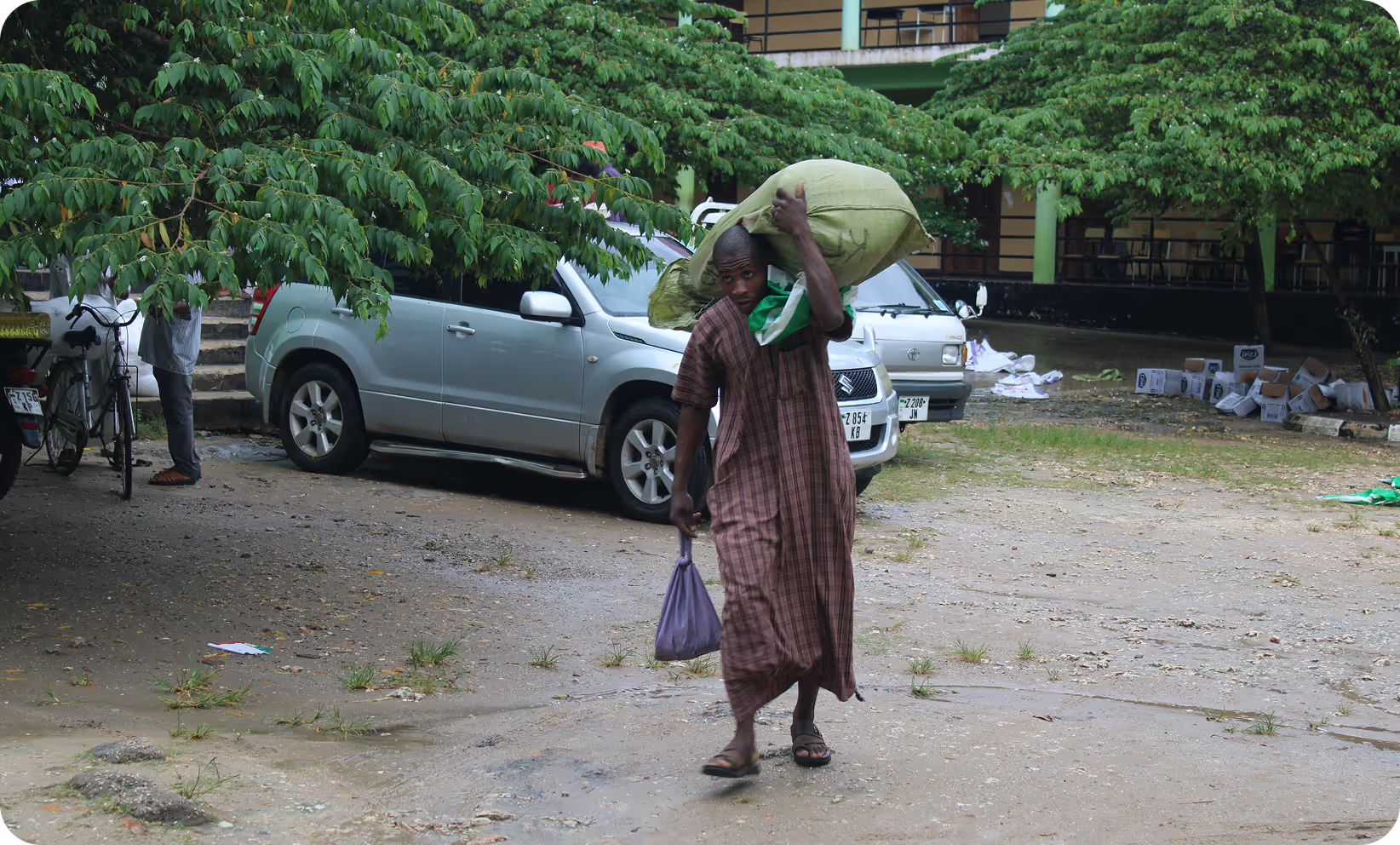
Most Qurbani organizations focus on one or two countries per season. ARCD's footprint spans the entire continent, from East Africa to the Sahel and beyond, making it one of the most geographically comprehensive among the best Qurbani non-profits to donate to in the Muslim world today.
What sets ARCD apart even further is the framework guiding their work. Their programs are philosophically grounded in the Maqasid Al-Shariah through an implementation model called Fiq-ul-Ihya (the Jurisprudence of Life). This places the preservation of human life at the center of all humanitarian action and ensures every intervention, including Qurbani, is ethically sound, culturally sensitive, and deeply aligned with the values of the communities being served.
In plain terms: ARCD does not just drop off meat and leave. They understand the people they serve, speak their languages through local teams, and ensure that your Udhiyah reaches a family that is also being supported with clean water, healthcare, education, and livelihood opportunities.
ARCD's Verified Impact at a Glance
ARCD's scale of delivery is not self-reported aspiration. It is documented and verifiable:
- 1.1 million+ people reached across Africa as of 2025
- 2,300+ water wells constructed in underserved communities
- 150+ educational centers established
- 3,000+ orphans currently sponsored
- $7 million+ in in-kind donations facilitated
2. Al Mustafa Welfare Trust
Al Mustafa Welfare Trust is one of the most established names among the best Qurbani organizations to donate to, with a long-standing presence across the African continent. In 2026, they are delivering Qurbani to families in Sudan, Somalia, Kenya, Malawi, Djibouti, and Ethiopia, operating across 10 African countries. Their logistics are well-established, their reporting is consistent, and their pricing is accessible, making them a reliable option for donors who want broad continental coverage.
Why they stand out: Proven decade-long track record in Africa, multiple country operations in a single Eid season, and accessible entry-level Qurbani pricing for different budgets.
3. SAPA (Sudanese American Physicians Association)
SAPA is one of the most targeted and community-rooted Qurbani non-profits to donate to when it comes to Sudan specifically. Their 2026 Qurbani campaign is directly linked to Sudan's catastrophic hunger emergency, which is among the worst in the world this year. What sets SAPA apart is that it is physician-led, meaning the organization understands the nutritional dimension of food insecurity not just its logistical side. Their Sudan Hunger Relief Program ensures that Qurbani meat reaches internally displaced families in areas that larger organizations often cannot access.
Why they stand out: Deep community roots in Sudan, physician-led oversight, and a model that integrates Qurbani donations into a broader nutrition and healthcare response.
4. Children of Adam
Children of Adam is one of the good Udhiyah charities to donate to if you are looking for a faith-centered approach with a strong emphasis on donor transparency. They strictly follow a 100% donation policy, covering overheads and operational costs through separate Lillah donations, so that when you give, the full value of your Qurbani reaches the beneficiary. They also operate with scholar-verified Shariah compliance and provide regular on-the-ground updates from their local teams. For donors who want assurance that their Amanah is handled with Islamic integrity, Children of Adam is a name worth trusting.
Why they stand out: 100% donation policy, scholar-verified processes, strong transparency ethos, and documented impact reporting.
ARCD: The Best Qurbani Charity to Donate to Across 32 African Countries
If you are specifically looking for a qurbani charity that operates at scale across the African continent with a faith-rooted, community-centered model, Africa Relief and Community Development (ARCD) is the name you need to know.
Founded in 2019 and headquartered in New Jersey, USA, ARCD is a 501(c)(3) non-profit organization. Unlike many organizations that operate in one or two African countries, ARCD works across 32 African countries from five regional offices making it one of the most geographically comprehensive Qurbani organizations to donate to on the continent.
ARCD's Programs Beyond Qurbani
When you give your Qurbani through ARCD, you are also supporting an organization that invests in long-term change through its six core programs:
- WASH Program — Clean water and sanitation for vulnerable communities
- Health Program — Healthcare delivery in underserved areas
- Education Program — Schools and learning centers across Africa
- Empowerment Program — Livelihood support for women and communities
- Food and Nutrition Program — Emergency food relief including Qurbani distribution
FAQs
1. What is the difference between Qurbani and Udhiyah?
They refer to the same act Qurbani is the Arabic/Urdu term commonly used in South Asian and Pakistani communities, while Udhiyah is the classical Arabic term used in Islamic jurisprudence. Both describe the ritual animal sacrifice performed during Eid ul Adha.
2. Who is obligated to give Qurbani?
Qurbani is wajib (obligatory) for every adult Muslim who is sane, not traveling, and who possesses wealth above the Nisab threshold (the minimum amount of wealth that makes Zakat obligatory). Children and travelers are generally exempt, though they may still choose to give.
3. What animals are valid for Qurbani/Udhiyah?
Valid Qurbani animals include sheep, goats, cows, buffalo, and camels. Sheep and goats must be at least one year old (with exceptions for sheep over six months under certain conditions). Cows and buffalo must be at least two years old, and camels at least five years old.
4. How do I know my Qurbani was actually performed?
Reputable qurbani charities provide confirmation receipts and, increasingly, photographic or video evidence of the sacrifice and distribution. Always ask your chosen charity what documentation they provide.
5. Is it better to give Qurbani locally or in Africa?
Both have merit. Giving in Africa particularly through organizations like ARCD ensures your Qurbani reaches communities where meat is a rare luxury and food insecurity is life-threatening. In West and Central Africa alone, 13 million children are expected to suffer from malnutrition in 2026, with over three million people facing emergency levels of food insecurity. Your Qurbani meat can make a measurable difference to a family's nutrition.
6. Can Zakat funds be used to pay for Qurbani?
No. Qurbani is a separate obligation from Zakat. It must be funded from your own personal wealth. Your charity should clearly account for Qurbani donations separately from Zakat funds.
7. How many shares does one Qurbani animal provide?
One sheep or goat counts as one full Qurbani share for one person or household. One cow, buffalo, or camel can be shared among up to seven people, with each person contributing one share.
8. What should I look for in a Shariah-compliant Qurbani charity?
A reputable Qurbani charity will have a published policy and will often work with a board of qualified Islamic scholars who audit their distribution methods. You can usually find these details in the "About Us" or "Governance" section of their website.


