

Best Charity to Sponsor an Orphan in 2026
.avif)
Published Date:
Millions of children across Africa wake up every day without a parent to care for them, and finding the right orphan charity to support can feel overwhelming when so many organizations ask for your trust. Choosing well matters, because a good orphan sponsorship charity does far more than send a monthly check. It builds a consistent relationship around a child's education, health, and daily stability. This guide breaks down why orphan charities matter, what separates a strong program from a weak one, and which organizations are worth your support in 2026.
Why an Orphan Charity Is Essential for Africa's Vulnerable Children
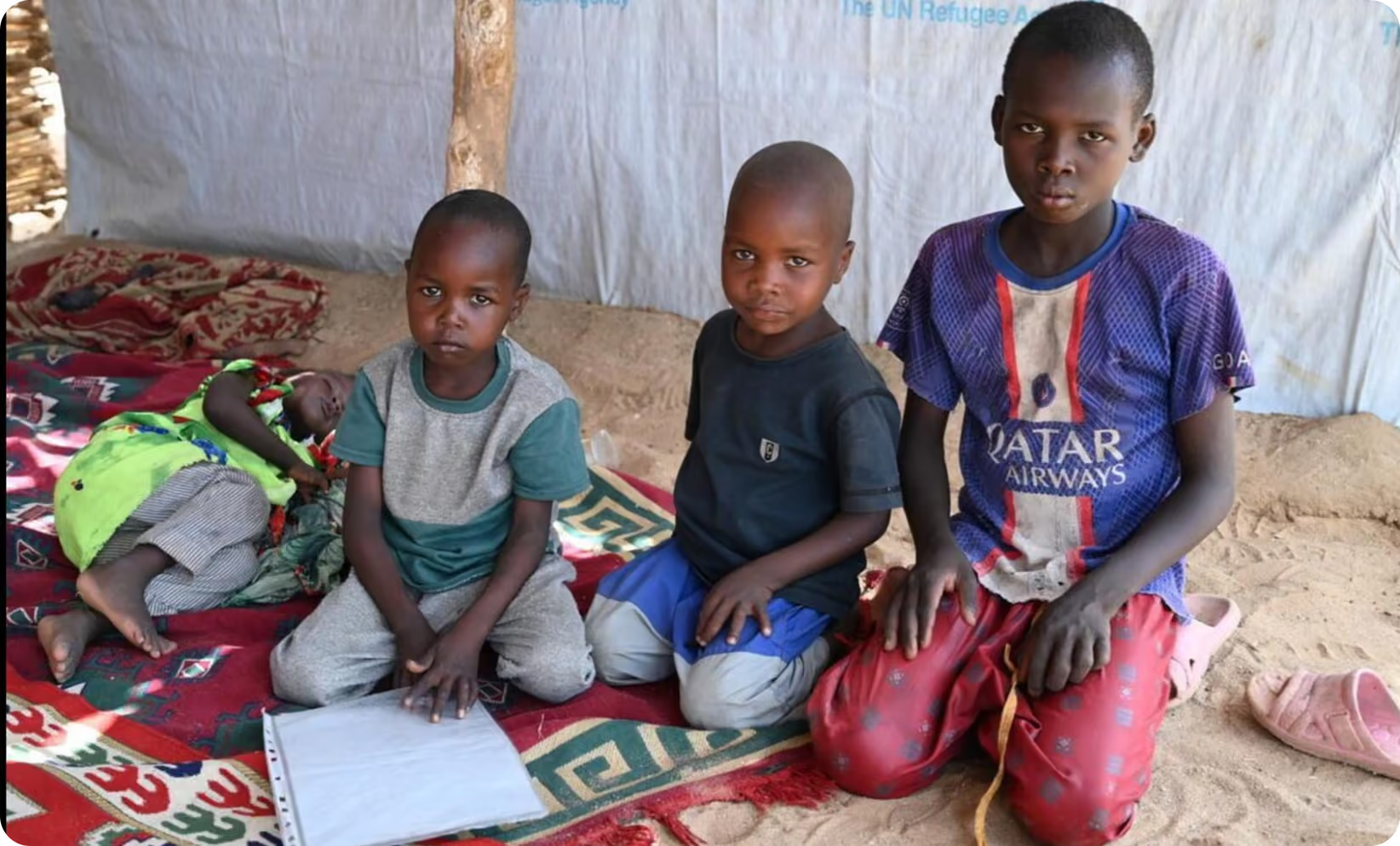
The number of children growing up without parental care across the continent is difficult to fully grasp. According to UNICEF's 2026 update on orphanhood, 39% of the world's 151 million orphans live in sub-Saharan Africa : a share that translates into roughly 59 million children who have lost one or both parents. In sub-Saharan Africa specifically, the UNAIDS 2025 Global AIDS Update reports that 9.8 million children under 18 have lost one or both parents to AIDS alone — three-quarters of the global total. Numbers like these are exactly why a dedicated orphan charity is not a small side project for humanitarian organizations, but a core part of the response Africa needs.
Daily Challenges Orphaned Children Face
Losing a parent rarely means losing just one form of support. It usually sets off a chain reaction that touches nearly every part of a child's life.
- Education gaps. Without a parent to cover school fees or push attendance, many orphaned children drop out early or never enroll at all.
- Health vulnerability. Orphaned children are less likely to receive routine checkups, vaccinations, or care when they fall ill, since no consistent adult is tracking their well-being.
- Protection risks. Children without stable guardianship face a higher risk of exploitation, child labor, and unsafe living arrangements.
>> Related Post: Causes of Food Insecurity: Its Effects and Solutions in 2026
Key Factors to Look for in an Orphan Sponsorship Charity in 2026
Not every organization asking for sponsors is equipped to deliver on that promise long-term. A few factors consistently separate a strong orphan charity from one that falls short.
- Transparency and reporting. The best charity to sponsor an orphan through will show you exactly where funds go, ideally with regular updates tied to the specific child or program you support.
- Family and community-based care. Leading child welfare research favors keeping children within extended family or community settings rather than large institutional orphanages, since this supports better emotional and developmental outcomes.
- Holistic support, not just cash transfers. Programs that combine education, healthcare, and nutrition tend to outperform those that only provide a stipend.
- Local partnerships. Charities that work through community leaders and local staff are better positioned to respond to a child's actual circumstances than those operating from a distance.
>> Related Post: Best Hunger Relief Charities to Donate to in 2026
Best Charities to Sponsor an Orphan in 2026:
1. Africa Relief and Community Development (ARCD)
ARCD combines direct child sponsorship with active education, health, and food security programs already running in the same communities. For donors specifically looking for the best orphan charity operating across multiple African countries at once, ARCD's connected model means a sponsored child benefits from more than just their individual sponsorship, since they are also part of a community ARCD is already supporting through WASH and nutrition initiatives. For donors giving with faith in mind, ARCD also frames ongoing child support as a form of continuous giving through its Islamic giving programs.
2. World Vision
World Vision runs child sponsorship programs across close to 100 countries, with a strong emphasis on education, tutoring, and dropout prevention. Its scale makes it a familiar name among orphan charities, particularly for donors who want a globally recognized organization with decades of program history.
3. Compassion International
Compassion International is the organization behind the widely cited six-country sponsorship study, and its programs are specifically designed around long-term educational and vocational outcomes for sponsored children. Independent research found sponsored children through Compassion were substantially more likely to finish secondary and tertiary school compared to non-sponsored peers in the same villages.
4. SOS Children's Villages
SOS Children's Villages focuses on family-style care for children who have lost parental support entirely, placing them in small household units with consistent caregivers rather than large institutional settings. This model is often recommended by child welfare researchers as a healthier alternative to traditional orphanages.
>> Related Post: How ARCD Keeps Africa’s Children Learning
Why ARCD Stands Out Among Orphan Charities
ARCD's orphan sponsorship program is built around consistent, individual relationships between sponsors and children, layered on top of ARCD's existing education and health initiatives already active in the same communities. ARCD's impact reporting reflects the same transparency standard donors should expect from any orphan charity they choose to support. This layered model means a sponsored child is not relying on a single program working in isolation, but on an entire support system already active in their community.
How ARCD's Sponsorship Works
- A sponsor is matched with a child based on need and, where possible, shared interests or background.
- Monthly support funds school fees, uniforms, healthcare visits, and basic household needs for that child.
- Sponsors receive periodic updates on the child's progress, keeping the relationship personal rather than transactional.
ARCD structures its orphan sponsorship program so that a single sponsorship touches all three of these areas at once, rather than treating education, health, and protection as separate problems to solve individually. This is the same connected approach ARCD takes across its wider work, detailed further in Six Programs, One Mission: A Complete Guide to ARCD's Programs.
Research backs up why this model works. A landmark six-country study published in the Journal of Political Economy found that sponsored children showed statistically significant gains in years of schooling, school completion at every level, and the likelihood of securing quality employment as adults. In other words, a well run orphan sponsorship charity does not just cover a child's bills. It measurably changes the trajectory of their life.
>> Sponsor an orphan through ARCD and help write the next chapter of their story.
FAQs
1. What does an orphan charity actually do with my monthly donation?
A reputable orphan charity typically directs monthly sponsorship funds toward school fees, uniforms and supplies, healthcare visits, and basic household support for the specific child or community you are sponsoring. Organizations like ARCD also layer this support on top of existing community programs in health and nutrition, so the sponsorship dollar works alongside services already reaching that child's household. The best programs will show you a breakdown of how funds are allocated rather than asking for trust without evidence.
2. Is it better to sponsor an individual orphan or donate to a general fund?
Both approaches have value, but individual sponsorship through an orphan sponsorship charity creates a personal, trackable relationship that many donors find more motivating to sustain over time. General funds give organizations flexibility to respond to urgent needs as they arise. Many donors choose to do both, sponsoring one child consistently while giving additional gifts toward broader relief efforts during emergencies.
3. How do I know if a charity that helps orphans is trustworthy?
Look for clear reporting on where funds go, community-based rather than purely institutional care models, and evidence of long-term program outcomes rather than only emotional appeals. Charities that publish impact data, like ARCD's regular updates on program reach, give donors a way to verify claims instead of relying on marketing language alone. A trustworthy orphan charity should also be transparent about administrative costs versus direct program spending.
4. What is the difference between an orphanage and a sponsorship program?
An orphanage is a residential institution where children live full time, while a sponsorship program typically supports a child who remains with extended family or in a community based care setting. Child welfare research generally favors family or community-based models over institutional care, since children raised in family settings tend to show better long-term emotional and developmental outcomes. Many modern orphan charities, including ARCD, prioritize keeping children connected to their existing communities rather than removing them into institutional care.
5. Does child sponsorship actually improve a child's future?
Yes, and this is one of the more well-researched areas of international aid. A major six-country study published in the Journal of Political Economy found that sponsored children completed significantly more years of schooling and were more likely to secure quality employment as adults compared to children who were not sponsored. These effects were large enough to be statistically significant across very different countries and cultural contexts, which strengthens confidence that the outcomes were driven by the sponsorship itself.
6. How much does it typically cost to sponsor an orphan?
Costs vary by organization and country, but most orphan sponsorship charities structure giving as an affordable monthly commitment rather than a large lump sum, often in a range accessible to most individual donors. The exact amount usually reflects local costs of schooling, healthcare, and basic needs in the child's community. ARCD structures its sponsorship program to keep this commitment sustainable for long-term donors rather than asking for an amount that is difficult to maintain over years.
7. Can I choose which country or region my sponsorship supports?
Many orphan charities, including ARCD, allow donors some ability to direct support toward specific regions or programs, depending on where active sponsorship opportunities exist at the time of giving. This flexibility lets donors align giving with causes or regions they feel personally connected to. It is worth asking any charity directly about current sponsorship availability before committing.
8. What happens to a sponsored child when they reach adulthood?
Well-designed sponsorship programs plan for this transition rather than ending support abruptly. Many charities shift focus in a sponsored child's later teenage years toward vocational training, higher education support, or job placement assistance, building on the educational foundation the sponsorship already funded. This continuity is part of what separates a strong orphan sponsorship charity from one that only addresses a child's immediate needs.
9. Are orphan charities only focused on children who have lost both parents?
Not always. Many organizations, ARCD included, extend support to children who have lost one parent or are otherwise without adequate guardianship, since the practical challenges around school fees, healthcare access, and daily stability are often similar regardless of the exact circumstances. The term orphan in this context is frequently used broadly to include vulnerable children more generally, not strictly those who have lost both parents.
10. How can I start sponsoring an orphan through ARCD?
You can begin by visiting ARCD's orphan sponsorship program page, where you can review current sponsorship opportunities and start a monthly commitment to support a specific child. ARCD provides updates on the child's progress over time, so the relationship remains personal rather than a one-time transaction. Every sponsorship contributes not only to that individual child but to the broader community programs ARCD already runs alongside it.


