

Building Water Wells in Gambia: Costs, Benefits, and Impact
Published Date:
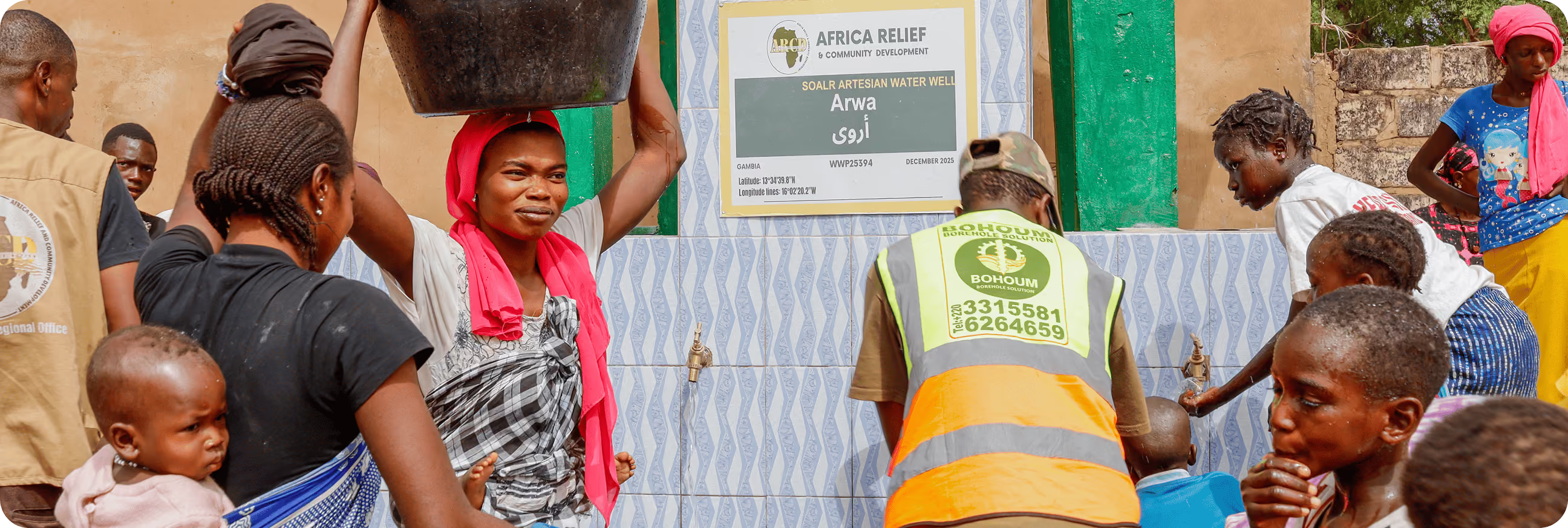
The Gambia is a small country wrapped almost entirely around a single river, yet reliable access to clean water still eludes a large share of its population. Recent government data shows only 48 percent of Gambians use a safely managed drinking water source, and that figure drops sharply outside the cities. Water wells in Gambia offer one of the most direct and lasting ways to close that gap for families who currently depend on unsafe or seasonal sources. Understanding the true cost, the process, and the long-term impact helps donors give with confidence and clarity.
Why Water Wells in Gambia are Vital for Rural Communities
The Gambia's water challenge is not simply about scarcity since the country sits along one of West Africa's major rivers. It is about uneven access, aging infrastructure, and the wide gap between urban and rural coverage. According to UNICEF Gambia, just 48 percent of the population uses a safely managed drinking water source nationally, with coverage reaching 68 percent in urban areas but falling to only 10 percent in rural communities. That rural gap means millions of people in farming villages and riverine settlements still rely on unprotected wells, seasonal streams, or shared community taps that run dry for parts of the year.
The consequences extend well beyond thirst. UNICEF also reports that only 13 percent of Gambian households have a handwashing facility with soap and water at home, and roughly 18 percent of children in the country are affected by stunting, a condition closely tied to poor hygiene and inadequate water access. A functioning Gambia water well addresses these overlapping problems at their source rather than managing the symptoms one at a time.
The Daily Water Burden in Rural Gambia
In villages without a nearby well, women and girls are typically the ones who walk to fetch water, often more than once a day. That routine eats into time that could otherwise go toward school, small business work, or simple rest. A single well placed within a reasonable walking distance can return those hours almost immediately, and the ripple effects show up in attendance records and household income within a single season.
Health Risks Linked to Unsafe Water
Families who rely on unprotected surface water or shared shallow wells face constant exposure to bacteria and parasites. Diarrheal illness, typhoid, and skin infections are common in communities without a protected water point, and children under five carry the heaviest share of that burden. Building water wells in Gambia interrupts this cycle by giving families a source that is tested, protected, and maintained rather than left exposed to contamination.
>> Related Post: Best Hunger Relief Charities to Donate to in 2026
What Does It Cost to Build a Water Well in Gambia
The Gambia water well cost depends on a mix of site-specific factors, and no two projects carry the same price tag. According to Drop in the Bucket, a standard drilled borehole in sub-Saharan Africa typically costs between $6,000 and $10,000, with wells that reach deeper aquifers or sit in remote locations running higher. Other assessments of well construction across the region place the full cost of a community project, including permits, casing, and pump installation, anywhere between $5,000 and $15,000.
These figures rarely tell the whole story on their own. The cost to build a water well in Gambia also depends on whether the community needs a hand pump or a solar-powered system, how far the drilling rig has to travel, and whether an existing but broken water point can be repaired instead of replaced. Each of these variables shifts the final budget in a different direction.
Key Factors That Determine Gambia Water Well Cost:
- Depth and geology: Since deeper aquifers or rocky ground near the river basin require more casing, more time, and heavier equipment.
- Location and remoteness: As villages, further from paved roads add transportation costs for moving rigs, crews, and materials.
- Pump type: Solar powered systems cost more upfront but reduce long term fuel and maintenance expenses compared to manual pumps.
- Permits and surveys: Hydrogeological assessment is typically required before drilling begins in any community project.
- Community training: This is not an optional add on but the piece that determines whether a well is still functioning ten years from now.
Types of Water Wells Built in Gambia:
Shallow hand dug wells remain the least expensive option, though they carry a higher risk of contamination from surface runoff during the rainy season. Drilled boreholes with hand pumps offer a more protected source and suit smaller villages with moderate daily demand. Deep boreholes fitted with solar-powered submersible pumps serve larger populations reliably and are increasingly common in communities like those in the Central River Region, where solar water systems have already reshaped daily life. The right choice always comes down to a site specific assessment before any drilling starts.
>> Related Post: How to Donate to Charity in Africa: Make Every Dollar Count
The Lasting Benefits of Gambia Community Water Projects
A single well, properly built and maintained, can serve a Gambian community for two decades or more. That long horizon is what makes Gambia community water projects such a meaningful investment for donors who want their support to compound over time rather than fade after a single season. Families gain a dependable source for drinking, cooking, and small-scale farming in one move, and the benefits spread outward from there.
Education and Gender Equity Through Water Access
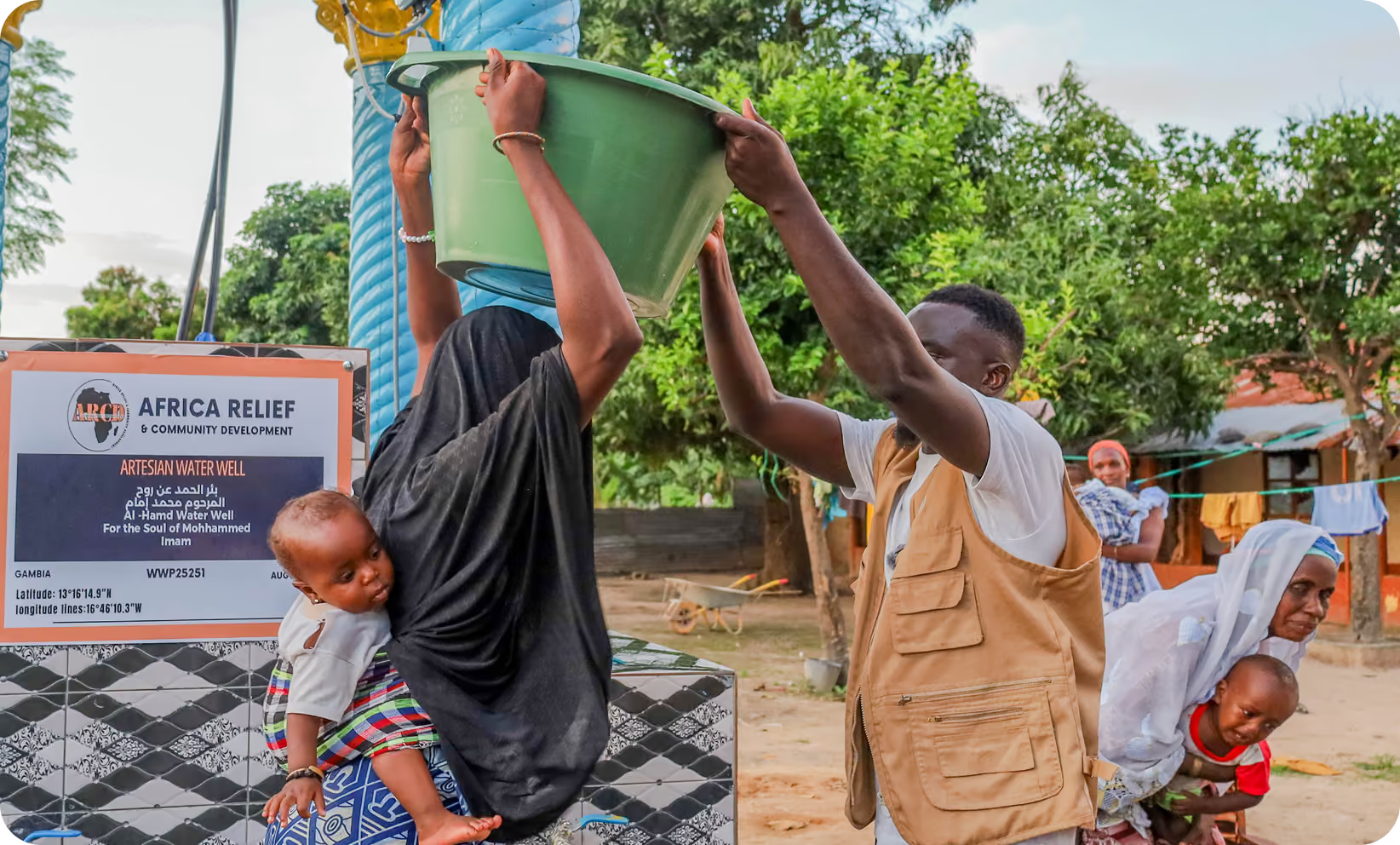
Girls in rural Gambia are frequently the ones responsible for fetching water before school, and that responsibility often comes at the cost of attendance and academic progress. When a well is built close to home, girls return to class more consistently, and that shift in routine tends to hold over multiple school terms. Over time, communities report stronger literacy outcomes and more women stepping into local leadership roles once the daily water burden is lifted.
Health and Economic Improvements
Access to a protected well sharply reduces the diarrheal illness and waterborne disease that strain both households and local clinics. This directly eases pressure on the health facilities ARCD supports across Africa, freeing up limited capacity for other urgent needs. Households also gain the ability to maintain small gardens and livestock, supporting the kind of food and nutrition security that helps families break cycles of poverty over several seasons rather than one harvest at a time.
>> Related Post: Building Water Wells in Africa: Costs, Benefits, and Impact
How ARCD Supports Gambia Community Water Projects
Africa Relief and Community Development works to expand clean water access across Africa through its WASH program, which focuses on both new well construction and the repair of water points that communities have already lost. Every project is designed with local ownership built in from day one, since a well handed over without training tends to fail within a few years while one supported by a trained community committee can run for decades. ARCD's approach connects clean water directly to its wider work, as outlined in its guide to ARCD's programs, because families rarely face a single challenge in isolation.
Beyond drilling, ARCD evaluates existing but non-functional water points across rural communities and repairs them where feasible, stretching donor support further while reaching more households sooner. This model reflects one of the broader benefits of donating to charity, since a single contribution toward a Gambia water well can ripple outward into better health, stronger school attendance, and steadier household income for years after the well is complete. Supporting ARCD's clean water work in Gambia means investing in a solution built to last, not a short-term fix that fades once funding ends.
>> A well today keeps giving for a generation. Donate to ARCD and help bring lasting clean water to a Gambian community.
FAQs
1. How serious is the water crisis in Gambia?
The Gambia has made real progress on water access compared to many of its neighbors, but significant gaps remain, especially in rural areas. National data shows only 48 percent of the population uses a safely managed drinking water source, with urban coverage at 68 percent against just 10 percent in rural communities. Handwashing access is even lower, with only 13 percent of households reporting a facility with soap and water at home. These gaps contribute to ongoing child health challenges, including a stunting rate of around 18 percent tied in part to poor hygiene and sanitation conditions.
2. What is the average Gambia water well cost for a community project?
A standard drilled borehole across sub-Saharan Africa typically costs between $6,000 and $10,000 for a basic setup, according to Drop in the Bucket. A complete community project in Gambia, including permits, casing, pump installation, and training, often falls within a broader range of $5,000 to $15,000 depending on depth and location. Projects in remote riverine villages or areas requiring deeper drilling tend to land toward the higher end of that range.
3. What factors affect the cost to build a water well in Gambia?
Depth and geology are usually the biggest cost drivers, since deeper aquifers require more casing and drilling time. Remoteness matters as well, because transporting rigs and materials to villages far from paved roads adds to the budget. Pump type also plays a role, as solar powered systems cost more upfront but reduce long term maintenance needs compared to manual hand pumps.
4. What types of water wells are common in Gambia?
The three most common types are shallow hand dug wells, drilled boreholes with hand pumps, and deep boreholes fitted with solar powered submersible pumps. Shallow wells are the least expensive but carry the highest contamination risk during the rainy season. Solar powered boreholes, like those already transforming communities in the Central River Region, tend to be the most reliable option for larger populations.
5. How long does a water well in Gambia typically last?
A well built with quality materials and supported by a trained local committee can serve a community for twenty years or more. Longevity depends heavily on regular maintenance, prompt repairs, and a community's willingness to take ownership of the system. Wells that are built without any training or maintenance plan tend to fail within just a few years.
6. How many people can one Gambia water well serve?
This depends on the type of well and its yield. A shallow well typically supports a few hundred people, while a deeper borehole with a solar powered pump can reliably serve several hundred to over a thousand people depending on demand. Proper planning before drilling ensures the well is sized correctly for the community it is meant to support.
7. What are the main benefits of Gambia community water projects?
Clean water access reduces the spread of diarrheal disease and other waterborne illness, easing pressure on local clinics and cutting household medical costs. Girls are able to attend school more consistently once they are no longer responsible for daily water collection. Families also gain the ability to maintain small gardens and livestock, which supports food security and household income over time.
8. Does ARCD build water wells in Gambia?
Yes. ARCD's WASH program supports clean water access across multiple African countries, and its approach in Gambia includes both new well construction and the repair of existing non-functional water points. Every project comes with training for local water committees so that communities can manage repairs and upkeep independently for years after construction ends.
9. How does a water well support education in Gambia?
When a well is built close to a village, girls in particular no longer need to spend early morning hours collecting water before school. That reclaimed time goes directly into classroom attendance and homework, and the effect tends to compound over multiple school terms. Communities with reliable water access consistently report higher school completion rates among girls over the following years.
10. How can I support water well projects in Gambia through ARCD?
You can donate directly to ARCD to help fund the surveys, drilling, pump installation, and community training that go into a lasting Gambia water well. Contributions at any level move a project forward, whether that covers a hydrogeological survey or a full borehole installation.

© Africa Relief. All rights reserved.
Privacy Policy


