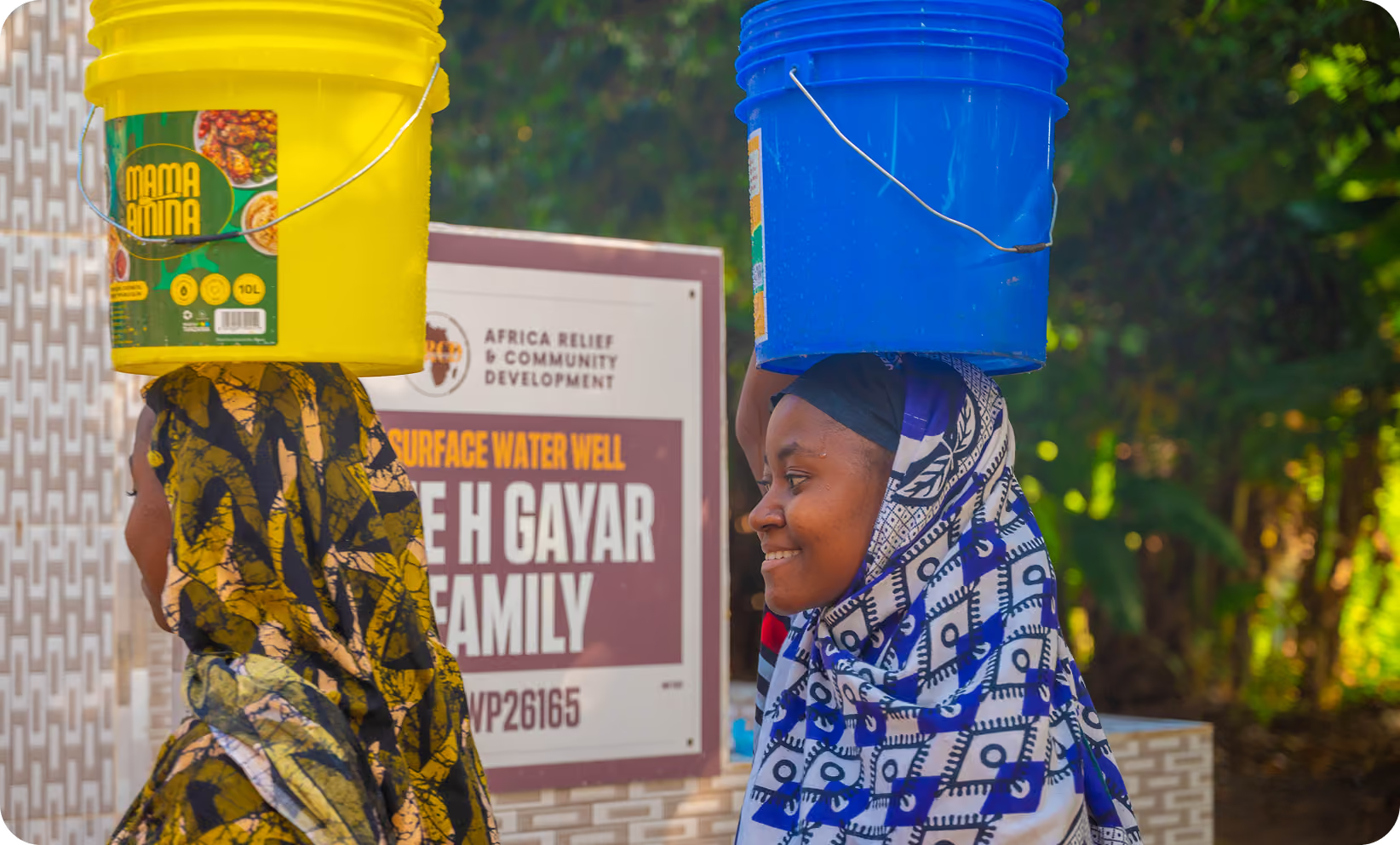
Tanzania is home to some of East Africa's most striking landscapes, yet millions of families across the country still struggle to reach a safe source of drinking water. Rural communities often depend on rivers, ponds, or unprotected wells that carry serious health risks every single day. Water wells in Tanzania offer a direct and lasting solution that removes this daily burden while protecting families from preventable disease. Understanding what these projects cost, how they are built, and the impact they create helps donors make informed decisions that change lives.

Tanzania has made real progress in expanding water access, but large gaps remain. According to UNICEF Tanzania, roughly three in five households nationwide now have access to improved drinking water, a figure that climbs to 98 percent in Zanzibar. Rural mainland communities still lag far behind that average, leaving many families to rely on rivers, seasonal streams, or unprotected shallow wells. A functioning Tanzania water well changes that picture almost overnight for the families closest to it.
The scale of the shortage becomes clearer when looking at the wider region. UNICEF reports that among Eastern and Southern African countries, Tanzania carries one of the highest burdens of children without access to basic drinking water services, trailing only Ethiopia and Uganda. That burden falls hardest on rural households, where the nearest safe source can be an hour or more away on foot. This is not a scarcity problem in the traditional sense. It is a problem of infrastructure that has not yet reached the people who need it most.
In many Tanzanian villages, fetching water is a task that shapes the entire rhythm of the day. Women and girls typically leave home before sunrise to reach a distant source, often waiting in long queues once they arrive. By the time they return, hours that could have gone toward school, farming, or rest are already gone. A well placed within walking distance of the community reclaims that time almost immediately.
Families who rely on unprotected sources face constant exposure to cholera, typhoid, and diarrheal disease. These illnesses hit young children the hardest and often overwhelm local clinics during rainy seasons when contamination spreads fastest. Clean water access directly supports the work being done at health facilities ARCD partners with across Africa. When a community shifts from a contaminated source to a protected well, the volume of preventable illness drops quickly and noticeably.
A few patterns show up again and again in communities facing the heaviest water burden.
>> Related Post: Best African Charities to Donate to in 2026
The cost to build a water well in Tanzania depends heavily on depth, geology, and the type of pump system chosen. According to The Living Water Project, well costs across the region can range from roughly 3,000 US dollars in some countries to 10,000 US dollars or more for a well in Kenya or Tanzania, depending on local drilling conditions and terrain. Coastal sandy soil tends to drill faster and cheaper, while hard rock formations inland raise both time and cost considerably. Pump installation, casing, and testing are separate line items that must be budgeted alongside the drilling itself.
Community scale projects follow a similar pattern. SHIPO Well Drilling, a well drilling network founded in Tanzania, reports that a machine-drilled borehole with an imported hand pump generally costs between 3,000 and 6,000 US dollars and can serve around 250 people. Lower cost manual drilling methods exist for shallower sites with softer ground, though they serve smaller populations and carry more limitations. The right approach always depends on a proper site assessment before any drilling begins.
Several factors combine to determine the final price of a Tanzania water well project.
Three main well types are used across Tanzanian communities today. Shallow hand-dug wells are the least expensive option but carry a higher risk of contamination from surface runoff. Drilled boreholes fitted with hand pumps offer a more protected water source suited to small and mid-sized villages. Deep boreholes with solar-powered submersible pumps serve larger populations and reduce the community's dependence on fuel or grid electricity.
>> Related Post: Best Hunger Relief Charities to Donate to in 2026
A well built with quality materials and proper community oversight can serve a village for two decades or longer. This is what makes Tanzania community water projects one of the most cost-effective investments in rural development. Families gain a reliable source for drinking, cooking, and small-scale farming almost overnight. The benefits ripple outward from there, touching nearly every part of daily life.
Girls in rural Tanzania are frequently the ones sent to fetch water, often at the cost of missing school. When a well is built close to home, attendance improves quickly, particularly for girls in upper primary grades. Over time this supports stronger literacy outcomes and keeps more girls connected to ARCD's education programs through to completion. A single well, placed in the right location, can reshape a girl's entire educational path.
Reliable water access also opens the door to home gardens, small livestock, and better household nutrition. This directly supports the kind of food and nutrition security that helps families break cycles of poverty over time. Women freed from hours of water collection can pursue skills training through ARCD's community empowerment programs. These gains compound year after year, strengthening the whole community rather than just the households closest to the well.
>> Related Post: Building Water Wells in Africa: Costs, Benefits, and Impact
Africa Relief and Community Development approaches clean water as one part of a much larger picture of community wellbeing. Through its WASH program, ARCD drills new wells and repairs non-functional water points in communities that have already lost access once before. Every project is designed with local water user committees involved from the very beginning, so ownership and maintenance stay in the hands of the people who rely on the well daily. This connected model links clean water directly to ARCD's ongoing work across health, education, and food security.
For donors motivated by faith, funding a water well through ARCD also carries the weight of Sadaqah Jariyah, a form of ongoing charity that continues benefiting the giver as long as the well provides water. Every family that draws from a well funded through your support experiences that benefit directly, year after year. ARCD remains committed to expanding water wells in Tanzania and across the continent, one community at a time.
>> Give through ARCD and help fund the surveys, drilling, and training a lasting Tanzania water well depends on.
1. How severe is the water crisis in Tanzania?
Tanzania has made progress in recent years, with roughly three in five households nationwide now having access to improved drinking water. Rural mainland communities still fall well behind that average, and Tanzania carries one of the highest burdens in the region when it comes to children lacking basic water access. The gap is driven by infrastructure that has not yet reached remote villages rather than a true shortage of water resources. Families in these areas often rely on unprotected sources that put them at ongoing risk of disease.
2. What is the average cost to build a water well in Tanzania?
A fully functional deep well between 80 and 120 meters typically costs between roughly 3,000 and 6,400 US dollars, depending on geology and site conditions. Coastal areas with sandy soil tend to see lower costs, while hard rock terrain inland raises both drilling time and expense. These figures usually cover drilling and casing but not always pump installation or community training. A complete, sustainable project often costs more once every component is factored in.
3. What factors affect the Tanzania water well cost the most?
Depth and ground geology are the biggest cost drivers, since hard rock formations slow progress and increase equipment wear. Remote locations add transport costs for moving drilling rigs and crew to the site. The type of pump selected, whether hand operated or solar powered, also shapes the total budget significantly. Permits, hydrogeological surveys, and community training add further costs that responsible projects should never skip.
4. How deep are most water wells in Tanzania?
Many community boreholes in Tanzania fall between 80 and 120 meters, though this varies by region and water table depth. Some coastal areas allow for shallower, less expensive wells due to higher groundwater levels. Inland and highland regions often require deeper drilling to reach a reliable aquifer. A hydrogeological survey conducted before drilling determines the exact depth needed for each specific site.
5. How long does a Tanzania water well typically last?
A well built with quality casing, a suitable pump, and an active local maintenance committee can serve a community for twenty years or more. Wells that lack a trained committee or ongoing upkeep plan frequently fail within just a few years of construction. Regular inspection and prompt repair of small issues prevent larger, more costly breakdowns later on. This is why community training is treated as an essential part of every well project rather than an optional add-on.
6. How many people can one Tanzania water well serve?
This depends heavily on the type of well and the pump installed. A basic machine-drilled borehole with a hand pump can serve around 250 people reliably. Larger boreholes with solar powered submersible pumps and proper storage can serve considerably more people across a wider area. Proper planning before drilling ensures the well is sized appropriately for the community it is meant to support.
7. What are the biggest benefits of Tanzania community water projects?
Clean water access reduces disease, improves hygiene, and frees up hours previously spent on long water collection trips. Girls in particular benefit from higher school attendance once the daily burden of fetching water is lifted from their mornings. Families gain the ability to grow small gardens, raise livestock, and generate income through activities that depend on a steady water supply. Over time these combined benefits build stronger, more self-reliant communities that are less dependent on outside aid.
8. Does ARCD build water wells in Tanzania?
Yes. ARCD's WASH program supports clean water access across multiple African countries, including Tanzania. This includes drilling new wells, repairing existing non-functional water points, and training local water committees for long-term upkeep. Every project is designed around community ownership so that the benefits of a single well continue for decades rather than years.
9. How does a water well support education in Tanzania?
When a well is built close to a village, children, especially girls, no longer need to spend their mornings walking long distances for water. That reclaimed time goes directly into classroom attendance and schoolwork instead. Better access to water also allows schools to maintain proper latrines and handwashing stations, creating a safer learning environment. Over time, communities with reliable water access tend to see steadier school completion rates among girls specifically.
10. How can I support water well projects in Tanzania?
You can donate directly to ARCD to help fund the site survey, drilling, pump installation, and community training that a lasting well requires. Contributions of any size help move projects forward, whether that means covering a hydrogeological survey or funding a full borehole installation. For donors giving with faith in mind, a water well donation also functions as Sadaqah Jariyah, a continuous charity whose benefit lasts as long as the well provides water. Visit ARCD's website to give today and become part of a Tanzania water well story that changes lives for years to come.