

What Is Zakat in Islam? Guide to Islamic Charity

Published Date:
What is zakat in Islam? This question opens the door to exploring one of the Five Pillars of Islam. Zakat signifies the 'purification of wealth' and 'growth,' marking it as a mandatory act for financial and spiritual cleansing. It exemplifies Islamic dedication to social welfare and economic justice.
What is Zakat in Islam?
Zakat is a compulsory act of charity and one of the Five Pillars of Islam, required from every financially able Muslim. It involves donating a fixed portion of one's wealth to those in need, with the aim of purifying the giver's wealth and soul from selfishness and greed.
- Calculated as 2.5% of all savable wealth and assets exceeding the nisab threshold
- Measured over a lunar year
Zakat in the Quran:
The Quran frequently pairs zakat with prayer (Salah), emphasizing its importance as an act of worship:
- Surah Al-Baqarah (2:43): Commands to establish prayer and give zakat
- Surah At-Tawbah (9:103): Wealth charity purifies and causes increase
- Surah At-Tawbah (9:34-35): Warns against hoarding wealth and refusing to pay zakat — painful punishment in the hereafter
Zakat in the Hadith:
- "Sadaqah (zakat) is only for the poor, the needy, those employed to collect zakat, to attract hearts inclined towards Islam, to free captives, for those in debt, for Allah's cause, and for the wayfarer." (Sahih Bukhari, Book 24, Hadith 557)
- "The wealth of a person does not decrease by paying Zakat" (Sahih Bukhari)
- "One who pays Zakat, Allah will make their wealth increase" (Sahih Bukhari)
- "Zakat is a right that the poor have upon the rich" (Sahih Bukhari)
Types of Zakat
- Zakat al-Mal: Annual zakat on accumulated wealth (cash, gold, silver, business commodities, livestock, agricultural produce) exceeding the nisab threshold over a lunar year.
- Zakat al-Fitr (Fitrana): Paid at the end of Ramadan, before Eid al-Fitr prayer. Obligatory for every Muslim regardless of age or financial status, provided they have surplus food over their needs.
8 Categories of Zakat Recipients (Surah At-Tawbah 9:60)
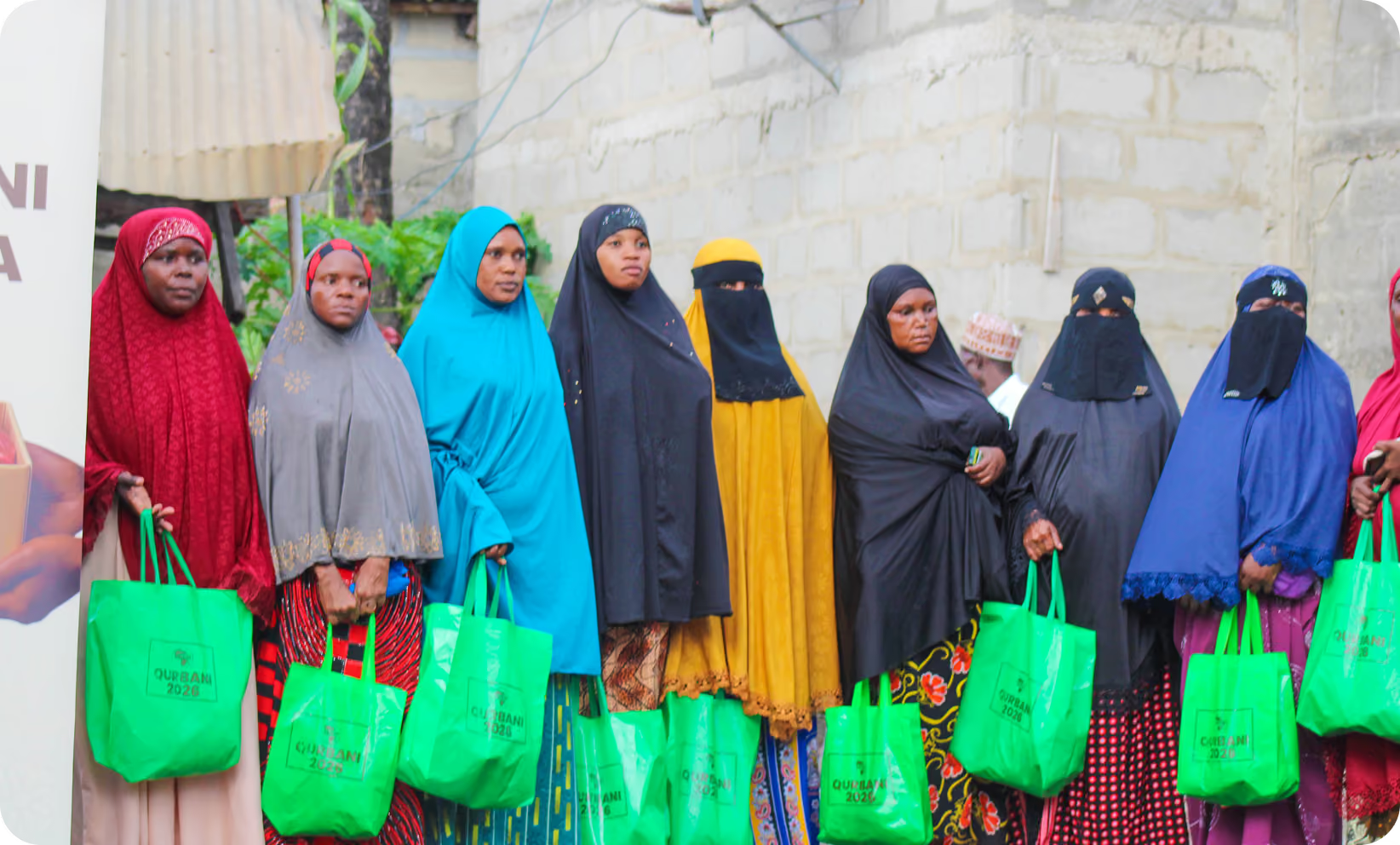
- The poor (Fuqara)
- The needy (Masakeen)
- Those employed to collect zakat
- Those whose hearts are to be reconciled (new Muslims)
- Freeing captives/slaves
- Those in debt
- In the cause of Allah (Fi Sabilillah)
- The stranded traveler (Ibn al-Sabil)
Eligibility is determined by need and circumstance, not creed, race, or nationality.


