
ARCD Impact in Figures: Changing Lives Across Africa
Published Date:
What does real change look like? Not in theory, but on the ground, in the communities where children drink clean water for the first time, where a mother delivers safely in a clinic that didn't exist a decade ago, or where a young woman opens a small business after completing vocational training.
At Africa Relief and Community Development (ARCD), we believe impact is best measured not in intentions, but in outcomes. Since our founding in 2019, we've worked alongside Africa's most vulnerable communities in 32 countries where our teams live and work.
This blog brings together the figures behind that work. From over 2,300+ clean water wells to 3,000+ orphaned children now sponsored into stability, each number below represents a real shift in someone's life.
A Snapshot of ARCD's Impact: By the Numbers
Before diving into the programs, here is ARCD's impact at a glance:
- 1.1 million+ lives reached across Africa
- 2,300+ water wells built in underserved communities
- 150+ educational centers constructed or supported
- 3,000+ orphaned children enrolled in ARCD's sponsorship program
- $7 million+ in in-kind donations mobilized
- 32 countries across Sub-Saharan Africa served
- 5 regional offices on the ground (East, West, North, Central, and Southern Africa)
How ARCD's Six Programs Are Driving Measurable Change
ARCD operates at the intersection of immediate humanitarian relief and long-term development. Its six program areas are each designed around a core question: what does this community actually need to thrive, not just survive?
1. Clean Water & Sanitation (WASH Program)
In many parts of Sub-Saharan Africa, women and children walk several hours each day to reach unsafe water sources. ARCD's WASH program confronts this reality head-on.
To date, ARCD has constructed over 2,300 water wells in communities where clean water was either inaccessible or absent entirely. The program is grounded in sustainability: wells are built with community ownership in mind, trained local maintenance teams are established, and sanitation education is delivered alongside infrastructure.
The outcomes are cascading. When a community gains reliable access to clean water, child mortality from waterborne disease drops. Girls who previously spent mornings fetching water now attend school. Women gain hours back that can be invested in income-generating activity. According to UNICEF, approximately 748 million people globally lack access to safe drinking water.
2. Healthcare Program
ARCD's healthcare model addresses the stark gap in primary care across rural Africa. Through a combination of Primary Healthcare Centers (PHCCs), specialist surgical camps, maternal health initiatives, and large-scale in-kind medical supply donations, ARCD brings healthcare access to communities that have historically been left behind by formal health systems.
Key activities include:
- Cataract surgery camps restoring sight to patients who had lost functional vision
- Maternal health support reducing preventable deaths in childbirth
- In-kind medical donations funnelling critical supplies (medicines, equipment, hygiene materials) directly into underserved health facilities
ARCD's healthcare work aligns with SDG 3 (Good Health and Well-Being) and operates with an equity-first lens, prioritising women, children, and elderly populations in the communities it serves.
3. Education Program
Sub-Saharan Africa is home to approximately 98 million out-of-school children, which is the highest concentration in the world. ARCD's education program is built to address this crisis at both the infrastructure and access levels.
ARCD has built or supported over 150 educational centers across the continent, providing physical learning environments in communities where none existed. But infrastructure alone is not enough. The program also delivers:
- School supply distributions
- Scholarship support
- Teacher training
4. Economic Empowerment Program
Sustainable dignity cannot be built on dependency. ARCD's empowerment program targets the economic root causes of vulnerability by equipping women, youth, and displaced individuals with the skills and capital to build self-reliant futures.
Core program activities include:
- Vocational training across trades such as tailoring, agriculture, construction, and digital skills
- Microfinancing which is a small-loan facility allowing beneficiaries to launch or scale small businesses
- Case management support to track outcomes and ensure long-term economic integration
5. Food Security & Nutrition Program
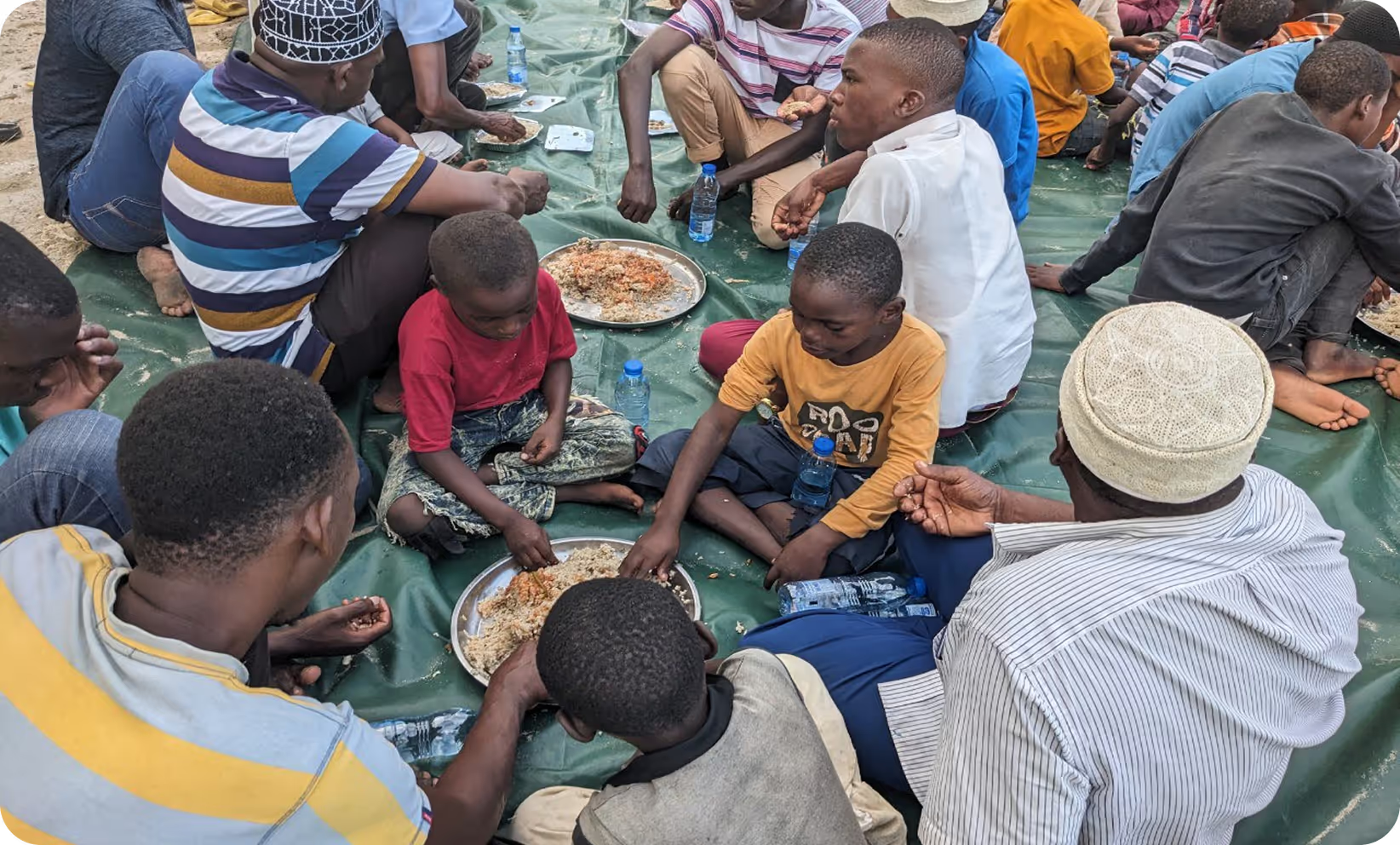
Food insecurity across Africa is both chronic and acute. Communities face long-term nutritional deficits compounded by sudden crisis moments: drought, displacement, or conflict. ARCD's food program responds to both.
Activities include:
- Emergency food basket distributions to families in acute crisis
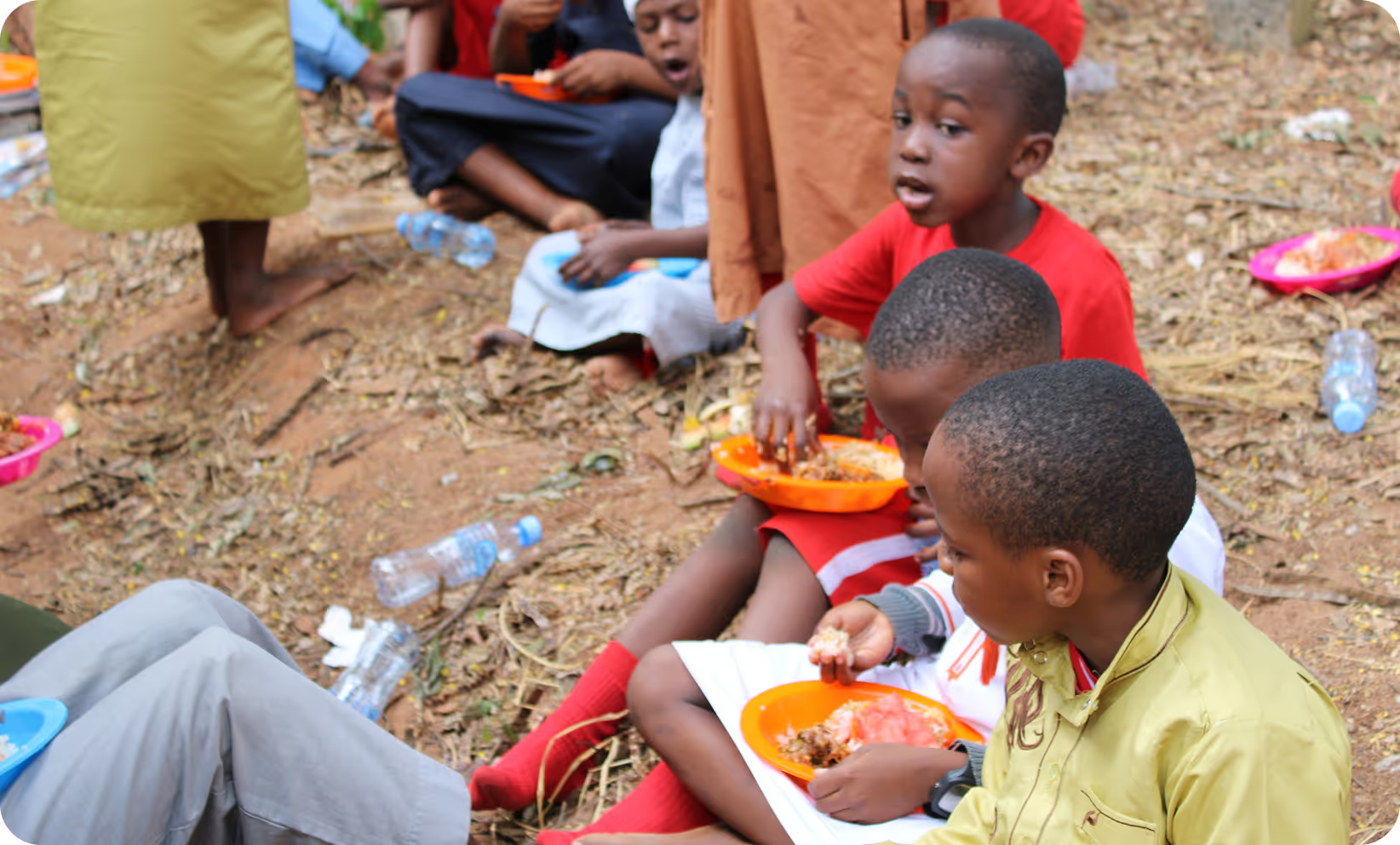
- Meat distribution during Islamic holidays and community observances
- Nutrition support programs targeting children under five and pregnant or lactating women
6. Orphan Sponsorship Program
Africa is home to an estimated 52 million orphaned children, a scale of vulnerability that demands a structured, holistic response. ARCD's orphan sponsorship program currently supports over 3,000 children and is built on a philosophy that goes far beyond basic relief: it aims to keep orphans connected to their surviving family members while providing comprehensive support that stabilises the whole household.
Each sponsored child receives:
- Monthly cash disbursements to their guardian family for basic living expenses
- Dedicated case management — a social worker assigned to monitor wellbeing, provide psychosocial support, and protect the child's rights
- School supply packages — ensuring children can attend and succeed in school
- Ramadan and Eid gifts — ensuring orphans feel included in community life during Islamic celebrations
The long-term outcomes of this model include reduced vulnerability, improved educational attainment, and enhanced psychological stability, laying the foundation for tomorrow's community leaders.
About Africa Relief and Community Development: A Mission Built on Dignity
ARCD Impact in Figures: The Organisation Behind the Numbers
Africa Relief and Community Development (ARCD) is a 501(c)(3) nonprofit headquartered in New Jersey, USA. Founded in 2019 by Dr. Mohamed Moussa, ARCD was born from a conviction that vulnerability should not define a person's future, and that communities, given the right support, have everything they need to thrive.
ARCD operates at the intersection of immediate humanitarian response and long-term development. From five regional offices spanning East, West, North, Central, and Southern Africa, ARCD's teams work directly alongside local communities, not from a distance, not through intermediaries, but as embedded partners in the places they serve.
The organisation's mission is clear: "Facilitating Dignity to Vulnerable African Communities." Its vision is equally direct: "Dignity for Vulnerable Communities in Africa". ARCD holds a Candid (GuideStar) Platinum Seal, the most trusted nonprofit transparency certification in the United States. All financials are independently audited, publicly available, and include full IRS Form 990 reporting. Donors receive quarterly photo and field reports from the exact programs and regions of their support funds.
in 2025 alone, ARCD reached 1.1 million lives and mobilised over $7 million in in-kind donations.
FAQs
1. What is Africa Relief and Community Development (ARCD)?
ARCD is a U.S.-based 501(c)(3) nonprofit founded in 2019 that delivers humanitarian relief and long-term development programs across 32 African countries. Its six core programs cover clean water, healthcare, education, economic empowerment, food security, and orphan care. ARCD holds a Candid Platinum Seal for nonprofit transparency.
2. How many lives has ARCD reached so far?
As of 2025, ARCD has reached over 1.1 million lives across Sub-Saharan Africa. This figure spans all six program areas and is verified through field reporting from ARCD's five regional offices.
3. How does ARCD's orphan sponsorship program work?
Sponsors contribute to a monthly support package that includes cash disbursements to the orphan's guardian family, school supplies, dedicated case management by a social worker, and special gifts during Islamic holidays. ARCD currently sponsors over 3,000 children and prioritises keeping orphans connected to surviving family members.
4. Where does ARCD operate?
ARCD operates across 32 countries in Sub-Saharan Africa through five regional offices covering East Africa, West Africa, North Africa, Central Africa, and Southern Africa. This on-the-ground presence allows ARCD teams to work directly with local communities.
5. How transparent is ARCD with donor funds?
Very. ARCD holds the Candid (GuideStar) Platinum Seal — the highest nonprofit transparency rating in the U.S. All financials are independently audited and publicly available, including IRS Form 990 filings. Donors also receive quarterly photo and field reports tied to the specific programs and regions their donation supports.
6. What is ARCD's WASH program and why does it matter?
ARCD's WASH (Water, Sanitation, and Hygiene) program builds clean water wells and sanitation infrastructure in communities where safe water is inaccessible. To date, ARCD has built over 2,300 wells. Access to clean water directly reduces child mortality from waterborne disease, increases school attendance — especially among girls — and frees women's time for economic activity.
7. How does ARCD's education program support children beyond building schools?
Beyond constructing 150+ educational centers, ARCD distributes school supplies (backpacks, books, stationery), provides scholarships for at-risk students, and conducts community engagement and teacher training programs. The goal is improved learning outcomes, not just improved enrollment figures.
8. Can individuals or organisations donate in-kind goods to ARCD?
Yes. ARCD has mobilised over $7 million in in-kind donations to date, including medical supplies, food items, and educational materials.
9. How does ARCD's economic empowerment program break the cycle of poverty?
ARCD's empowerment program delivers vocational training in practical trades and provides microfinancing to enable beneficiaries to start or expand small businesses. By building long-term income capacity rather than dependency on aid, the program addresses poverty at its root rather than its symptoms.
10. How do ARCD's programs align with the UN Sustainable Development Goals?
ARCD's programs are explicitly mapped to the 2030 Agenda for Sustainable Development. Key alignments include: WASH → SDG 6; Healthcare → SDG 3; Education → SDG 4; Empowerment → SDG 8; Food & Nutrition → SDG 2; Orphan Sponsorship → SDG 1 and SDG 4. This framework ensures ARCD's work contributes to globally recognised benchmarks for human development.


