

For Sudan’s Orphaned Children, the Need for Support Outlasts the Emergency
%20(1).avif)
Published Date:
When El Fasher fell in October 2025, a 12-year-old girl named Maryam fled to Tawila in North Darfur. According to UNICEF, she was separated from her parents in the chaos and now shelters among thousands displaced by Sudan's escalating war. Maryam's story illustrates the kind of disruption Sudanese children are experiencing (Not every separated child is an orphan, and family tracing and reunification remain the priority when parents may still be alive. For children who have lost a parent, longer-term family-based support can play a different role).
Children affected by that kind of displacement rarely need one dramatic rescue. They may need food, school supplies, protection and a stable family environment while their situation is resolved. For children who have lost a parent, the need can continue long after the initial emergency has passed. That is where an orphan sponsorship program in Sudan can play a different role.
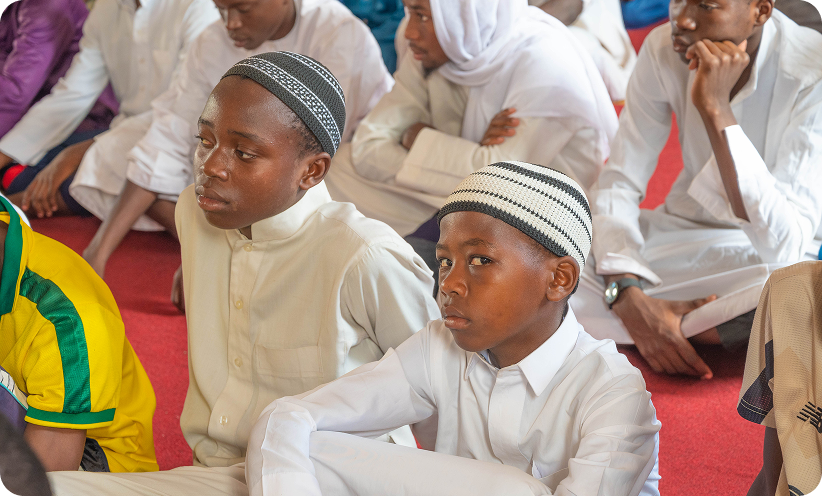
Why Orphaned Children in Sudan Need Long-Term Support
Sudan's humanitarian agencies are working at an enormous scale. Emergency assistance addresses urgent needs such as food, shelter and protection, while children who have lost a parent may also need sustained support for education, daily care and family well-being.
UNICEF's 2026 appeal identifies 12.4 million children in need of protection services, while its response includes a specific target for 15,427 unaccompanied and separated children. Those figures illustrate both the scale of Sudan's child-protection needs and the particular challenges faced by children separated from their families.
Money is also running short. UNICEF reported that by 31 July 2026 it had raised US$352.2 million of the US$962.9 million it needs, leaving a 63 percent funding gap. The funding gap illustrates how difficult it is for large humanitarian systems to meet every child's longer-term needs, particularly when emergency needs continue to consume limited resources.
Monthly sponsorship can provide a more predictable stream of support for children and the families caring for them.
The relatives who take in orphaned children are also where the research points. A UNICEF review of a decade of its own evaluation evidence, from 2014 to 2024, found that the findings repeatedly favor safe care within families, such as kinship and foster care, over institutions, while noting that these family-based models remain under-resourced in many countries.
Three Moments When a Sponsor Makes the Difference:
1. Fleeing Home: Why Cash Can Help Families Meet Immediate Needs
Getting goods to displaced families is slow and costly: UNICEF calculates that moving 50 metric tons of supplies from Port Sudan to hard-to-reach parts of Darfur and Kordofan costs about $53,000, around five times the price of shipping the same load from Asia. The agency treats cash as a way for households to meet urgent needs while keeping their dignity.
Where local markets are functioning, cash assistance can allow families to purchase essentials locally rather than relying on relief items transported long distances.
2. Rebuilding After Displacement: Why Ongoing Support Matters
For returning families, consistent support can make it easier to address problems such as a child falling behind in school or struggling with basic needs. IOM's displacement tracking recorded more than 4.6 million people who had returned to their areas of origin by mid-2026, and UNICEF describes many of them as living in precarious conditions. A family returning without the parent who earned its income may have to rebuild on a thinner budget, making continued support particularly important for children.
3. Back to School for Orphans Who Can't Afford Supplies
UNICEF estimates that 10.8 million children in Sudan need education support in 2026 and describes them as deprived of safe learning opportunities. For an orphan, a guardian's inability to afford the basics can be enough to keep a child out of class, which is why the school supplies included in a sponsorship matter as much as the cash.
What Donors Can Verify About ARCD Before Sponsoring in Sudan
ARCD was founded in New Jersey in 2019 and reports working in 32 countries through six regional offices. Before committing to a Sudan sponsorship program for orphans, it is worth checking a few things that do not rely on ARCD's description of itself.
- Transparency rating. ARCD holds Candid's Platinum Seal of Transparency, an independent profile that anyone can open and read.
- Public tax filings. ARCD posts its Form 990 tax return on its website, showing how the organization reports its income and spending.
- Work inside Sudan. ARCD reports that its Central Kitchen in Sudan served 90,000 hot meals over 30 days, a documented example of the organization operating in the country during the war.
A monthly sponsorship gives donors a way to provide sustained support for a child's needs beyond the immediate emergency.
>> Sponsor a Sudanese Child Each Month
FAQs
1. What does ARCD's orphan sponsorship program in Sudan provide?
An orphan sponsorship program can help cover a child's ongoing needs, such as food, education, clothing, healthcare, and other essential support. The exact assistance depends on the organization and the child's circumstances. ARCD's sponsorship model supports children within their family units rather than placing them in orphanages, with assistance intended to help the child and the family caring for them.
2. Is every child separated from their parents considered an orphan?
No. A separated child is apart from their parents, but the parents may still be alive and family tracing or reunification may still be possible. An orphan has lost one or both parents. Humanitarian agencies generally prioritize tracing and reunifying separated children with their families when it is safe and appropriate.
3. Why is family-based care important for orphaned children in Sudan?
Family-based care can allow children to remain connected to relatives, siblings, language, culture, and their communities instead of being placed in institutional care. UNICEF's review of evidence on family-focused and caregiving programs found support for safe family-based care, including kinship and foster care, while also noting that these approaches remain under-resourced in many settings.
4. Can I sponsor a child on behalf of someone who has died?
ARCD's Islamic giving guidance says that Sadaqah can be given on behalf of someone who has died. If you want to dedicate a sponsorship to a deceased parent, grandparent, or another loved one, you can tell ARCD about your intention (you can also select Tribute on our donation form) when arranging the donation.
5. Is an orphan sponsorship donation tax-deductible in the United States?
ARCD is a U.S. 501(c)(3) nonprofit, and donations may be tax-deductible to the extent permitted by U.S. law. Donors should retain their donation records and consult a qualified tax professional about their individual circumstances. Tax treatment may differ for donors outside the United States.
6. How is orphan sponsorship different from donating to Sudan's emergency food response?
An emergency food donation generally supports immediate assistance for a wider group of people, while sponsorship is intended to provide longer-term support for an individual child and the family caring for them. The two forms of giving address different needs, so donors may choose between immediate humanitarian assistance and longer-term child-focused support based on what they want their donation to accomplish.


