

Building Water Wells in Nigeria: Costs, Benefits, and Impact
Published Date:
Nigeria is one of Africa's most populous nations, yet millions of its people still lack access to safe, clean water. The country holds enormous freshwater reserves, but decades of infrastructure neglect have left rural communities without a reliable supply. Water wells in Nigeria offer a proven, practical path to solving this challenge at the community level. Understanding the real costs, the building process, and the lasting impact helps donors make informed decisions that save lives.
Why Water Wells in Nigeria Are Vital for Rural Communities
Nigeria's water crisis runs much deeper than simple scarcity. According to Hope Spring Water, the average Nigerian has access to only nine litres of water per day. That figure falls far below the fifty litres recommended for drinking, cooking, cleaning, and sanitation. The shortage is not about running out of water resources. It is about failed infrastructure and decades of underinvestment in the communities that need it most.
UNICEF Nigeria reports that diarrheal diseases linked to unsafe water kill more than 70,000 Nigerian children under five every year. Seventy-three percent of that disease burden is tied directly to poor water, sanitation, and hygiene conditions. According to a UNICEF analysis, one-third of Nigerian children do not have access to basic water at home. Seventy-eight million children in Nigeria face a convergence of water-related threats that put their health and futures at serious risk. This is not a regional problem. It touches communities across every part of the country.
The Daily Water Burden Facing Nigerian Communities
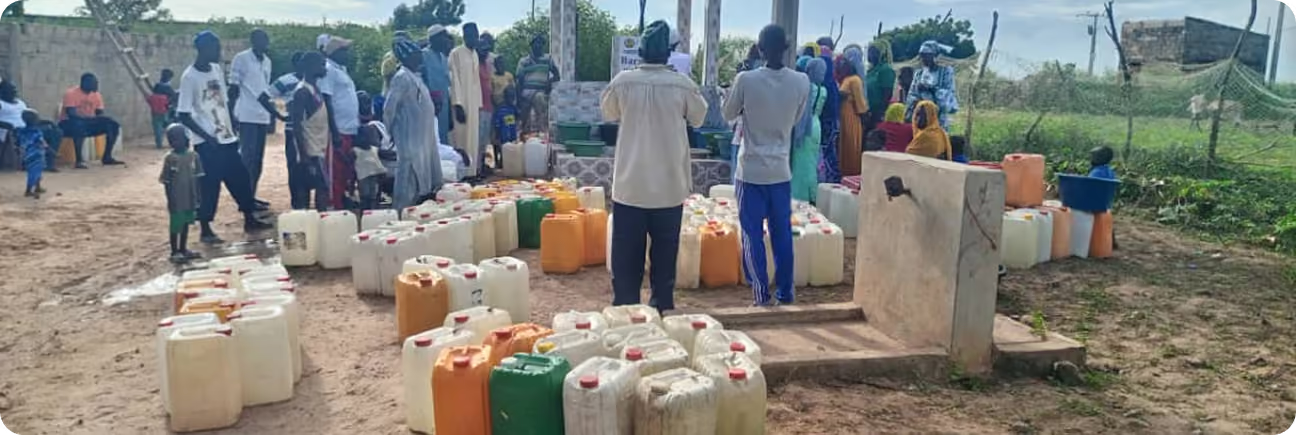
In rural Nigeria, collecting water is a daily ordeal that consumes several hours per round trip. Women and children, especially girls, carry the heaviest burden of this task every single morning. Every hour spent fetching water is an hour lost from school, work, or rest. A single Nigeria water well placed within walking distance eliminates this burden almost immediately. The time reclaimed translates into school attendance, income generation, and stronger family stability across entire communities.
Waterborne Disease and the Public Health Emergency
Unsafe water sources expose Nigerian families to cholera, typhoid, and dysentery on a daily basis. In 2024, Nigeria's Centre for Disease Control recorded a 220 percent increase in cholera cases, linked directly to contaminated water supplies. Communities without a protected water source struggle to maintain basic hygiene even when they understand its importance. Building water wells in Nigeria addresses this public health emergency at its root rather than managing symptoms after they appear. Clean water is not a luxury in these communities. It is the difference between life and death.
>> Related Post: Best Nigerian Charities to Donate to in 2026
What Does It Cost to Build a Water Well in Nigeria
The Nigeria water well cost varies based on several interconnected factors that must be assessed before any budget is finalised. Location, drilling depth, soil conditions, and the type of pump system all influence the final price of a project. According to Drop in the Bucket, a standard borehole in sub-Saharan Africa typically costs between $6,000 and $10,000. In Nigeria, community-scale projects with full infrastructure and training can run considerably higher depending on site complexity. Understanding what drives these costs helps communities and donors plan more effectively from the start.
Drilling costs in Nigeria are generally calculated on a per-meter basis. For a typical 100-meter borehole, drilling alone can cost between NGN 600,000 and NGN 1,500,000, based on data from Borehole Driller Nigeria. These figures do not include pump installation, casing, water testing, or community training. All of those components are essential for a well that remains safe and functional over the long term. Skipping any one of them is one of the most common reasons wells fail within their first few years of operation.
Key Factors That Determine the Cost to Build a Water Well in Nigeria
- Location: The single biggest cost driver. Urban areas like Lagos and Abuja carry higher costs for materials, permits, and skilled labor than rural states.
- Remoteness: Remote communities add transportation expenses for moving drilling rigs, crew, and heavy equipment to site, often making up a significant share of the budget in hard-to-reach areas.
- Geology: Sandy or loose soil requires different casing and gravel-packing methods than rocky terrain, directly affecting material costs and drilling time.
- Permits & Regulatory Approvals: A hydrogeological survey is legally required before drilling can begin in most states, adding both time and cost upfront.
- Pump Type: Solar-powered systems cost more initially but significantly reduce long-term fuel and maintenance expenses compared to diesel-powered alternatives.
- Community Training & Water Management Committees: Not optional extras; this is what determines whether a well is still delivering clean water ten or twenty years from now.
Types of Wells and Their Price Range in Nigeria
There are three main types of water wells commonly used in Nigerian communities. Shallow hand-dug wells are the least expensive option but carry the highest risk of contamination from surface runoff and animal waste. Drilled boreholes with hand pumps offer a more protected source and are well suited to smaller communities with moderate water needs. Deep boreholes equipped with solar-powered submersible pumps are the most reliable and high-capacity option for larger rural populations. The right choice depends entirely on site conditions, community size, funding availability, and long-term maintenance capacity.
>> Related Post: Building Water Wells in Africa: Costs, Benefits, and Impact
The Lasting Benefits of Nigeria Community Water Projects
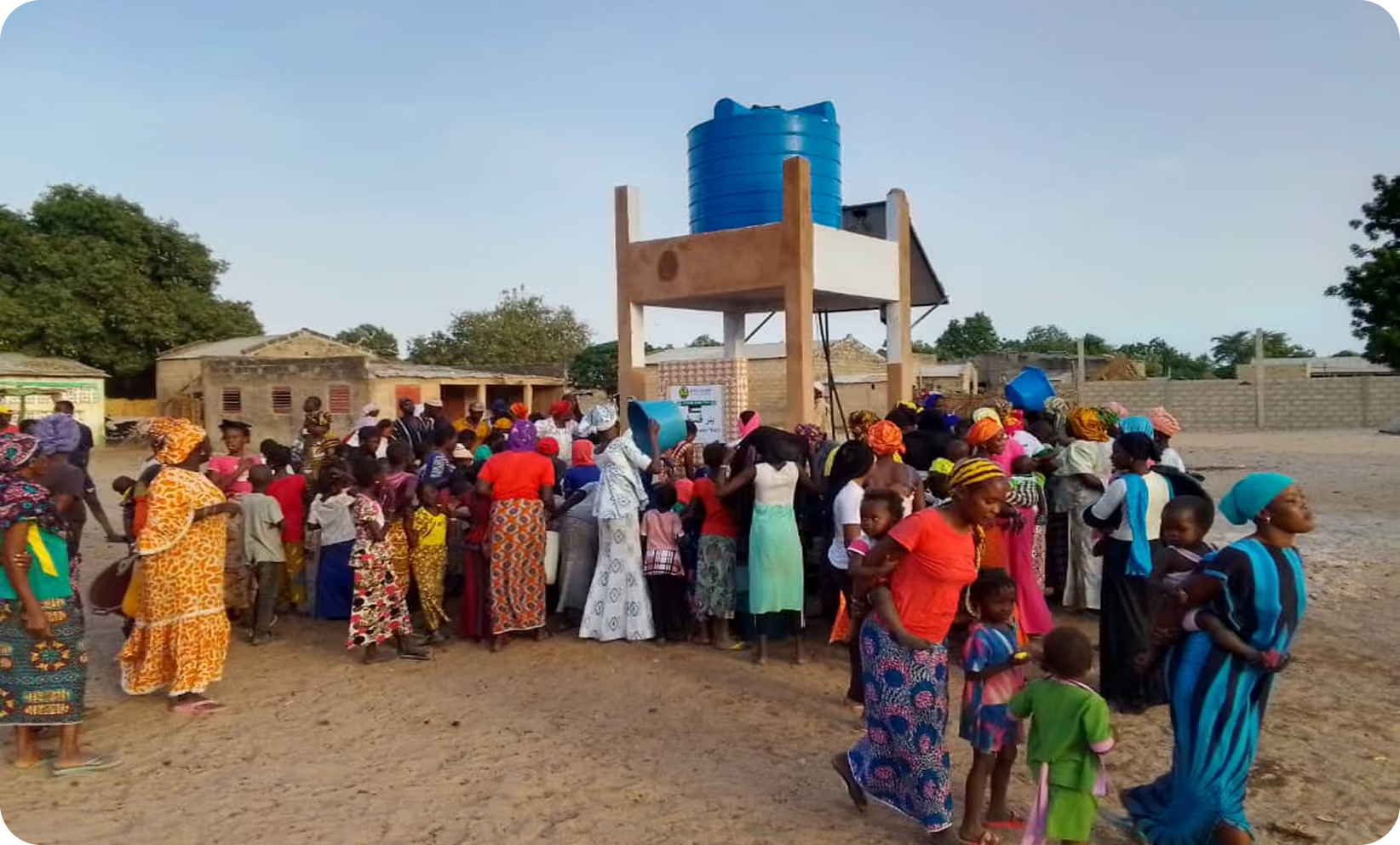
A single well, properly built and maintained, can serve a Nigerian community for two to three decades or more. This long-term impact is what makes Nigeria community water projects among the most powerful investments in international development. Families gain reliable access to clean water for drinking, cooking, farming, and sanitation in one single move. Children gain time. Women gain opportunity. Communities gain the resilience to grow without depending on external aid indefinitely.
The benefits of a Nigeria water well extend far beyond the well itself. When clean water is available locally, children are healthier, schools run more consistently, and households spend less on medical treatment. Local economies grow as farmers gain a stable irrigation source and women gain hours previously lost to water collection. Communities with access to clean water are also more capable of absorbing climate shocks like drought or flooding without falling into crisis. The returns on a single well investment continue compounding for a generation.
Education and Gender Equity Through Water Access
In Nigeria, girls are far more likely than boys to miss school because of daily water collection responsibilities. UNICEF reports that 7.6 million girls are currently out of school in Nigeria, with water and sanitation challenges among the key contributing factors to that figure. When a Nigeria water well is built within a community, girls attend class more consistently almost immediately. Over time this leads to higher literacy rates, stronger income potential, and more women in community leadership. That single change, a well close to home, reshapes the educational trajectory of an entire generation of girls.
Health Improvements and Lower Disease Rates
Access to clean water from a protected well drastically reduces the spread of waterborne diseases in Nigerian communities. Cholera, typhoid, and diarrheal illness become far less common when families shift from surface sources to a protected borehole. This directly eases the burden on local health facilities ARCD supports across Africa by reducing the volume of preventable disease cases they must treat. Children who are healthier miss fewer school days and develop more consistently over time. Families who spend less on medical treatment have more resources to invest in food, education, and long-term savings.
Economic Empowerment and Food Security
Reliable water access opens the door to small-scale agriculture and home-based food production for Nigerian families. A household with a well nearby can maintain a kitchen garden, keep livestock, and grow crops through the dry season. This supports the kind of food and nutrition security that breaks cycles of poverty at the household level over time. Women who are free from water collection can pursue training and economic opportunities through ARCD's community empowerment programs. Economic gains at the household level steadily accumulate into stronger, more self-reliant communities.
>> Related Post: Best Hunger Relief Charities to Donate to in 2026
How ARCD Delivers Clean Water to Communities Across Africa
Africa Relief and Community Development has built over 1,500 water wells across Africa, delivering clean water to millions of vulnerable families. ARCD's WASH program focuses on both new well construction and the rehabilitation of non-functional water points that communities have already lost access to. Both types of projects are designed with community involvement and long-term sustainability at their core from day one. ARCD installs both surface water wells and artesian wells, depending on the depth and needs of each specific community. Every project includes training so that local members can manage and maintain their water system independently for years to come.
For donors motivated by faith, contributing to a water well through ARCD carries deep and lasting spiritual significance. A well funded Sadaqah Jariyah continues to benefit the giver as long as the water flows and the community thrives. Every family that drinks from a well built with your contribution benefits directly from your generosity in both this life and the next. ARCD ensures that each donation is used with full accountability, community impact, and transparency as its guiding principles. This is development done with dignity, not just charity given and forgotten.
Water wells in Nigeria are not simply infrastructure projects. They are lifelines that transform communities from the ground up, one family at a time. ARCD remains committed to expanding its clean water work across Africa with solutions that are built to last. Every well comes with community ownership, local training, and a maintenance plan that protects the investment for decades. Your support today becomes clean water tomorrow and clean water for a generation to come.
>> Clean water is not a wish. It is a well away. Give now through ARCD and turn a community's thirst into a future.
FAQs
1. How serious is the water crisis in Nigeria?
Nigeria's water crisis is one of the most severe in Africa, despite the country's vast freshwater resources. According to UNICEF, more than 70,000 children under the age of five die from diarrheal diseases linked to unsafe water every single year in Nigeria. The average Nigerian has access to only nine litres of water per day, far below the fifty litres recommended for basic needs. One in three Nigerian children does not have access to basic water at home, and seventy-eight million children face overlapping water, sanitation, and hygiene threats simultaneously. The crisis is rooted in infrastructure failure and chronic underinvestment rather than a lack of available water in the ground.
2. What is the average Nigeria water well cost for a community project?
The cost of a community water well in Nigeria varies depending on depth, location, drilling method, and the type of pump installed. A standard drilled borehole in sub-Saharan Africa typically costs between $6,000 and $10,000 for a basic setup. In Nigeria, a 100-meter borehole can cost between NGN 600,000 and NGN 1,500,000 for drilling alone, before pump installation, casing, and community training are factored in. Projects in remote areas, cities like Lagos and Abuja, or regions with rocky terrain will tend to cost more due to logistics and specialized equipment. A complete, sustainable community well project with all necessary components often runs higher than initial drilling estimates suggest.
3. What factors affect the cost to build a water well in Nigeria?
Several variables determine the final price of any water well project in Nigeria. Drilling depth is the biggest single driver, as deeper aquifers require more materials and time. Location affects both logistics costs and the availability of skilled labor and equipment nearby. Soil and rock conditions determine which drilling method is needed and how quickly progress can be made. Additional costs include the hydrogeological survey, government permits, pump installation, casing materials, water quality testing, and the community training that ensures long-term functionality.
4. What types of water wells are built in Nigeria?
The three main types used in Nigerian communities are shallow hand-dug wells, drilled boreholes with hand pumps, and deep boreholes with solar-powered submersible pumps. Shallow wells are the least expensive but are most vulnerable to contamination from surface water and animal waste. Drilled boreholes provide a more protected and reliable source and are well suited to communities with moderate daily water needs. Solar-powered deep boreholes are the most dependable option for larger populations, offering high yield and reduced long-term operating costs. The appropriate type depends on groundwater depth, community size, and available budget.
5. How long does a water well in Nigeria typically last?
A well that is built with quality materials, equipped with a suitable pump, and maintained by a trained community committee can last twenty to thirty years or more. Longevity depends heavily on regular maintenance checks, prompt repair of faulty components, and the commitment of local water management committees to keep the system running. Wells that are handed over to communities without training or maintenance plans frequently fail within five years. This is why comprehensive project design, including community ownership structures, is as important as the drilling itself.
6. How many people can one Nigeria water well serve?
This depends on the type and yield of the well. A surface water well can typically serve between 200 and 400 people in a community. An artesian borehole with a higher yield can serve up to 800 or more people consistently over several years. Large-scale solar-powered borehole systems with storage and distribution infrastructure can serve even larger populations in schools, health facilities, and multi-household clusters. Proper planning before drilling ensures that the well is sized appropriately for the community it is meant to serve.
7. What are the main benefits of Nigeria community water projects?
Nigeria community water projects deliver benefits across health, education, and economic wellbeing simultaneously. Access to clean water reduces deaths from waterborne disease, cuts household medical expenses, and supports better hygiene in homes and schools. Girls are more likely to stay in school when they are no longer burdened with daily water collection duties. Farmers and small business owners gain a reliable input that supports food production, livestock, and income generation. Over time, communities with access to clean water become more resilient and less dependent on emergency aid.
8. Does ARCD work on water well projects in Nigeria?
ARCD's WASH program supports clean water access for vulnerable communities across Africa as part of its broader humanitarian mission. This includes drilling new wells, repairing existing non-functional water points, and training local water management committees to oversee ongoing maintenance. ARCD's approach links clean water access directly with its programs in health, education, food security, and community empowerment. Each project is designed to deliver lasting results by putting the community in ownership of its own water supply from day one.
9. How does a water well support education in Nigeria?
When a well is built close to a community, children, especially girls, no longer need to wake before dawn to collect water for their families. The hours they reclaim go directly into classroom attendance, homework, and academic progress. UNICEF has identified water and sanitation challenges as a contributing factor to the 7.6 million girls currently out of school in Nigeria. Access to clean water also means that school latrines can be properly maintained, creating a safer and more dignified environment that keeps adolescent girls enrolled. Better attendance leads to higher completion rates and greater long-term economic opportunity across the community.
10. How can I support water well projects in Nigeria through ARCD?
You can donate directly to ARCD to fund the surveys, permits, drilling, equipment, and community training needed to build a lasting water well. Contributions at any level help move projects forward, from covering the cost of a hydrogeological survey to funding a complete borehole installation. For those giving with faith in mind, a water well donation through ARCD also functions as Sadaqah Jariyah, a continuous charity whose rewards endure as long as the well provides clean water to those who depend on it. Visit ARCD's website to donate today and become part of a story that changes lives one well at a time.

© Africa Relief. All rights reserved.
Privacy Policy


