

Building Water Wells in Senegal: Costs, Benefits, and Impact
Published Date:
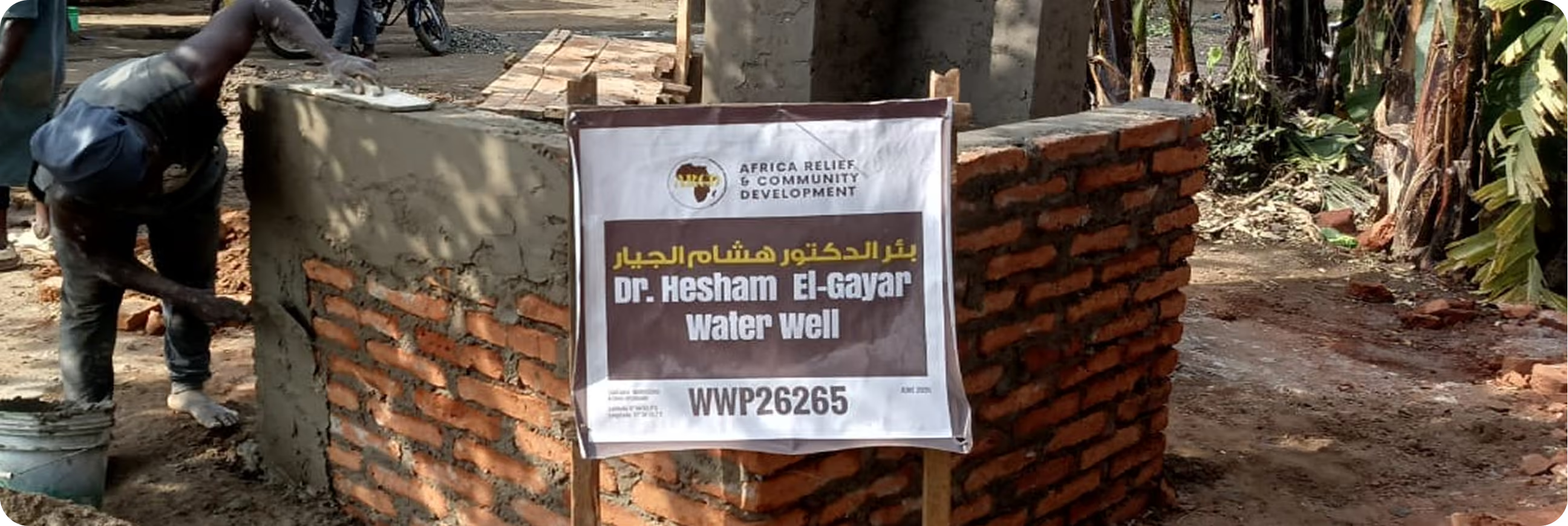
On paper, Senegal looks like one of the better water access stories in West Africa. In practice, that national picture flattens out a much rougher reality for families living in the country's southeastern regions. The gap between official numbers and lived experience is exactly why water wells in Senegal deserve closer scrutiny than a quick glance at country-level statistics allows. This piece breaks down what a Senegal water well actually costs, where the money goes, and why the impact runs deeper than clean drinking water alone.
Why Water Wells in Senegal Are a Regional Priority for Community Water Projects
Senegal's government reports that clean water now reaches close to 91 percent of the rural population, a figure the country has used to position itself as a regional leader. That number tells only part of the story. Data tracked under the UN's Joint Monitoring Programme puts the share of Senegalese actually using a safely managed drinking water service at closer to 27 percent nationwide, meaning water that is on premises, available when needed, and free of contamination.
That gap between broad access and safely managed access is where Senegal community water projects earn their value. A tap or standpipe counted as "improved" in national statistics can still mean a long walk, an unreliable schedule, or water that requires additional treatment before it is safe. The regions of Kolda, Kédougou, Sédhiou, Tambacounda, and Ziguinchor sit furthest from meeting the safely managed standard, according to Senegal's Ministry of Water and Sanitation, and are where new wells make the most measurable difference.
What a Missing Well Actually Costs a Household
A study of rural communes in the Kaffrine region found that households without a nearby standpipe were paying for water sold by the basin, often at rates equivalent to several hundred CFA francs per cubic meter once resale markups were factored in. Poorer households, the same research found, faced the greatest difficulty securing water at an affordable price, since they had the least ability to travel further for a better rate. A community well removes this pricing burden entirely by giving households a fixed, no-cost source close to home.
Beyond the financial cost, there's a time cost that rarely appears in national statistics. Women and girls in underserved communes are typically the ones who absorb it, walking to whichever source is available and returning with only enough water for the day's most urgent needs. That routine repeats daily, regardless of season, until a protected well changes the equation.
>> Related Post: Building Water Wells in Africa: Costs, Benefits, and Impact
Breaking Down the Cost to Build a Water Well in Senegal
Senegal's government has acknowledged the scale of investment still needed. In August 2024, officials announced reforms requiring more than CFA 1,627 billion, or roughly $2.74 billion, to reach fair and sustainable water access nationwide, a figure that reflects just how far infrastructure spending has to stretch across the country. On a smaller scale, the World Bank approved $200 million in 2024 for the first phase of Senegal's Integrated Water Security and Sanitation Program, aimed specifically at improving rural resilience to drought and flooding.
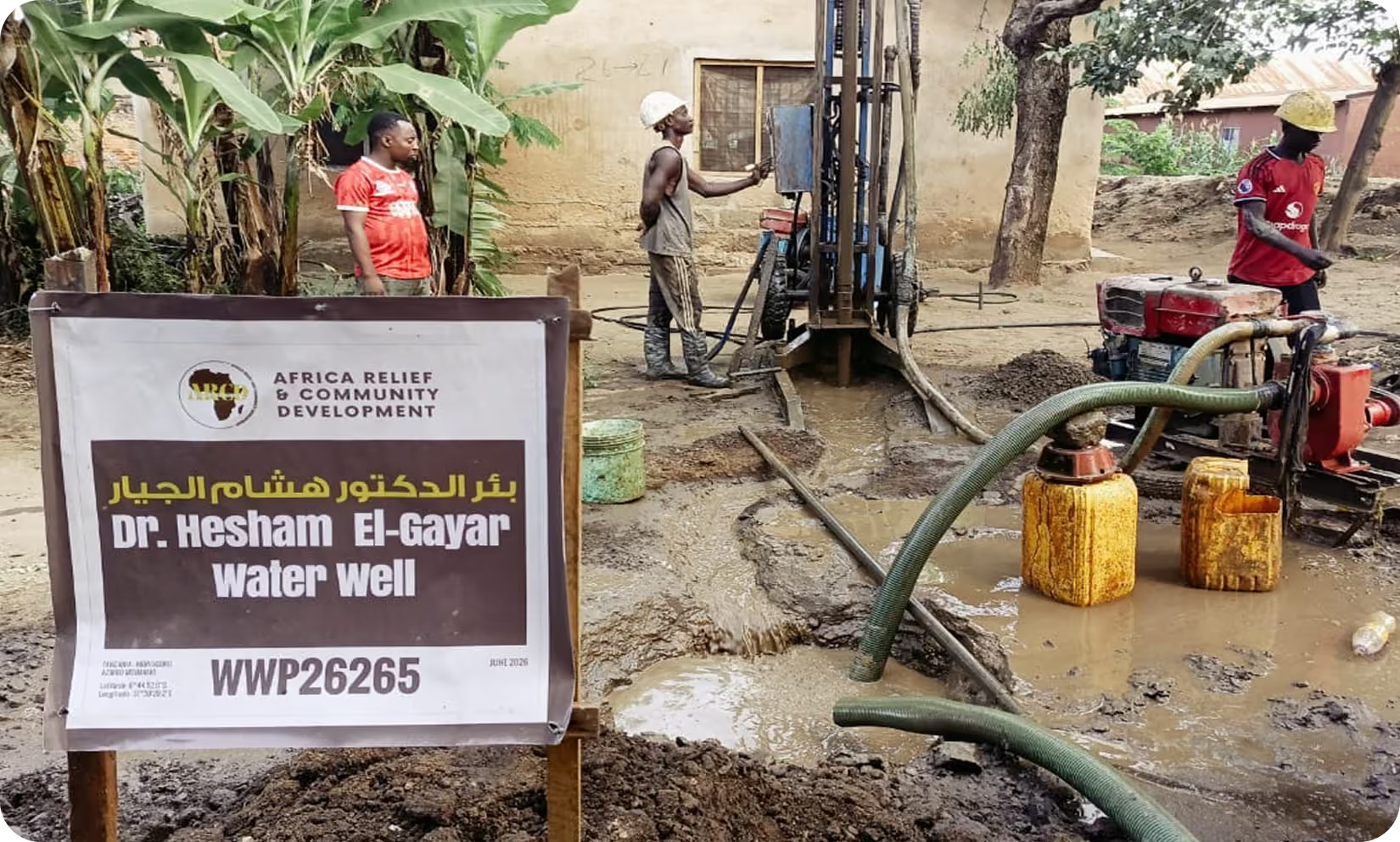
Individual community wells operate at a very different scale than these national programs, but they draw on the same underlying cost drivers. According to Drop in the Bucket, a standard borehole across the wider sub-Saharan region typically runs between five thousand and fifteen thousand dollars for a complete installation Senegal-specific projects can land toward the higher end of that range, partly because drilling timelines here run longer than in many neighboring countries. Research from ANTEA found that the average borehole in Senegal takes around forty five days to complete, compared to just two days in Burkina Faso, a gap driven by differences in geology, logistics, and site access.
Cost Drivers Worth Understanding Before Budgeting a Project
- Depth and rock type: Wells in the drier southeastern communes often require deeper drilling through harder ground than coastal areas with shallower water tables.
- Site access: Villages far from paved roads add real cost simply in getting a rig, crew, and materials to the drill site.
- Pump selection: Solar powered systems raise the upfront bill but cut down on the fuel and labor costs that hand pumps or diesel systems carry year after year.
- Survey and permitting: A hydrogeological assessment is required before drilling starts, adding both time and expense to the early stages of any project.
- Local training: Setting up a community water committee and training members in basic repair work is what keeps a well functioning past its first few years.
>> Related Post: ARCD Impact in Figures: Changing Lives Across Africa
The Long-Term Impact of Water Wells in Senegal on Community Water Projects
A single well, properly sited and maintained, tends to outlast the initial funding cycle by decades. That durability is what separates Senegal community water projects from short-term aid, and it's also what makes the upfront cost easier to justify against the alternative of repeated, ongoing relief spending. Once a well is in place, the benefits compound in ways that are easy to underestimate from the outside.
Households no longer budgeting time or money around water collection start redirecting both toward other priorities. Farmers with a nearby source can plant through months that would otherwise sit fallow. Children, especially girls in the communes where school dropout is already a known issue tied to water burden, gain a more consistent path to attending class. None of these outcomes require a separate program. They follow naturally once the water problem itself is solved.
Health Gains That Extend Past the Household
Diarrheal illness remains a leading cause of preventable death among children under five across Senegal, and researchers studying WASH access nationally found that prevalence stayed relatively high even as broader water infrastructure improved. That mismatch is a reminder that infrastructure numbers and health outcomes don't always move together automatically. A protected well paired with hygiene education closes that gap directly, and it eases pressure on stretched local clinics that would otherwise be treating preventable cases tied to unsafe health outcomes ARCD works to improve.
Where Water Meets Food Security
A reliable source also changes what a household can grow. Kitchen gardens and small livestock, both difficult to sustain without consistent water, become realistic options once a well is nearby, supporting the same goals behind ARCD's food and nutrition work. Programs like ARCD's broader community empowerment efforts tend to gain the most traction in villages where water is no longer the limiting factor on a family's time.
>> Related Post: 7 Surprising Benefits of Donating to Charity You Didn't Know
ARCD's Role in Advancing Senegal Water Well Projects
ARCD's WASH work in Senegal follows the same principle it applies across the continent, that a well is only as good as the system built around it. This means drilling new sources in underserved communes, but it also means repairing wells that already exist and have simply fallen out of use due to broken pumps or neglected maintenance. Every project ARCD supports includes training for a local committee, since a well without local ownership tends to fail long before its equipment actually wears out.
This approach ties directly into ARCD's broader philosophy that isolated fixes rarely hold. A family gaining water access in Kolda or Tambacounda is also more likely to benefit from the full range of ARCD programs working alongside it, from nutrition support to education access. That connected model is also why donations to ARCD tend to produce compounding impact rather than a single, one-time result. The wider work ARCD has completed across Africa gives a sense of scale for what consistent, well-funded WASH programming can accomplish over time.
>> Every well has a story before the water even starts flowing. Help ARCD write the next one in Senegal with your support today.
FAQs
1. Is Senegal's water access really as strong as national statistics suggest?
Not entirely. The government reports around 91 percent rural access to an improved water source, but that figure counts any protected point regardless of distance, reliability, or water quality. UN Joint Monitoring Programme data puts the share meeting the stricter safely managed standard at closer to 27 percent nationally, which is a meaningfully different picture, especially in underserved regions.
2. Which parts of Senegal face the biggest water access gaps?
Kolda, Kédougou, Sédhiou, Tambacounda, and Ziguinchor consistently rank as the regions furthest from meeting safely managed water standards, according to Senegal's Ministry of Water and Sanitation. These same regions tend to have the least infrastructure investment relative to population size, which is part of why new well projects concentrate here.
3. What does a Senegal water well cost to build?
Costs typically fall in line with the wider sub-Saharan range of five thousand to fifteen thousand dollars for a complete installation, though Senegal projects often land toward the higher end. This is partly due to longer average drilling timelines, with research putting the typical borehole completion time in Senegal at around forty five days, well above the two-day average seen in some neighboring countries.
4. Why do Senegal water well projects take longer to complete than in other countries?
Drilling duration depends heavily on geology, equipment availability, and site access, all of which vary significantly by region. Research from ANTEA found Senegal's average borehole completion time considerably longer than in countries like Burkina Faso, a gap tied to harder ground conditions in parts of the country and the added logistics of reaching more remote communes.
5. What is Senegal's government doing to address the national water gap?
In 2024, Senegalese officials announced reforms requiring an estimated $2.74 billion in funding to reach fair, sustainable water access countrywide. Separately, the World Bank approved $200 million that same year for the first phase of a program specifically targeting rural water security and resilience to drought and flooding. These national efforts run alongside, rather than replace, the community-level well projects that nonprofits like ARCD support directly.
6. How does a lack of water access affect household spending in rural Senegal?
Research from the Kaffrine region found that households without a nearby standpipe often pay resale prices for water sold by the basin, with poorer households facing the greatest difficulty affording consistent access. A community well removes this recurring cost by giving households a fixed, no-cost source instead of one priced per unit collected.
7. Does a Senegal water well actually reduce disease?
Yes, though the relationship isn't always immediate. Studies tracking WASH access in Senegal found that diarrheal illness in children under five remained relatively high even as broader water infrastructure metrics improved nationally. Combining a protected well with hygiene education closes that gap more directly than infrastructure investment alone.
8. How does water access connect to school attendance in Senegal?
In regions where water collection falls to children, particularly girls, a nearby well tends to reduce the time lost to that task and supports more consistent school attendance. This effect is strongest in the same underserved communes, like Kolda and Tambacounda, that already face the widest water access gaps.
9. Does ARCD repair existing wells or only build new ones in Senegal?
Both. ARCD's WASH program addresses new well construction in underserved communes as well as the rehabilitation of existing wells that have fallen out of use due to mechanical failure or lack of local maintenance capacity. Every project includes training for a community water committee to prevent the same failure from recurring.
10. How can I support ARCD's water well work in Senegal?
Donations to ARCD go toward the site survey, drilling, pump installation, and training needed to complete a well and keep it functioning long term. You can give any amount directly through ARCD's website, and your contribution supports the same connected model of health, nutrition, and education programming that follows once clean water reaches a community.

© Africa Relief. All rights reserved.
Privacy Policy


