

World Humanitarian Day 2026: Changing Lives Across Africa
Published Date:
Every August 19, the world pauses to recognize the men and women who risk everything to bring relief to people in crisis. World Humanitarian Day 2026 arrives at a moment when the need across Africa has never been more urgent, with conflict, drought, and displacement pushing tens of millions of families toward the edge. This day is not only a tribute to humanitarian workers but also a call to action for donors, communities, and organizations to keep showing up. Understanding what World Humanitarian Day 2026 represents and how it connects to real work happening across Africa helps donors see exactly where their support makes a difference.
Why World Humanitarian Day 2026 Matters for Communities Across Africa
World Humanitarian Day is not a symbolic date invented for a calendar. It was born out of tragedy and has grown into one of the most important reminders of what humanitarian work actually costs, both in resources and in human lives. For Africa specifically, where several of the world's largest and most protracted crises are unfolding at once, the day carries added weight every single year.
The Origins of World Humanitarian Day 2026
World Humanitarian Day traces back to August 19, 2003, when a bombing at the United Nations headquarters in Baghdad killed the UN's top envoy to Iraq. According to National Today, twenty two humanitarian workers died in that attack, which the United Nations General Assembly later cited when designating the date to honor humanitarian personnel who have lost their lives in service. World Humanitarian Day 2026 marks the eighteenth year the observance has been formally recognized worldwide. The day continues to draw attention to a simple but often overlooked fact: that aid workers frequently operate in the same conflict zones and disaster areas as the people they are trying to help.
The Scale of Humanitarian Need Across Africa Today
The urgency behind World Humanitarian Day 2026 is easiest to understand through the numbers. According to OCHA, the international community aims to save 87 million lives in 2026 through a costed and reform-focused response plan. In Eastern Africa alone, OCHA reports that an estimated 53.2 million people currently need humanitarian assistance, driven by conflict, drought, floods, and disease outbreaks across the region. West and Central Africa faces a similarly severe outlook, and according to OCHA, more than 42 million people across the region will need help to survive and stay safe in 2026, with agencies appealing for 5.1 billion dollars to reach the 24 million most vulnerable people in that region alone.
These figures are not abstract. They represent families who have been displaced multiple times, children who have missed years of school, and communities where a single well, clinic, or feeding program can be the difference between survival and disaster. This is precisely the gap that organizations like ARCD work to close every day, not only on August 19 but throughout the year.
>> Related Post: Best African Charities to Donate to in 2026
How World Humanitarian Day 2026 Highlights Humanitarian Aid in Africa
World Humanitarian Day 2026 shines a spotlight on the people delivering aid under extremely difficult circumstances. Humanitarian aid in Africa is rarely a straightforward operation, since teams often work across active conflict zones, flooded regions, and communities cut off by poor infrastructure. Recognizing this work is part of what the day is meant to do, but the deeper purpose is mobilizing continued support so that aid keeps reaching people long after the observance ends.
Humanitarian Workers on the Frontlines of Africa's Crises
Humanitarian workers in Africa include local staff, international aid personnel, healthcare workers, logisticians, and community volunteers who often live in the same communities they serve. Many of these workers face security risks directly tied to the conflicts and instability affecting the populations they support.
From Emergency Relief to Long-Term Recovery
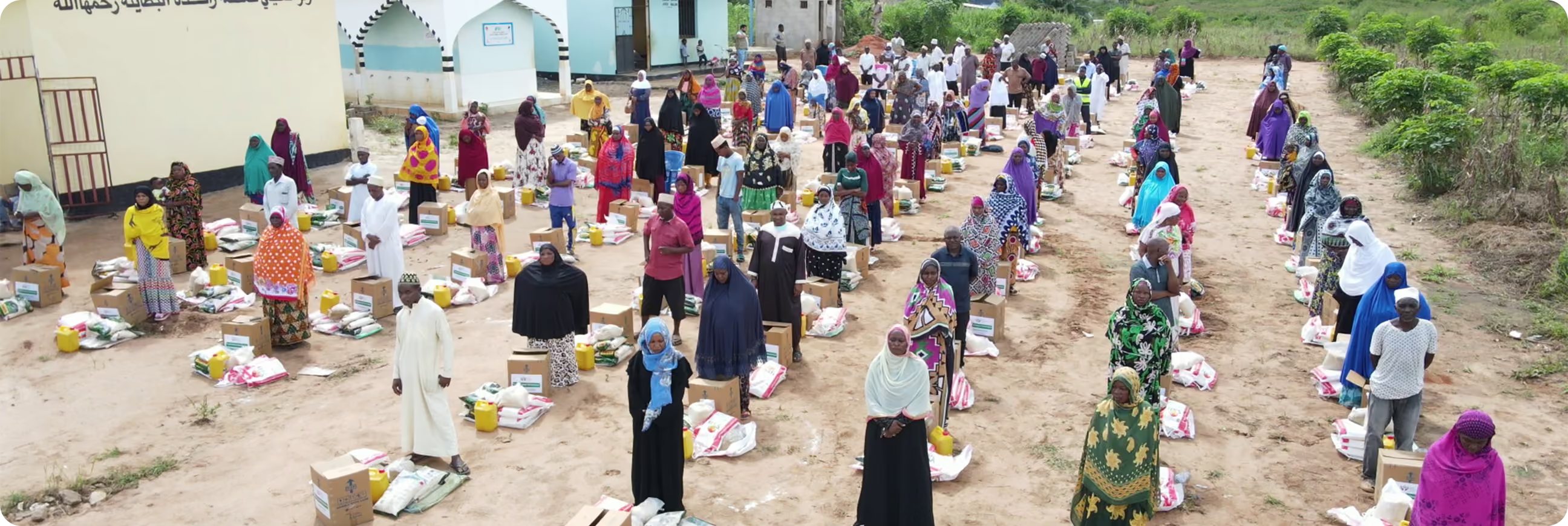
Humanitarian aid in Africa spans a wide spectrum, from emergency food distributions during a famine to long term infrastructure projects like clean water access programs that reduce a community's dependence on repeated crisis response. Emergency relief saves lives in the short term, but it is the long term recovery work, rebuilding schools, restoring clean water systems, and supporting local healthcare services, that allows a community to eventually stand on its own. World Humanitarian Day 2026 is a moment to recognize both sides of this work equally, since one without the other rarely leads to lasting change. ARCD structures its programs around exactly this balance, pairing emergency response with sustainable development so communities are not left rebuilding from zero after every disaster.
>> Related Post: ARCD Impact in Figures: Changing Lives Across Africa
How ARCD Honors World Humanitarian Day 2026 by Changing Lives Across Africa
Africa Relief and Community Development approaches World Humanitarian Day 2026 as more than a single day of recognition. It is a checkpoint for the organization's ongoing commitment to communities across Africa facing hunger, disease, displacement, and limited access to basic services. ARCD's work is built around the belief that humanitarian aid should not just respond to a crisis, it should help a community outgrow its need for emergency support altogether.
ARCD's Programs Bringing Lasting Change
ARCD runs a connected set of programs that mirror the priorities highlighted on World Humanitarian Day every year. Support for education initiatives keeps children in school even in communities recovering from crises, while food and nutrition programs address the hunger that so often follows displacement and drought. These efforts are designed to work together rather than in isolation, since a family facing hunger is frequently also facing gaps in healthcare, education, and clean water at the very same time.
Standing With Humanitarian Workers and Communities Together
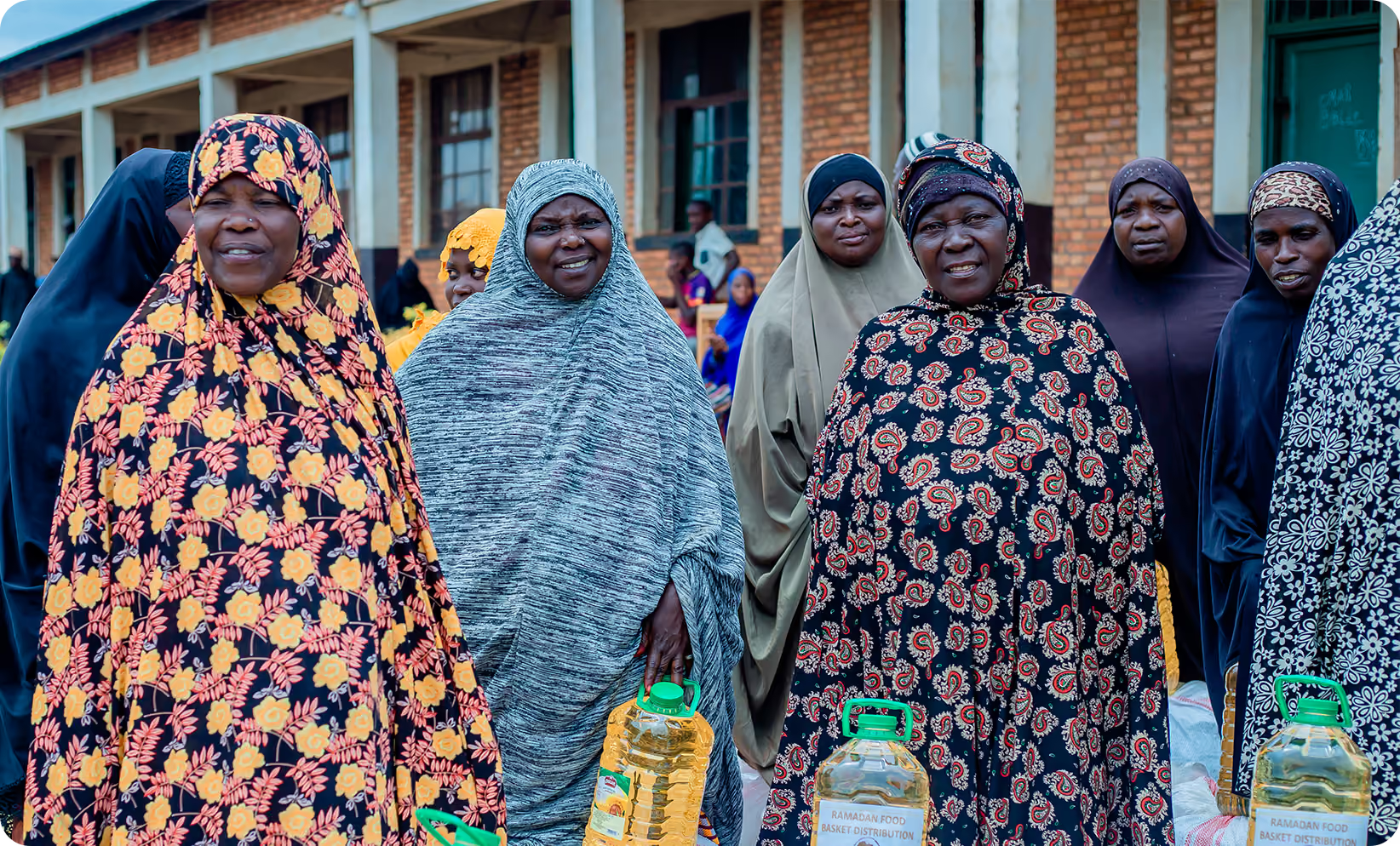
World Humanitarian Day 2026 is also a chance to recognize the local staff and volunteers who make ARCD's work possible on the ground. These are often community members who understand local needs, languages, and challenges better than any outside organization ever could. Their presence is what allows ARCD to reach families in remote or unstable regions where larger agencies sometimes cannot operate safely or consistently. Supporting ARCD means supporting both the humanitarian workers doing this work and the communities depending on it for survival and stability.
World Humanitarian Day 2026 will come and go on August 19, but the crises it highlights will not disappear the following morning. Tens of millions of people across Africa will still need food, clean water, healthcare, and safety long after the observance ends. ARCD remains committed to the kind of humanitarian work that outlasts a single day on the calendar, building programs that continue changing lives across Africa throughout the year.
>> Support ARCD's mission and help carry the spirit of World Humanitarian Day 2026 forward, one family at a time.
FAQs
1. What is World Humanitarian Day 2026 and when is it observed?
World Humanitarian Day 2026 is observed on August 19, as it is every year, and is dedicated to honoring humanitarian workers who provide life saving assistance in crisis situations around the world. The date commemorates the 2003 bombing of the United Nations headquarters in Baghdad, which killed the UN's top envoy to Iraq and twenty one of his colleagues. Since being formally designated by the UN General Assembly, the day has grown into a global moment of recognition for aid workers and a call for continued support of humanitarian causes. In 2026, the observance marks its eighteenth year since being first held in 2009.
2. Why was World Humanitarian Day created?
World Humanitarian Day was created to honor humanitarian personnel who have died in the course of their work and to recognize those who continue serving in dangerous conditions. The date was chosen specifically because it marks the anniversary of the Baghdad bombing that claimed the lives of twenty two aid workers in 2003. The United Nations General Assembly formally established the observance in 2008 as part of a broader effort to strengthen coordination of emergency assistance worldwide. Since then, it has become one of the most recognized international days dedicated to humanitarian work.
3. How many people in Africa currently need humanitarian assistance?
The scale of need across Africa is significant heading into 2026, with Eastern Africa alone facing an estimated 53.2 million people in need due to conflict, drought, flooding, and disease outbreaks. West and Central Africa is expected to see more than 42 million people requiring help to survive and stay safe during the same year. These figures reflect overlapping crises including displacement, food insecurity, and weakened health systems across multiple countries. The scale of need has made 2026 one of the most challenging years for humanitarian response on the continent in recent memory.
4. What does humanitarian aid in Africa typically include?
Humanitarian aid in Africa spans emergency food distribution, clean water access, medical care, shelter support, and protection services for displaced populations. It also includes longer term development work such as building water infrastructure, supporting local healthcare facilities, and keeping children enrolled in school despite disruption. Organizations increasingly aim to pair immediate relief with sustainable programs so that communities are not left rebuilding from nothing after every new crisis. This dual approach is central to how organizations like ARCD design their humanitarian response across the continent.
5. Are humanitarian workers in Africa at risk while doing their jobs?
Yes, humanitarian workers frequently operate in active conflict zones, unstable regions, and areas affected by natural disasters, which puts them at real risk. Reports have documented well over 150 attacks on relief workers in a single year, underscoring that the dangers recognized on World Humanitarian Day are ongoing rather than historical. Many of these workers are local staff and volunteers who remain in their communities even as conditions deteriorate around them. Their continued presence is often what allows aid to reach families in the hardest to access parts of Africa.
6. How does ARCD support humanitarian efforts across Africa?
ARCD supports humanitarian efforts across Africa through a connected set of programs covering clean water, healthcare, education, food and nutrition, and community empowerment. Rather than treating these as separate issues, ARCD designs its response around how closely they are linked in a family's daily life during and after a crisis. This includes both emergency style relief and longer term infrastructure and training that helps communities become more self reliant over time. ARCD's approach reflects the same balance between immediate response and lasting recovery that World Humanitarian Day itself is meant to highlight.
7. Why is World Humanitarian Day 2026 especially significant this year?
World Humanitarian Day 2026 comes at a time when humanitarian funding is falling well short of what is needed across multiple regions, including Africa. In West and Central Africa alone, only a fraction of the funding required in 2025 was actually received, leading to worsening hunger and strained health systems. Against that backdrop, the 2026 observance carries added urgency as a call for renewed donor support rather than simply a moment of recognition. It serves as a reminder that humanitarian gaps left unfunded translate directly into preventable suffering for millions of people.
8. How can individuals get involved with World Humanitarian Day 2026?
Individuals can get involved with World Humanitarian Day 2026 by donating to trusted humanitarian organizations, raising awareness through social media or community events, and learning more about the crises currently affecting vulnerable populations. Supporting an organization's ongoing programs, rather than a single day of giving, tends to have a more lasting impact on the communities being served. Sharing accurate information about humanitarian needs also helps counter misinformation and keeps public attention on crises that might otherwise be overlooked. Even modest, consistent support can make a meaningful difference when it is sustained over time.
9. Does supporting ARCD on World Humanitarian Day make a lasting difference?
Supporting ARCD on World Humanitarian Day contributes to programs that extend well beyond a single day of giving, since the organization's work in water access, healthcare, education, and food security continues year round. A donation made in connection with the observance helps fund the same ongoing projects that support families long after August 19 has passed. This continuity is what allows ARCD to build toward long term stability rather than repeatedly responding to the same emergencies. Donors motivated by the spirit of World Humanitarian Day often find that consistent giving creates the deepest impact.
10. How can I support ARCD's humanitarian work in Africa?
You can support ARCD's humanitarian work in Africa by donating directly through the organization's website to fund programs in clean water, healthcare, education, food security, and community empowerment. Contributions of any size help sustain both emergency response efforts and the longer term development work that reduces a community's need for future aid. ARCD also welcomes support in the form of awareness raising, since accurate information about humanitarian needs helps mobilize broader public backing. Visiting ARCD's donation page is the most direct way to become part of the work being honored on World Humanitarian Day 2026.


