

How Holiday and Year-End Food Donations Put Meals on the Table for Families
Published Date:
A holiday food donation can become a ration parcel, a hot meal or, where markets and programs allow, a cash or voucher transfer that lets a family shop for itself. Which one it becomes depends on local need, what is available to buy and how the appeal is designed. Between the gift and the table sits a chain of decisions about who eats first, what to buy and how to hand it over.
Costs along that chain are moving. The World Bank's September 2026 Food Security Update found that global maize prices rose 26 percent between June and mid-September, though the effect varies from one local market to the next. Following holiday food donations from start to finish shows how food assistance is assessed, sourced and delivered.
The Reality Behind a Holiday Food Donation
Who Gets Fed First
Before any food is bought, someone has to decide where it goes. Aid groups and local partners map needs through household surveys, nutrition screenings and conversations with community leaders. Across food-crisis countries worldwide, the Global Report on Food Crises 2026, produced by the Global Network Against Food Crises, found that 35.5 million children were acutely malnourished in 2025, nearly 10 million of them severely, and that more than 85 million people were forcibly displaced in those same contexts. Displacement can separate families from land, livestock and the means to prepare food, which is one reason many food appeals prioritize displaced households, young children and older people, though targeting rules differ from program to program. A missed meal can have serious consequences, especially for young children and people already facing health risks.
What a Dollar Buys This Season
Then the money meets the market. In the World Bank's latest quarterly data, real food prices outpaced overall inflation in about 22 percent of the 150 countries it analyzed, up from 14 percent in the previous period. At a market stall, that can look like the same coins buying a smaller bag of flour than they did in the summer. In a charity's budget, it can mean fewer kilos per dollar, which is why the timing and scale of purchases matter.
>> Related Post: Planning a Year-End Donation? Tips & Key Benefits for Donors
How a Holiday Food Donation Becomes a Meal
A Sack of Flour or a Hot Meal
What a household receives depends on its situation and on what the program offers. Food assistance usually takes one of three forms:
- Dry rations of grain, pulses and cooking oil, for households that still have a kitchen and fuel. Depending on household size and what goes into the basket, a ration may last for different lengths of time.
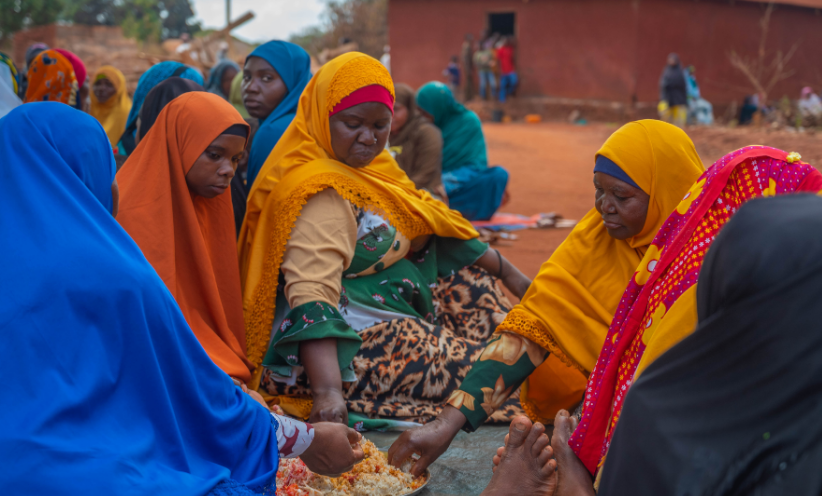
- Hot meals from a community kitchen, for people who have fled their homes or have nothing to cook on. Nothing needs to be carried home or prepared.
- Cash or vouchers, where local markets are stocked and working. A family buys what it needs, from fresh vegetables to cooking fuel, and the money is spent with nearby sellers.
When Food Is Bought Nearby
Where markets are functioning and programs source food locally, procurement can also support nearby farmers and traders who are under pressure themselves. Presenting the 2026 report, FAO Director-General QU Dongyu called for a shift "from relying solely on food assistance to protecting local food production," a reminder that food aid and local farming are closely linked. Whether a particular appeal buys locally depends on the program, which makes it a fair question to ask before giving.
The Day the Food Arrives
Distribution day is the part donors rarely see, and much of it is logistics. A distribution may include advance registration, collection points that people can reach easily, staggered collection times and a record of each handover. Where handovers are recorded, those records can help a charity report how many households a distribution reached. When an update mentions that a food basket reached a family, this is usually the moment it describes.
>> Related Post: Employer Matching Gifts: How to Double Your Year-End Donation
Where ARCD's Holiday Food Donations Go
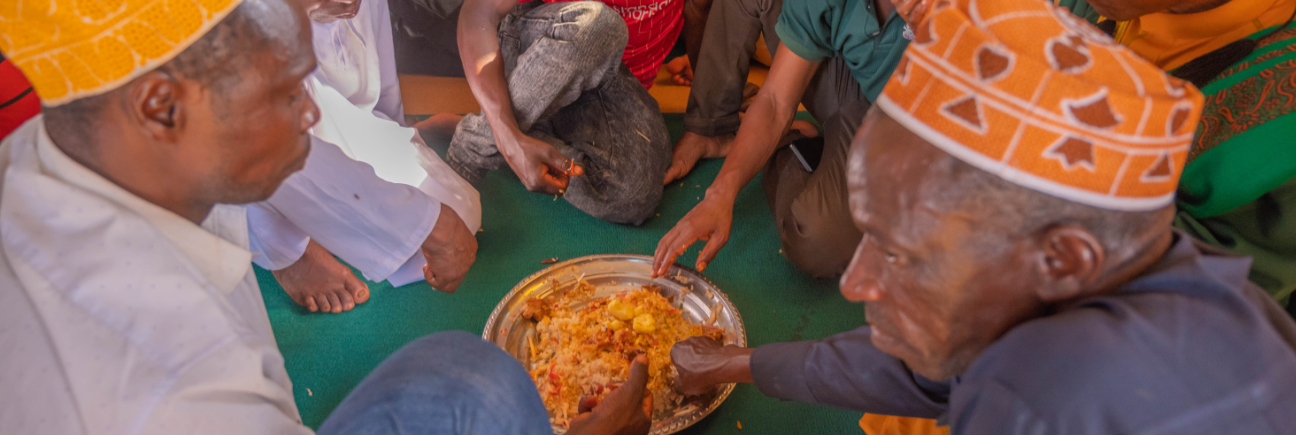
Africa Relief and Community Development (ARCD) is a U.S. nonprofit whose programs run entirely on the African continent, with food and nutrition support among its core areas of work. At Masjid Bent Alomary in Tanzania, ARCD has provided 500+ warm meals served to the community.
ARCD's current year-end appeal, offers several food-related gifts alongside its support for orphan care. Families affected by Sudan's war are supported through a separate emergency food appeal.
>> Donate this Holiday Season. Help ARCD provide food, education, and family-based care to communities across Africa.
FAQs
1. Will a gift made in late December still help families over the holidays?
Yes, though not always within the same week. Food often has to be bought, packed and transported before it is handed out, so a gift made near the end of December may fund deliveries in the weeks that follow. Hunger does not end with the holidays, and food that arrives in January is just as welcome.
2. Why are staple foods so common in ration baskets?
Staple foods are common in ration baskets because they give households essential ingredients for everyday meals and are often easier to store. Contents vary by local needs, prices and availability, so a basket in one country may look quite different from a basket in another.
3. Can I choose whether my gift goes to food specifically?
Yes. Donors can select a specific program or campaign on ARCD's donation form, or choose the general fund, which goes to ARCD's most urgent priorities. ARCD's donor team can confirm how a gift will be allocated before you give.
4. Will I get a receipt for a holiday food gift?
Yes. A confirmation and tax receipt is sent by email after the donation, which helps with year-end records. If a receipt doesn't arrive, or you need an annual giving summary, ARCD's communications team can help.
5. Is it safe to donate online?
Yes. Donations to ARCD are processed through a secure, encrypted payment platform, and ARCD never stores full card details.


