

What Can a $100 Donation Do to Help Someone in Need?
Published Date:
What can $100 really do for someone facing hardship? Depending on the charity and the program, it might pay for a family's food package, contribute toward clean-water access or help fund medical treatment. The key is understanding what the donation amount actually covers.
At Africa Relief & Community Development (ARCD), donors can choose from programs addressing hunger, clean water, healthcare and other essential needs. The organization's published donation options show how a $100 gift can support practical assistance for people facing hardship across Africa.
Why Your $100 Donation Matters in 2026
Humanitarian needs remain substantial, while charities also need reliable support to keep essential programs running. Food assistance, access to clean water and healthcare all require resources that can be deployed where they are needed most.
The Global Report on Food Crises documents the continuing scale of acute food insecurity and malnutrition. These challenges are not solved by one donation, but individual gifts can contribute to coordinated responses that help households meet urgent needs.
A $100 donation also gives donors a practical starting point. Rather than waiting until they can afford a much larger contribution, they can choose a specific campaign and support an identifiable area of need.
The important distinction is between what a single gift can fund directly and what it can help achieve when combined with contributions from other donors. Both can be valuable, provided the charity communicates the distinction clearly.
>> Related Post: Questions to Ask Before Donating to a Charity Working in Africa
What Can a $100 Donation Do in Africa?
A $100 donation can support different forms of humanitarian assistance, depending on the campaign you choose. Here are ways your gift can help through ARCD's programs.
1. Help Feed a Family Facing Hunger
In 2025, 35.5 million children experienced acute malnutrition, according to the 2026 Global Report on Food Crises. Behind these figures are families struggling to afford their next meal, children missing essential nutrients and communities facing food shortages caused by conflict, displacement and economic hardship.
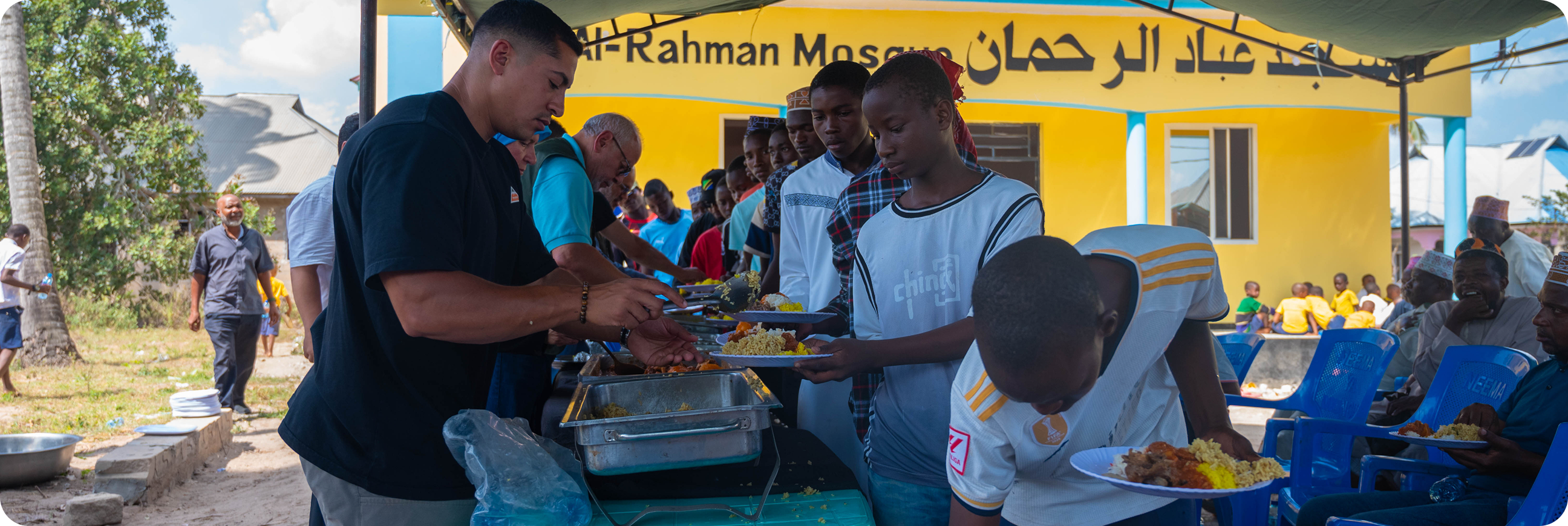
A $100 donation through ARCD's Africa Food Crisis Appeal can provide a food package for one family. This practical support helps households access essential supplies when their own resources are stretched thin.
Rather than addressing hunger only after a crisis becomes severe, food assistance can help families meet immediate nutritional needs while longer-term solutions are developed.
What your $100 can support: A food package for one family through ARCD's Africa Food Crisis Appeal.
Donate to the Africa Food Crisis Appeal →
2. Support Clean Water Access for Families
Clean water is essential for drinking, preparing meals, maintaining hygiene and preventing waterborne illnesses. Yet when communities lack reliable water sources, families may have to travel long distances to collect water, often at the expense of school, work and other daily responsibilities.
Building a reliable community water source involves more than drilling. Equipment, installation, maintenance and local management all contribute to keeping water accessible over time.
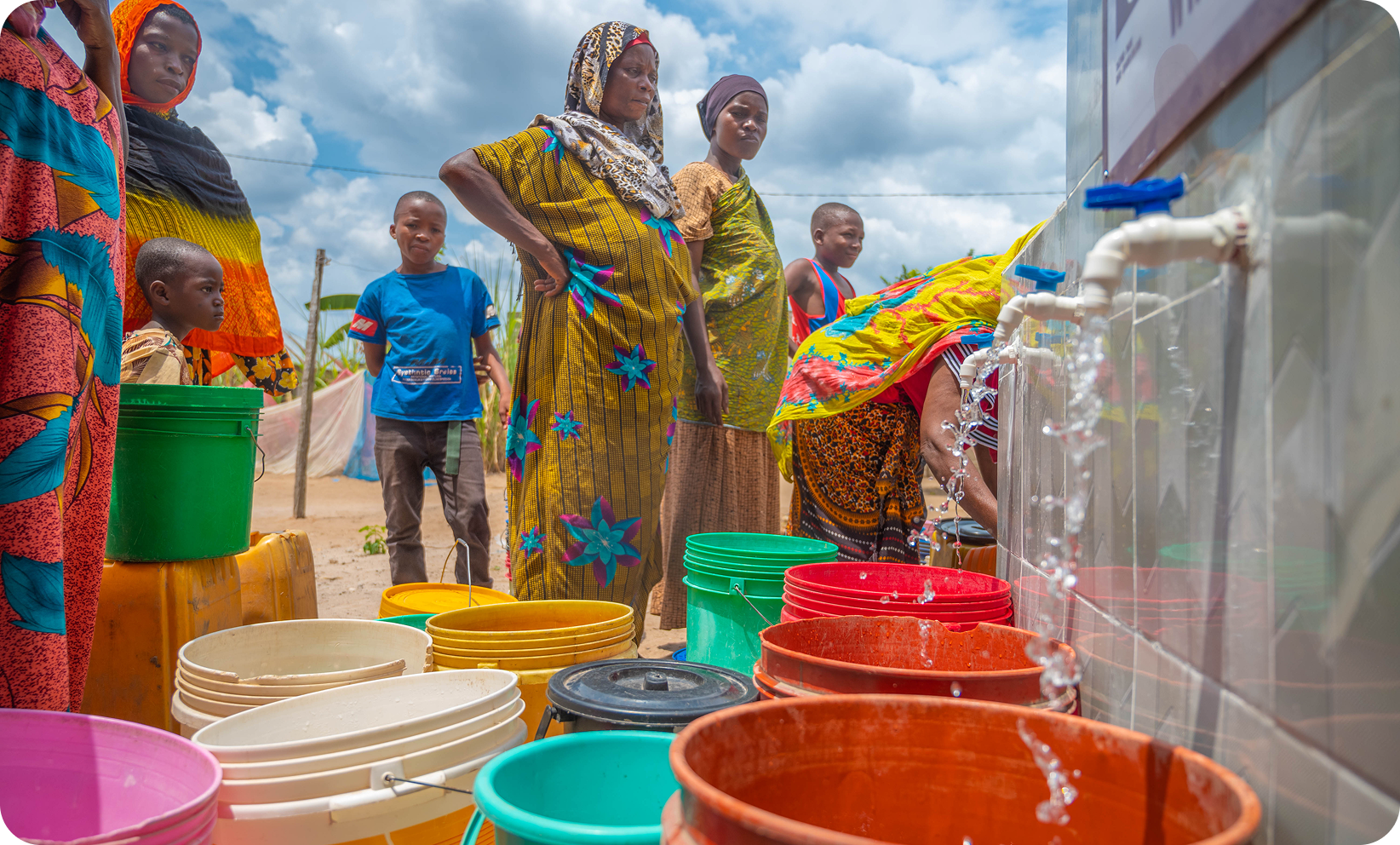
ARCD's Water Well in Africa program offers a way to contribute toward this essential work. A $100 donation supports community water access as part of a wider effort to improve the availability of clean water.
A single $100 gift does not build an entire well. Instead, it can contribute toward a larger project that serves multiple households once completed.
What your $100 can support: A contribution toward community water access through ARCD's water-well program.
3. Contribute Toward Cataract Surgery and Restored Sight
Cataracts gradually cloud the eye's lens, making everyday activities such as reading, recognizing faces and moving around safely more difficult. When left untreated, they can cause severe vision impairment. Cataract surgery can restore sight for many patients.
However, access to treatment depends on more than the procedure itself. Patients need qualified medical professionals, appropriate equipment and follow-up care. In communities with limited healthcare access, reaching a surgical team can be a significant barrier.
ARCD supports healthcare initiatives that include cataract surgery camps. Its health program explains that some cataract procedures can cost as little as $100.
This makes cataract care a useful example of the potential impact of a gift at this level. However, the stated procedure cost should not automatically be treated as a dedicated $100 donation package; confirm the current campaign's allocation options before giving.
What your $100 can support: Cataract care where local procedure costs and the relevant campaign's donation arrangements allow.
Explore ARCD's healthcare programs →
4. Help Communities Maintain Places of Worship and Learning
Communities need spaces where people can gather, learn, worship and support one another. These facilities can serve as important local gathering points, particularly where access to community infrastructure is limited.
ARCD's Mosque & Community Centre program provides another way to contribute to community development. A $100 gift can go toward a place of worship and learning rather than funding the construction of an entire mosque.
By contributing to a larger community project, donors can help support infrastructure intended to serve people beyond a single household.
What your $100 can support: A contribution toward a mosque or community centre through ARCD's program.
Support mosque and community-centre projects →
What Can $100 Fund Through ARCD? A Quick Comparison
The following table brings the donation options together so you can compare the needs addressed, the type of support offered and the relevant landing page.
Note: Donation options, campaign availability and local costs may change. Review the linked landing page for the current terms and confirm what your gift will fund.
>> Related Post: Solutions to Water Scarcity in Africa Are Making a Difference
How to Make Your $100 Donation Go Further
Choosing a cause is only the first step. Before making a donation, consider the following ways to make your contribution more effective.
- Choose a specific purpose. Decide whether you want to support food assistance, clean water, healthcare or another essential service. A clearly defined campaign makes it easier to understand the intended use of your money.
- Check what the donation amount covers. A $100 food package, a contribution toward a well and a cataract procedure are different types of support. Read the campaign description to understand what is included.
- Look for employer matching. Some employers match charitable donations, allowing your original contribution to support a larger amount of charitable giving. Check your company's policy and the charity's eligibility.
- Consider recurring giving. If your budget allows, monthly contributions can give charities more predictable funding for ongoing programs. A one-time gift may be more suitable for a specific emergency or seasonal appeal.
- Review the charity's accountability practices. Look for program updates, financial disclosures and information about how aid reaches beneficiaries. For U.S. nonprofits, the IRS Tax Exempt Organization Search is one resource for checking tax-exempt status.
- Ask about project maintenance. For water infrastructure and community facilities, find out how the organization plans to maintain the project after construction or installation.
- Pool donations when appropriate. Friends, family members or coworkers can combine contributions to support a larger project. This is especially useful for initiatives that cannot be completed with a single $100 gift.
A trustworthy charity should explain its donation options clearly and provide information about its programs and financial accountability. These details help donors choose a contribution that aligns with their priorities.
>> Related Post: Want to Support Clean Water in Africa From the USA? Here’s How to Help
Giving Through Africa Relief & Community Development
Africa Relief & Community Development (ARCD) is a U.S. 501(c)(3) nonprofit working across African communities through humanitarian assistance and development programs.
For donors with $100 to give, ARCD offers several ways to direct their support. You can contribute to a family food package, support community water access, help fund relief for displaced families or explore other available campaigns.
Since its establishment, ARCD has supported more than 7,000 cataract surgeries, with more planned, and distributed more than 20,000 food baskets to families facing hunger. Those are the same two areas covered by the $100 options above. ARCD's Form 990 is published on its website for donors who want to review the wider financial record.
>> Donate to ARCD and help families facing crisis in Africa.
FAQs
1. What can a $100 donation do to help someone in need?
A $100 donation can support several forms of humanitarian assistance, depending on the organization and campaign. Through ARCD, it can provide a food package for one family, contribute toward community water access, support food packages for displaced families through a published relief campaign, or fund other available community initiatives.
2. Can $100 provide food for an entire family?
It depends on the location, household size, food prices and the package offered by the charity. ARCD's Africa Food Crisis Appeal lists a $100 food package for one family. The actual quantity and duration of assistance should be confirmed through the current campaign details.
3. Can a $100 donation build a water well in Africa?
A $100 donation generally represents a contribution toward a larger water project rather than the cost of building a complete well. ARCD's Water Well in Africa program provides an option to support community water access. Multiple contributions can help fund the wider project, including the infrastructure needed to deliver water.
4. Can $100 pay for cataract surgery?
Some cataract procedures can cost as little as $100, according to ARCD's healthcare program. However, procedure costs vary, and the cost of treatment is not necessarily the same as a dedicated donation package. Check the current campaign to confirm how your contribution will be allocated.
5. Is a $100 donation tax-deductible in the United States in 2026?
It may be, depending on your eligibility, filing status, the type of contribution and whether the recipient is an eligible charitable organization. U.S. tax rules for charitable deductions changed for the 2026 tax year, so review the latest IRS guidance and consult a qualified tax professional about your circumstances. Keep your donation receipt and any supporting records.
6. Is it better to give $100 once or donate $100 every month?
Both approaches can be useful. A one-time donation can support an immediate need or a time-sensitive appeal, while recurring donations provide more predictable funding for ongoing programs. Choose the approach that suits your budget and the cause you want to support.
7. How can I find out what my $100 donation accomplished?
Start by reviewing the charity's campaign page and accountability information. Look for program updates, distribution reports, project completion information and financial disclosures. You can also contact the organization to ask what reporting is available for the specific program you supported.


