
How to Help Children Facing Hunger in Africa

Published Date:
If you searched for starving kids in Africa, you were probably hoping to find something you could actually do, not another sad photo. FAO and WFP forecast that acute hunger will worsen in seven African countries between June and November 2026, from Sudan and Somalia to northeast Nigeria and Madagascar. Naming the places helps explain where needs are forecast to rise, rather than treating a continent of many countries as one crisis.
This guide covers where acute hunger is forecast to worsen, what the latest child malnutrition data shows, and how ARCD's food response supports families.
Where Acute Hunger Is Forecast to Worsen in Africa
The FAO and WFP Hunger Hotspots report, published in June 2026, looks ahead to where acute food insecurity is likely to deteriorate between June and November 2026. Its African list looks like this:
- Highest concern: Sudan, Somalia and northeast Nigeria. In Sudan, a risk of famine was identified in 14 areas of North Darfur, South Darfur and South Kordofan through September 2026, and is expected to persist in 13 areas into January 2027. In Somalia, famine risk has been identified in Burhakaba District.
- Very high concern: The Democratic Republic of the Congo, where conflict in the east and a resurgence of Ebola are disrupting markets and aid.
- Other hotspots: Mali, where conflict and economic pressure are eroding livelihoods, and Madagascar, added after erratic weather.
Look closely and a pattern appears. Armed conflict is the main driver in 12 of the 13 hotspots worldwide, and FAO warns that food insecurity deepens quickly when farmers cannot plant and markets are disrupted. At the same time, funding for food assistance, emergency agricultural assistance and nutrition in food crises fell by an estimated 59 percent between 2022 and 2025, which is one reason private donations matter.
>> Related Post: Top 5 Causes of Food Insecurity: Its Effects and Solutions
What the Child Malnutrition Data Shows
The forecasts above describe whole populations. For children specifically, the clearest picture comes from the joint estimates published by UNICEF, WHO and the World Bank, which track two different forms of undernutrition.
Stunting
Stunting is low height for a child's age and is associated with chronic or recurrent undernutrition and other factors that affect growth. According to the joint estimates, Africa is home to 43 percent of the world's 150.2 million stunted children (2024 data). Because stunting reflects conditions over time, it calls for steady nutrition, clean water and health care rather than a single delivery.
Severe Wasting
Wasting means a child is too thin for their height, the result of recent rapid weight loss or failure to gain weight, and UNICEF notes that it raises the risk of death but can be treated. The same joint estimates show that Africa accounts for 22 percent of the 12.2 million children with severe wasting worldwide (2024 data). UNICEF estimates that approximately half to two-thirds of those 12.2 million children remain untreated, even though global production capacity for therapeutic food is four to five times the level of funded demand. Funding is part of that gap, but reaching children also depends on safe access, trained staff and systems that refer them for care.
What to Check Before You Give
Whichever charity you choose, three quick checks will tell you a lot about how your gift will be used:
- Confirm the organization's U.S. tax-exempt status on the IRS Tax Exempt Organization Search, using its legal name or EIN.
- Look for a named place and a named item. An appeal that says what a specific amount provides, and where, is easier to hold to account than a general promise to fight hunger.
- Read the latest Form 990 and compare a few groups. ARCD's roundup on comparing hunger relief charities covers what to look for in program reports and field presence.
>> Related Post: How Does Food Insecurity Affect Children: Effects of Child Hunger
How to Help Starving African Children: ARCD's Food Appeal
For readers who want to help children facing hunger, ARCD’s Sudan Emergency Food Appeal provides a way to support emergency food assistance for families affected by hunger and displacement.
The appeal is family-focused rather than a child-only feeding program. That distinction matters: children depend on the food available to their households, while prolonged food insecurity can put young children at particular risk of malnutrition.
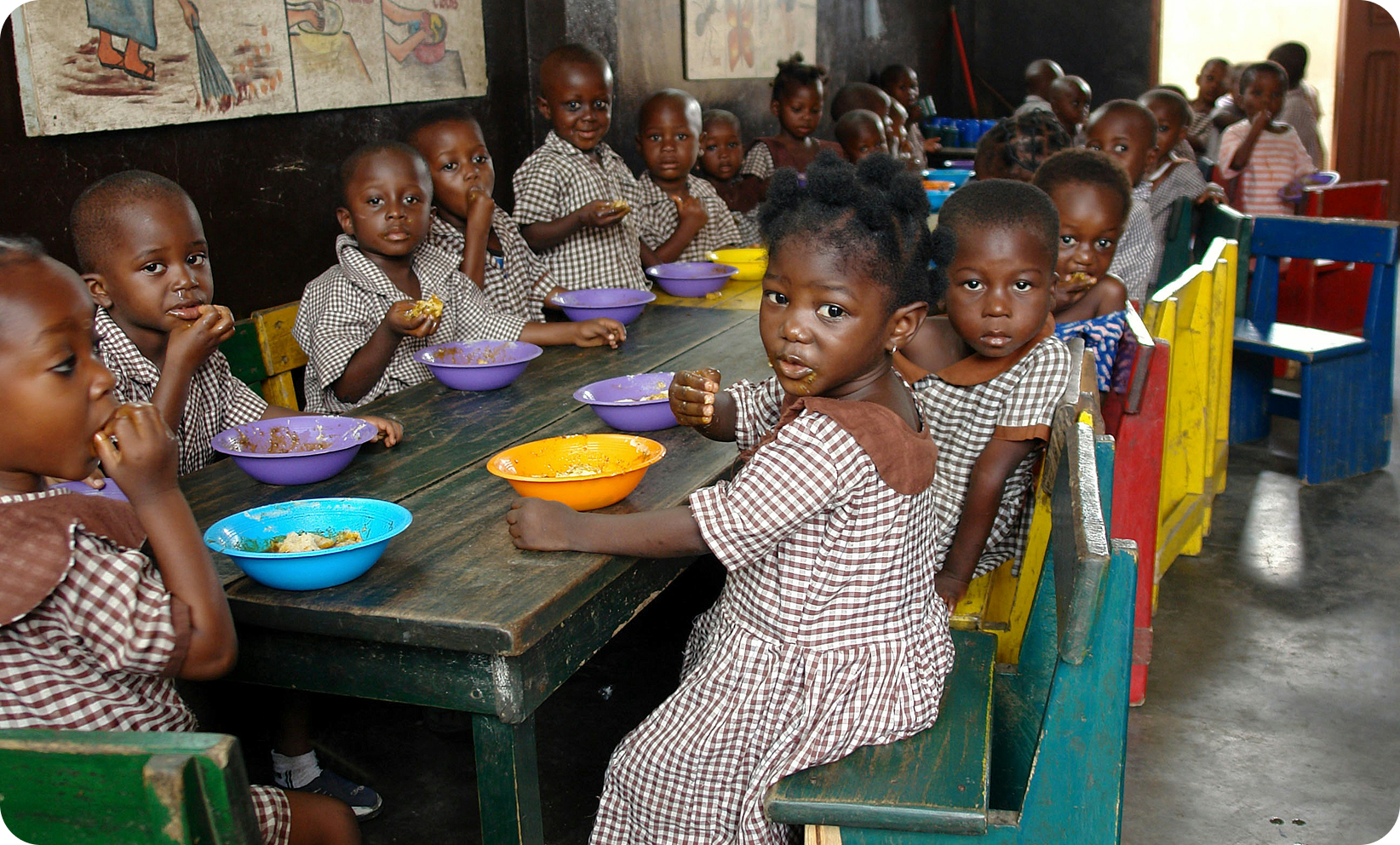
ARCD’s response includes emergency soup kitchens serving hot meals to displaced families and people with limited access to food, as well as family food packages containing essential staples. Through its Central Kitchen in Sudan, ARCD has served 90,000 hot meals over 30 days and has also distributed food baskets and seasonal food assistance.
For someone specifically looking to help hungry children, the practical takeaway is that this appeal supports the wider household food response on which children depend.
Ways to support the Sudan food response include:
Source: ARCD Emergency Food Appeal
Other Ways to Support Children's Health and Stability
Emergency food helps families through a crisis, but children also need support that continues afterwards. These routes work over a longer timeline.
1. Nutrition Screening for Young Children
ARCD's food and nutrition program runs screenings to identify the children and mothers most at risk, along with feeding programs and awareness campaigns on healthier practices. ARCD describes this work as running beyond its seasonal food aid. Screening helps direct support to the children who need it most.
2. Clean Water
UNICEF notes that wasting worsens when crises disrupt access to clean water and health services. ARCD shares the story of Amina in southern Chad, who walked four kilometers a day for unsafe water until a solar well was built 200 meters away in March 2024. ARCD's WASH program funds wells like that one.
3. Orphan Sponsorship
Emergencies end, but a child's need for regular meals does not. ARCD's orphan sponsorship program covers essentials including food, education and health care through monthly support. Sponsorship provides more consistent support for a child's wellbeing over time.
4. Employer Matching
If your employer runs a matching gift program, a donation you have already made may be matched once your company approves it. ARCD's guide to donation matching explains how to check whether your company takes part. It extends a gift you have already given rather than replacing it.
>> Want to help children facing hunger in Africa? Support ARCD's emergency food response to help provide meals and food assistance to families.
FAQs
1. Is "starving kids in Africa" an accurate way to describe the problem?
"Starving kids in Africa" is a search phrase, but it can make a diverse continent sound like one crisis. Current forecasts identify specific places where acute food insecurity may worsen. Naming those places helps readers understand the need more accurately.
2. What is the difference between famine and a risk of famine?
A risk-of-famine warning means forecasts suggest conditions could reach the thresholds for Famine. A Famine classification requires evidence of extreme food deprivation, acute malnutrition and mortality at the required levels, as set out in the IPC definitions used by UN agencies. That is why the hotspot report uses "risk of Famine" for the areas it names.
3. How is a severely malnourished child treated?
The standard treatment is ready-to-use therapeutic food, a paste made from peanuts, sugar, milk powder, oil, vitamins and minerals. It is designed for children aged 6 to 59 months and, when there are no medical complications, can be given through community programs without hospitalisation. Children with complications need clinical care and therapeutic milk.
4. Why give money instead of shipping food from home?
Shipping food overseas can be slow and expensive, and imported items may not match local diets or needs.
Money lets a charity buy what is needed closer to where it is needed and respond as conditions change. UNICEF reports that therapeutic food made in Africa and Asia compares favourably on price with imported products.
5. Is a donation to ARCD tax-deductible?
ARCD is a U.S. registered 501(c)(3) nonprofit with EIN 46-2568671, so donations may be tax-deductible to the extent allowed by law. You can review its 2025 Form 990 for its financial disclosure. A tax professional can tell you how a gift fits your own return.


