

Understanding Ramadan Through the Teachings of the Quran and Hadith
Published Date:
Most quotes about Ramadan from the Quran come from one stretch of Surah al-Baqarah and a short surah about a single night, and the word Ramadan itself appears only once in the Quran. Much of what Muslims now associate with the month, from the meal eaten before dawn to nights spent standing in prayer, rests on those verses. It also rests on the sayings of the Prophet Muhammad ﷺ, remembered by his companions and compiled in the centuries after his death.
That pairing of verse and narration still shapes how Ramadan is understood. The Quran sets out the fast and its purpose, and the hadith supply the texture: how the month opens, how a fasting person answers an insult, what the final nights looked like in the Prophet's home. Verses and narrations are often shared side by side, with little sign of which is which or how a narration was graded. Each text below carries its reference and a link to its source, so the wording can be confirmed before it is printed on an iftar invitation or read aloud at a mosque gathering.
>> Related Post: Which Charities Are Worth Donating to During Ramadan 2027?
What the Quran Says About Ramadan
Fasting With a Purpose (2:183)
The passage opens with Surah al-Baqarah 2:183: "O ye who believe! Fasting is prescribed for you, even as it was prescribed for those before you, that ye may ward off (evil)." The verse places the Ramadan fast inside a much older line of religious practice. It then names its aim with a single Arabic verb, tattaqūn. The word comes from the same root as taqwa, a constant awareness of God that keeps a person from wrongdoing.
The verse identifies taqwa as the purpose of fasting. In practical terms, the discipline of abstaining from food and drink is intended to nurture greater awareness of Allah and restraint in one's actions.
The Month Named for Revelation (2:185)
Ramadan in the Quran is tied first to revelation. Surah al-Baqarah 2:185 gives the reason the month matters: "The month of Ramadan in which was revealed the Qur'an, a guidance for mankind, and clear proofs of the guidance, and the Criterion (of right and wrong)." The same verse excuses anyone who is sick or traveling, who makes up the missed days later, and adds: "Allah desireth for you ease; He desireth not hardship for you." The verse before it, 2:184, speaks of "a ransom: the feeding of a man in need."
Ibn Abbas explained that this allowance applies to elderly men and women who are unable to fast, who should feed one person in need for each missed day (Sahih al-Bukhari 4505). This is one of the Quranic foundations for Fidyah. Its application differs from the concession for temporary illness, when missed fasts are generally made up later.
A Verse on Nearness (2:186)
Verse 2:186 sits between two verses of fasting law, and it turns to prayer: "And when My servants question thee concerning Me, then surely I am nigh. I answer the prayer of the suppliant when he crieth unto Me." Read in sequence, the passage moves from rules to intimacy and back to rules within three verses. That order places supplication inside the fast itself.
Between the White Thread and Nightfall (2:187)
Verse 2:187 fixes the daily boundaries of the fast: "eat and drink until the white thread becometh distinct to you from the black thread of the dawn. Then strictly observe the fast till nightfall." Those two lines give Ramadan its rhythm of suhoor before first light and iftar at sunset. The same verse tells believers to "be at your devotions in the mosques."
The verse also refers to remaining in retreat in mosques, a practice known as i'tikaf. The Prophet's observance of i'tikaf during Ramadan is described in the hadith section below.
The Night Better Than a Thousand Months (97)
Surah al-Qadr, the 97th chapter, is five verses long. Its first verse says the Quran was revealed on Laylat al-Qadr, which Pickthall renders there as the Night of Predestination and afterward as the Night of Power. Its third verse holds the comparison repeated every Ramadan: "The Night of Power is better than a thousand months." A thousand months comes to a little over 83 years, roughly a full human life. The surah closes on calm, "(The night is) Peace until the rising of the dawn," and leaves the night's date unstated.
>> Related Post: 5 Good Deeds to Do in Ramadan to Earn the Greatest Reward
Hadith on Ramadan: How the Prophet Described the Month
When the Month Begins (Bukhari 1899)
Abu Hurayrah reported the Prophet ﷺ as saying that when the month of Ramadan begins, the gates of heaven are opened, the gates of Hell are closed and the devils are chained (Sahih al-Bukhari 1899). In a shorter report, Abu Hurayrah quoted the Prophet ﷺ as saying simply that when Ramadan begins, the gates of Paradise are opened (Sahih al-Bukhari 1898). Both reports come from the same companion and sit side by side in al-Bukhari's book on fasting.
Fasting Belongs to God (Bukhari 1904)
A hadith qudsi is a report in which the Prophet ﷺ conveys words from God. In this one, narrated by Abu Hurayrah, God says that every deed of a person is for that person except fasting, which is for Him and which He rewards (Sahih al-Bukhari 1904). The same narration calls fasting a shield. It tells anyone insulted or pulled into a quarrel to reply simply, "I am fasting." It ends with two moments of joy for the one who fasts: one at breaking the fast, and one on meeting the Lord.
Ease Without Judgment (Bukhari 1947)
Anas ibn Malik described journeys with the Prophet ﷺ on which some travelers fasted and others did not, and neither group found fault with the other (Sahih al-Bukhari 1947).
The report illustrates how the companions respected one another's choices while travelling. Read alongside Quran 2:185, it also reminds readers that Islamic teachings make allowances for illness and travel rather than imposing unnecessary hardship.
The Last Ten Nights (Bukhari 2024 and 2026)
Aisha, the Prophet's wife, recalled that when the last ten nights began, he would intensify his worship, stay awake in prayer and wake his family to worship with him (Sahih al-Bukhari 2024).
She also reported that he kept i'tikaf in the last ten days of Ramadan until he died, and that his wives kept it after him (Sahih al-Bukhari 2026).
>> Related Post: Top 10 Benefits of Ramadan for Spiritual, Mental and Physical Health
Ramadan Sayings to Check Before Sharing
Not every line shared as a Ramadan hadith comes with a source attached. Quotes about Ramadan from the Quran are simpler to verify, since every verse has a fixed surah and verse number. A saying attributed to the Prophet ﷺ needs one more step: find its collection and number, then check its grade. The two collections cited in this post, Sahih al-Bukhari and Sahih Muslim, were compiled to hold authentic reports only, while collections such as Jami' at-Tirmidhi list a grade beside each narration. When a quote carries no reference at all, a local imam is a better next step than a search engine.
Give This Ramadan
Answering the Quran's Call to Feed Others With ARCD
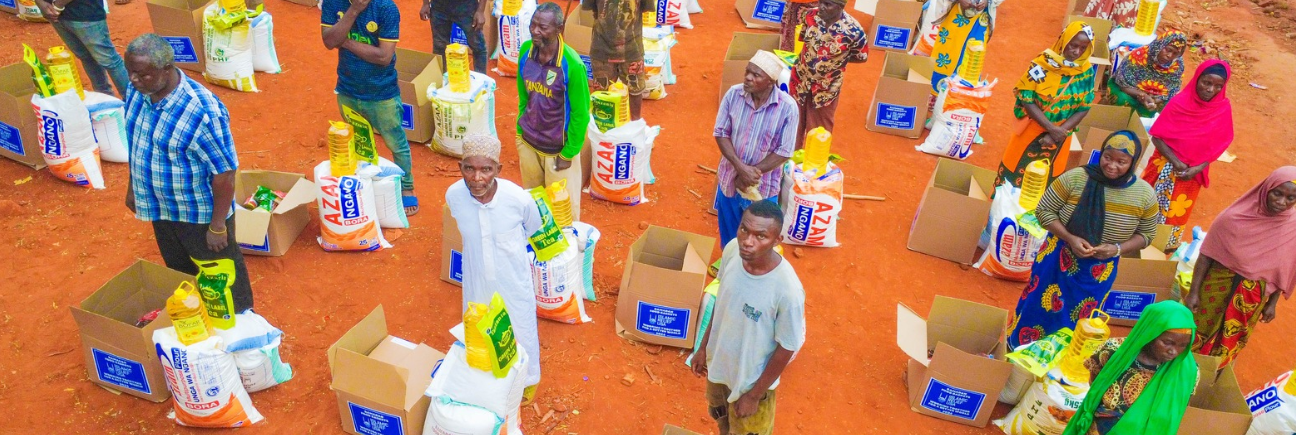
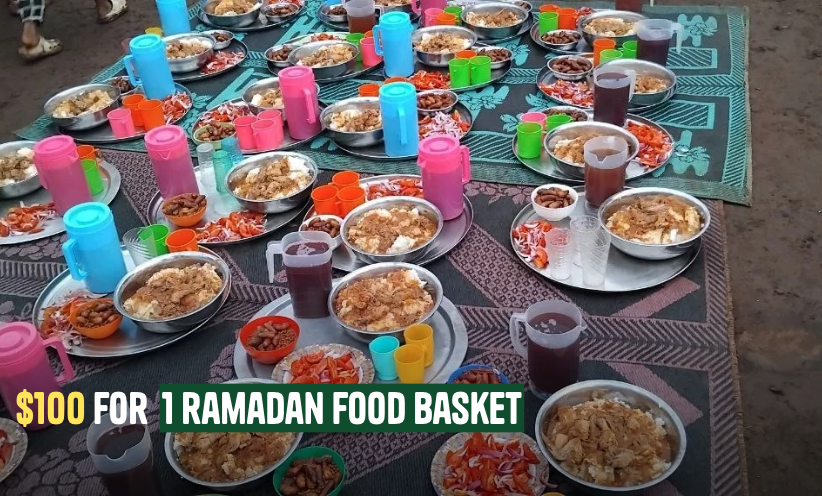
Africa Relief and Community Development (ARCD) works across Africa, through six regional offices and programs in 32 countries. ARCD is a U.S. 501(c)(3) nonprofit, and its Ramadan work centers on the same people the verse names. Its Ramadan food baskets hold a month of staples such as rice, flour, oil, lentils, dates and sugar. Community Walimas gather neighbors for iftar, and orphan sponsorship supports children through the whole year. For Ramadan 2027, the campaign aims to distribute 10,000 food baskets and sponsor 250 community Walimas across about 10 countries.
- 9,050: Ramadan Food Baskets Distributed in 2026
- 189,280: Ramadan Food Basket Recipients Counted Across 2021 to 2026
- 5,500+: Orphan Sponsorships, 2020 to August 2026
- 67: Schools Built for Quranic, Arabic and Formal Education Since 2021
Recipients are counted per distribution year, so a family supported in more than one Ramadan appears more than once in the total. All figures run through August 2026. For donors still deciding where to give, a comparison of charities worth donating to during Ramadan 2027 is worth a read.
→ Give a Ramadan Food Basket to a family in Africa before the month begins.
FAQs
1. How is the start and end of Ramadan decided?
Abu Hurayrah reported the Prophet ﷺ telling believers to start fasting when they see the new crescent, to stop when they see the next one, and to complete thirty days of Sha'ban if the sky is overcast (Sahih al-Bukhari 1909). Because a lunar month can end after 29 or 30 days, the exact start and end are confirmed only on the evening before. Local mosques announce the dates once the crescent is reported.
2. Is suhoor required?
Anas ibn Malik reported the Prophet ﷺ saying to eat suhoor, because there is a blessing in it (Sahih al-Bukhari 1923). Al-Bukhari placed the report under a chapter heading that calls suhoor a blessing but not compulsory. A fast is still valid without it, though the hadith encourages eating something before dawn.
3. When should the fast be broken?
Sahl ibn Sa'd reported the Prophet ﷺ saying that people will remain on the right path as long as they hasten to break the fast (Sahih al-Bukhari 1957). That means breaking the fast as soon as sunset is certain. Delaying iftar out of extra caution, once sunset is certain, runs against this teaching.
4. Does eating or drinking by mistake break the fast?
Abu Hurayrah reported the Prophet ﷺ saying that someone who forgets and eats or drinks should complete the fast, because it was God who fed them (Sahih al-Bukhari 1933). The hadith presents the forgotten meal as provision from God. Eating should stop as soon as the person remembers, and a local scholar can advise on any unusual case.
5. Is Zakat al-Fitr mentioned in the Quran?
Not by name. It comes from the Sunnah. Ibn Umar reported that the Prophet ﷺ set it at one sa' of dates or barley for every Muslim, young or old, and asked that it be given before the Eid prayer (Sahih al-Bukhari 1503). The form and amount, including whether a cash equivalent is accepted, are best confirmed with a local imam.


