

After Ramadan Ends, How Can Muslims Maintain Their Good Habits?
Published Date:
The first week after Eid can feel quieter. The alarm set for suhoor, the pre-dawn meal, falls silent, and the calendar no longer revolves around taraweeh prayers and iftar. If your own worship thinned out in those first days of Shawwal, the month after Ramadan, that is common, and it is recoverable.
Keeping good habits after Ramadan draws on what Islamic teaching calls istiqamah, or steadfastness, a quieter virtue than the intensity of the last ten nights. It shows up in what a person still does on an ordinary Tuesday in Shawwal. The seven steps below run from taking stock to fasting, prayer, reading and giving.

Why Do Good Habits Slip After Ramadan?
Ramadan supplies much of its own structure. Meal times are set by sunrise and sunset, and the mosque fills at the same hour every night. When Eid arrives, that scaffolding comes down at once, and the habits that leaned on it lose their support. The routine changes, but what was built during the month does not disappear with it.
Outside Ramadan, daily responsibilities can make it harder to maintain the same worship routine. Work, family commitments, caregiving and changing sleep schedules all compete for time. Recognizing these demands can help Muslims build realistic routines rather than setting goals that are difficult to sustain.
>> Related Post: Which Charities Are Worth Donating to During Ramadan 2027?
7 Ways to Maintain Good Habits After Ramadan:
1. Take Stock of What Ramadan Changed
Before choosing which after-Ramadan habits to keep, it helps to see the month clearly. For some people, recitation came easily by the third week while night prayer never settled, and for others it was the reverse. Writing down which practices felt natural, which felt forced and which had already faded before Eid gives an honest starting map. Pick one or two to protect, and let the rest wait for next year without treating them as failures.
2. Fast the Six Days of Shawwal
The most direct bridge out of Ramadan is a short one. In Sahih Muslim 1164, the Prophet Muhammad ﷺ said that fasting Ramadan and following it with six days of Shawwal is like fasting perpetually.
Scholars generally allow the six days to be spread across the month, after the day of Eid itself, on which fasting is not permitted. Some people fast them back to back while the Ramadan rhythm is still fresh, and others spread them across the month's weekends. Fasting alongside a sibling, a spouse or a friend from the mosque adds a little accountability.
3. Shrink the Routine, Then Keep It Daily
Ramadan routines are built for a sprint, and most are too heavy to carry for a year. The aim is a scaled-down version that fits an ordinary day. In Sahih al-Bukhari 6464, the Prophet ﷺ described the deeds most beloved to God as the most regular ones, even when they are small.
A second narration, Sahih al-Bukhari 1152, records him telling the companion Abdullah ibn Amr not to be like a man who used to pray at night and then gave it up.
For example, someone who prayed Taraweeh regularly can maintain a smaller night-prayer routine with two voluntary units before Witr. Similarly, instead of reading a full juz of the Quran each day, they might commit to one page after Fajr. The aim is to preserve a manageable routine rather than reproduce Ramadan's schedule throughout the year.
4. Attach Each Habit to Something Already in Your Day
New habits hold better when they hang on old ones. The page of Quran can sit beside the first cup of coffee, dhikr, the remembrance of God through short phrases, can fill the commute, and a brief supplication can become the thing said while buckling a child into a car seat. Each anchor removes one decision from the day.
The Prophet's own week had a rhythm worth borrowing. In Jami' at-Tirmidhi 747, he explained that deeds are presented to God on Mondays and Thursdays and that he loved for his deeds to be presented while he was fasting. For anyone who found the Shawwal fasts manageable, one of those two days each week is a natural next step.
5. Keep Giving on a Schedule
Ramadan is when many Muslims settle their Zakat and add voluntary gifts, and the month closes with Zakat al-Fitr. Needs do not follow that calendar. In its Islamic philanthropy report for 2025, UNHCR, the UN Refugee Agency, found that Zakat and Sadaqah given through the agency supported more than 1,000,000 people over the course of 2025. Separately, the same report counts over 199,800 displaced people who received support during Ramadan. Displacement, hunger and illness carry on through all twelve months, which is why steady giving matters as much as a generous Ramadan.
A modest automatic gift of voluntary Sadaqah each month, or a few dollars set aside every Friday, keeps generosity on the calendar without waiting for the next appeal. Zakat has its own eligibility, calculation and due-date rules, so it helps to keep it separate and to understand what Zakat is and how it differs from voluntary charity. Regular giving tends to shape the giver too, a theme explored in a piece on the less obvious benefits of donating to charity.
6. Stay Close to People Who Keep You Going
The weeks after Ramadan work better, with company. A weekly halaqa, or study circle, at the local mosque or a family WhatsApp group that reads one page a day can each help continue the Ramadan spirit. The group chat that argued over iftar times can just as easily argue over which surah to read next. Shared seasons help as well. Dhul Hijjah, whose first ten days carry their own traditions of fasting, remembrance and Qurbani, begins about two months after Eid al-Fitr, and planning for it together gives a household its next milestone.
7. Expect the Dip, and Meet It Gently
Some weeks will be thin. Tawbah, turning back to God, has no waiting period, and the next prayer is always the next chance to begin again. A setback is also information about the plan, and it may call for a smaller goal or a better-placed anchor.
For some people, the difficulty extends beyond a disrupted routine. Persistent sadness, anxiety or emotional exhaustion should not automatically be treated as a lack of faith or discipline. Spiritual practices can provide comfort, but they do not replace professional care when it is needed. Seeking support from a qualified counselor, including one familiar with Muslim experiences, can be part of looking after your wellbeing.
>> Related Post: Sadaqah in Ramadan and the Many Ways to Help Those in Need
Give This Ramadan
Keeping Good Habits After Ramadan Going With ARCD
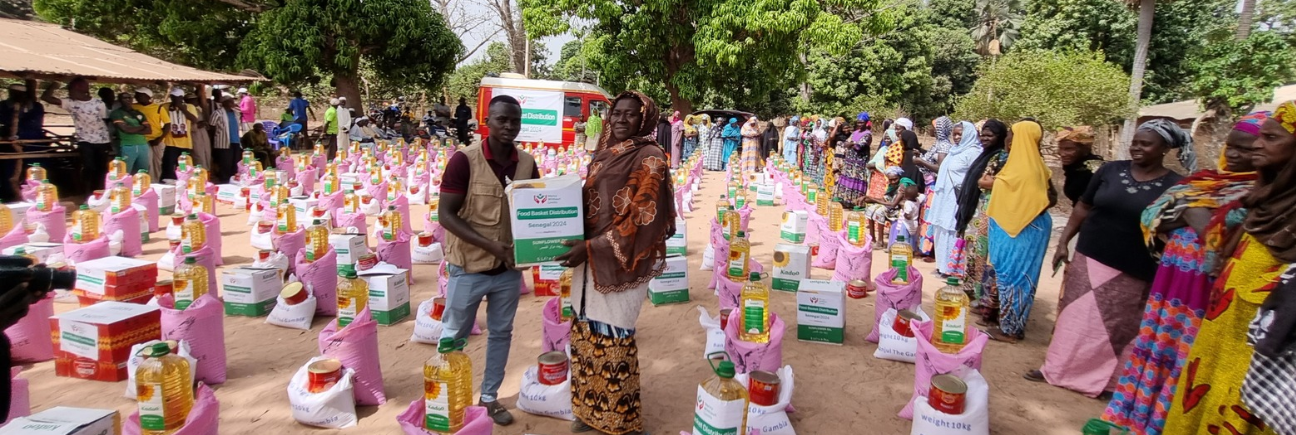
Africa Relief and Community Development (ARCD) is a New Jersey-based nonprofit working across Africa, and its year follows a calendar Muslim donors know well: Ramadan food baskets, Qurbani meat at Eid al-Adha and, between those seasons, programs that depend on gifts arriving every month. Its annual Qurbani programming alone has directly reached more than 1.2 million people since 2022. For a donor hoping to keep Ramadan’s generosity going, that calendar offers a ready-made rhythm.
Orphan sponsorship is a monthly commitment, with guardians receiving cash support, each child paired with a social worker and gifts arriving at Ramadan and Eid. Water wells and Quran schools are classic forms of sadaqah jariyah, ongoing charity whose benefit outlasts the gift. The figures below run to August 2026:
- 5,500+ — Orphan Sponsorships Funded Since 2020
- 2,167 — Orphan Sponsorships in 2026
- 395 — Water Wells Built From January to August 2026
- 65 — Solar-Powered Wells Among the 2026 Builds
- 67 — Schools for Quranic, Arabic and Formal Education Since 2021
- 600+ — Student Sponsorships
→ Give Sadaqah Jariyah through ARCD to keep giving long after Ramadan.
FAQs
1. Should missed Ramadan fasts be made up before the six days of Shawwal?
Scholars differ on the order. Some recommend making up missed obligatory fasts first, while others permit fasting the six days of Shawwal before making up missed days. Consult a qualified scholar if you are unsure which view to follow.
2. What if Shawwal ends before I complete all six fasts?
The six days of Shawwal are voluntary, so not completing them is not a sin. There is no general obligation to make them up after Shawwal. Other recommended fasts include the three white days, the 13th, 14th and 15th of each lunar month.
3. Does Zakat al-Fitr still count if paid after Eid prayer?
Zakat al-Fitr should reach eligible recipients before Eid prayer. A narration in Sunan Abi Dawud 1609 describes payment afterward as ordinary charity. However, the obligation may remain, so pay as soon as possible and seek guidance from a qualified scholar.
4. How can children stay involved once Ramadan ends?
Simple family routines can help children continue Ramadan's lessons. Try a weekly charity jar, reading a short surah together after dinner or letting children help choose a cause to support.
5. Are gifts to ARCD tax-deductible?
ARCD is a U.S. 501(c)(3) nonprofit (EIN 46-2568671). Donations may be tax-deductible to the extent allowed by law, depending on the donor's circumstances. Keep your receipt and consult a tax professional if unsure.


