

Sadaqah in Ramadan and the Many Ways to Help Those in Need
Published Date:
Ramadan 1448 is expected to begin on Monday, February 8, 2027, according to the Fiqh Council of North America's astronomical calculation. In the weeks before it, households start settling the practical questions of the month: when to cook for suhoor, which mosque to attend for taraweeh, and where their giving will go. For many, that last question is where sadaqah in Ramadan comes in.
Sadaqah, the voluntary charity given alongside Zakat, can be a shared iftar, support for a water project or an orphaned child, or a gift made in memory of someone. Some forms cost money, while others begin with time, care or kindness. Seven of them follow, along with what makes each one fit the month.
Why Generosity Peaks in Ramadan
In Sahih al-Bukhari 6, Ibn Abbas describes the Prophet ﷺ as the most generous of people, and at his most generous in Ramadan, when the angel Jibril met him every night to review the Quran. Ibn Abbas reaches for weather to convey the scale of it: on those nights, the Prophet's generosity outpaced a wind sent forth. The practice of giving more in Ramadan traces back to this example.
Fasting may sharpen awareness of food insecurity, but a day of fasting is not the same as living with hunger. Ramadan giving can turn that awareness into practical support. That is part of why so much of the month's giving gravitates toward the table, from community iftars at the local mosque to food parcels sent across oceans.
The Last Ten Nights and Laylat al-Qadr
One of the final ten nights is Laylat al-Qadr, the Night of Decree, which the Quran describes as better than a thousand months (97:3), a little over 83 years. Its exact date is hidden, so many Muslims spread their sadaqah evenly across all ten nights rather than stake everything on one. Scheduling those gifts before Ramadan begins keeps the habit intact on nights spent in prayer or asleep after a long taraweeh.
>> Related Post: Which Charities Are Worth Donating to During Ramadan 2027?
7 Ways to Give Sadaqah in Ramadan:
Sadaqah is often pictured as a single transfer of money. The tradition is far more generous with its definitions. The seven forms below range from the costly to the free.
1. Feed Someone Who Is Fasting
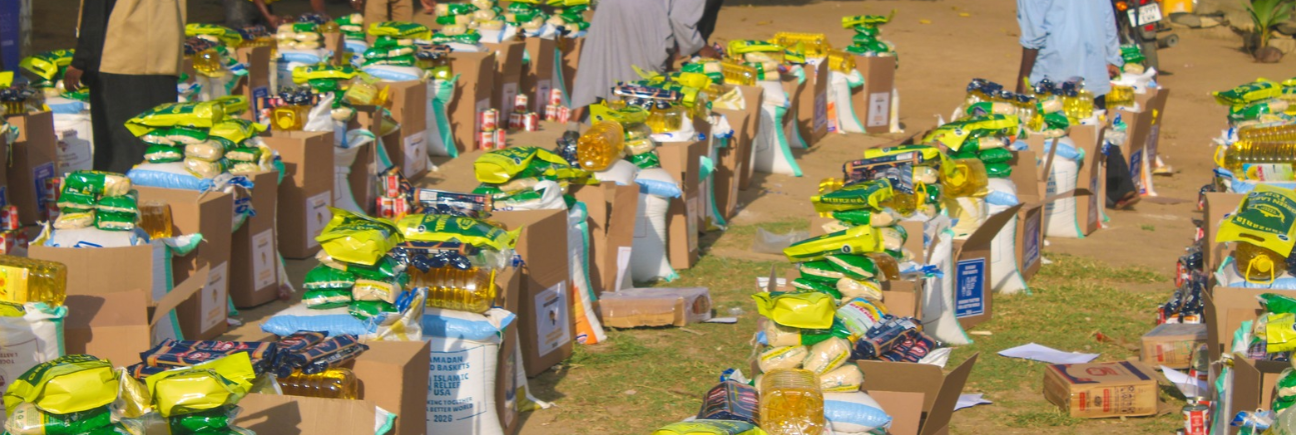
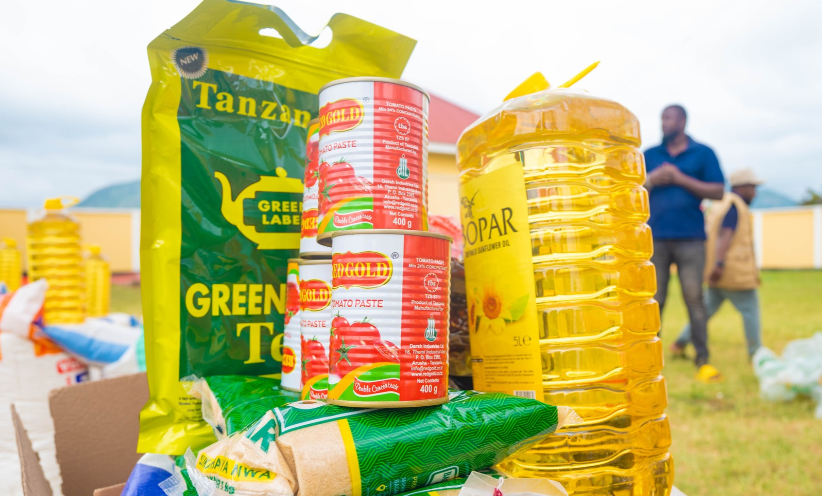
Food is the most immediate form of Ramadan sadaqah: dates passed down a row of worshippers at maghrib, a plate set aside for a neighbor, a basket that carries a family through the month.
The Prophet ﷺ encouraged this form of generosity, explaining that whoever provides food for a fasting person to break their fast receives a reward like theirs, without reducing the fasting person's reward (Jami' at-Tirmidhi 807).
2. Give Water
During Ramadan, giving towards clean water projects is one way to turn generosity into practical support that can continue beyond the month.
Water also matters where children learn: the WHO/UNICEF Joint Monitoring Programme found that in 2025, only 46 percent of schools in sub-Saharan Africa had basic drinking water services, and 250 million school-age children without that service at school lived in the region. When a school well is appropriately sited and maintained, it can provide students with a nearby water source over time.
3. Fund Something That Keeps Giving
Sadaqah Jariyah, or ongoing charity, keeps rewarding the giver for as long as people benefit from what it built, even after the giver has died.
Water systems, educational facilities, mosques and Quran distribution can support Sadaqah Jariyah when they continue providing a genuine benefit. Their lasting value depends on continued use, accessibility and maintenance.
4. Stand With an Orphaned Child
An orphan's needs do not end on the first day of Shawwal. School fees, meals and health care continue month after month, which makes consistency the most valuable thing a donor can offer. A sponsorship that begins in Ramadan and runs through the year turns a seasonal impulse into a steady presence in a child's life.
5. Pay for Someone's Healing
Health care is easy to overlook as sadaqah. A short cataract operation that replaces a clouded lens can return sight to someone who had lost it, and with it the ability to work, walk to the market or read the Quran again. Mobile clinics and medicines for rural health posts carry the same logic of relief that outlasts the donation.
6. Give in the Name of Someone You Have Lost
Ramadan sharpens the absence of parents who once sat at the iftar table. In Sahih al-Bukhari 2760, a man told the Prophet ﷺ that his mother had died suddenly and would have given in charity had she been able to speak, then asked whether he could give for her. An iftar, a food basket or a water project funded on a loved one's behalf can turn grief into an act of generosity that benefits others.
7. Give Without Spending Money
The Prophet ﷺ taught that every act of goodness is charity, a hadith recorded in Sahih al-Bukhari that opens sadaqah to anyone, whatever their bank balance. In Ramadan, that can look like an evening shift at a food pantry, a ride to taraweeh for an older neighbor or a meal cooked for a family with a new baby.
>> Related Post: After Ramadan Ends, How Can Muslims Maintain Their Good Habits?
How to Give Sadaqah in Ramadan
Most Ramadan sadaqah moves through a handful of channels: the collection box or donation link at a local mosque, a one-time gift to a charity's seasonal appeal, a sponsorship program for an orphan or student, a monthly recurring gift, or a fundraiser built around a family or community goal. Each suits a different kind of gift, from a quick contribution after taraweeh to a commitment that runs all year. Whatever the channel, a few minutes of planning before the first fast keeps the giving deliberate rather than reactive.
Questions to Settle Before You Give
- Which fund is this gift for? Choose the sadaqah option deliberately when a donation form also offers Zakat, Zakat al-Fitr or Fidyah, so the charity can route the money correctly.
- Restricted or flexible? A gift tied to one project shows exactly where it goes, while an unrestricted gift lets a charity cover needs no single appeal captured.
- Who delivers it on the ground? Look for a named field office or local partner, and some sign of how donors hear back.
- Could it be doubled? Many U.S. employers match charitable gifts, and checking how employer donation matching works before Ramadan leaves time to file the request.
>> Related Post: Top 10 Benefits of Ramadan for Spiritual, Mental and Physical Health
Give This Ramadan
Giving Sadaqah in Ramadan Through ARCD
Africa Relief and Community Development (ARCD) is a U.S.-based nonprofit working in 32 African countries, and its programs cover five of the forms of sadaqah above: feeding, water, lasting projects, orphan care and healing. Its work has reached more than 11 million people since its founding. In Ramadan, its food and nutrition program distributes baskets holding a month of staples for each family, and sponsored orphans receive Ramadan and Eid gifts.
Many 2026 wells are dedicated to parents and spouses who have passed, while others carry no name at all, only fa’il khayr, a doer of good, the quiet giving the Quran describes as better (2:271). The basket figures below are for Ramadan 2026, and the other totals run to August 2026 unless noted.
- 9,050: Ramadan Food Baskets Distributed in 2026
- 63,350: People Reached Through Those Baskets
- 5,500+: Orphan Sponsorships Funded Since 2020
- 2,969+: Water Wells Built
- 67: Schools for Quranic, Arabic and Formal Education Since 2021
- 7,000+: Cataract Surgeries Through the Health Program
Ramadan for Africa Giving Options
The Ramadan for Africa campaign aims to distribute 10,000 food baskets and sponsor 250 community Walimas, serving an estimated 50,000 people across about 10 countries. Its gift levels line up with several of the forms of sadaqah above. Each amount below is listed on the campaign page.
→ Give through Ramadan for Africa and let your sadaqah reach a family in Africa before Eid.
FAQs
1. What is the difference between Sadaqah and Zakat?
Zakat is an obligatory form of charity for eligible Muslims who meet specific conditions. Sadaqah is voluntary and can be given at any time, including Ramadan. Unlike Zakat, Sadaqah is not restricted to the same categories of eligible recipients.
2. Can I give Sadaqah to a family member?
Yes. Helping a family member in need can bring the reward of charity as well as maintaining family ties. However, Zakat has separate rules concerning relatives whom you are already financially responsible for supporting.
3. What are the best forms of Sadaqah to give during Ramadan?
You can give Sadaqah by providing food and water, supporting people in need, helping orphans, contributing to healthcare, funding education, or supporting projects that provide lasting benefits to communities.
4. Can small acts of kindness count as Sadaqah?
Yes. Sadaqah is not limited to financial donations. Helping someone, offering kind words, removing an obstacle from a path, and other beneficial acts can also count as charity.
5. Is donating to a water well considered Sadaqah Jariyah?
It can be. A water well may qualify as Sadaqah Jariyah when it continues to provide a useful benefit to people. Its accessibility, continued use, and maintenance are important to its lasting impact.


