

Meaningful Ways American Families Can Give Back During Christmas
Published Date:
You have probably started the list already: who still needs a gift, which relatives are hosting, what the children have been hinting at for weeks. The National Retail Federation expects holiday retail sales to reach $1.013 trillion in November and December 2026, up 4.2 percent from last year. In a season that full, many families want one tradition that isn't bought in a store, something their children will remember as part of Christmas itself. Giving back can be that tradition, and it doesn't take a large budget to mean something.
The ways American families can give back during Christmas range from a meal served across town to a monthly gift that reaches a child overseas. Some take an afternoon, others a few minutes at the kitchen table, and several work best when everyone in the house has a say. The ideas below are practical and start small, and each one can carry past December into the rest of the year.
>> Related Post: Why the Holiday Season is a Time to Give Back to Those in Need
7 Ways American Families Can Give Back This Christmas Season:
1. Give a Gift in Someone's Name
For the relative who insists they need nothing, a donation in their honor can replace one more box under the tree. Many charities let you dedicate a gift and send a card or e-card explaining what it supports, so the person still has something to open on Christmas morning. The gift lands best when it connects to the person's own life: school supplies for a retired teacher, clean water for someone who spent a career in nursing. It also works well for teachers, coaches and colleagues, who often receive more mugs and candles than they can use.
2. Let Your Children Choose the Cause
Children tend to remember the giving they had a hand in. Sit down together, agree on a budget, and let them compare two or three causes, such as animals at the local shelter, a classmate's food drive, or children their own age in another country. Try keeping a giving jar through December, filled with coins from chores or a share of birthday money, and decide together where it goes on New Year's Eve. The amount matters less than the conversation, because explaining why your family gives is how those values get passed on.
3. Share a Holiday Meal With Families Who Need One
Food is often the most direct way to help at Christmas, because a shared meal sits at the center of how so many people celebrate. For families stretched thin, the holidays can make an ordinary grocery budget feel even tighter. A family can sponsor a holiday meal, pack boxes at a local food bank, or give a pantry cash so it can buy whatever it is shortest on that week. Consider pairing a local food gift with one that reaches families abroad, where aid passes through its own chain of decisions on how holiday food donations become meals.
4. Volunteer Together Before the New Year
Time is a gift too. Independent Sector and the University of Maryland's Do Good Institute estimate the national value of a volunteer hour at $36.14 for 2025. The figure recognizes what volunteers contribute; it doesn't mean every organization would otherwise pay that rate. An afternoon sorting donations, wrapping presents at a shelter or delivering meals to older neighbors gives a family a shared memory and gives a local nonprofit extra hands during a busy season. December slots fill quickly at popular sites, so book early, check the age rules for children, and consider a second visit in the new year.
5. Swap the Gift Exchange for a Giving Party
Office and family gift exchanges often end with a drawer full of things nobody asked for. Try replacing the gift exchange with a group donation to one cause your family chooses together, or set up an online holiday fundraiser and share the link with relatives who live far away. A shared total gives the group a goal to celebrate, and an update from the charity afterward lets everyone see what their pooled gifts did.
6. Commit to a Child Beyond December
Christmas giving tends to arrive in a rush and then stop, while a child's needs continue all year. Sponsorship turns a one-time impulse into steady support, usually through a monthly gift that covers food, schooling and care. Before signing up, ask how the program reaches the child, whether support goes through the child's family or an institution, and how often sponsors receive updates. Families with older children can split the monthly cost between siblings, so each one feels part of the commitment.
7. Look Beyond Your Own Community
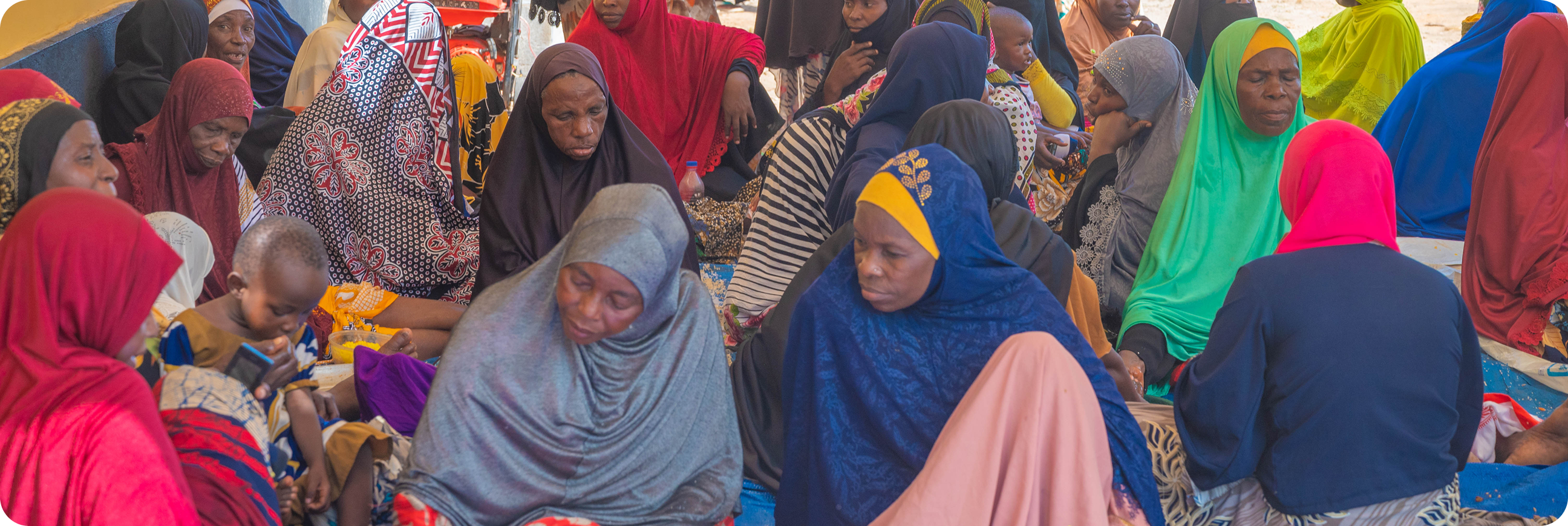
Families across Africa face different challenges this season, from food insecurity in farming communities to displacement caused by conflict. ARCD's Holiday Giving appeal, for example, supports food assistance and orphan care through programs across the continent. Giving through a U.S.-registered 501(c)(3) that works overseas keeps the process familiar and comes with a receipt for your records. Before giving, check where an appeal's money goes and whether it can be restricted to the country or region you care about, and run through a few checks on any charity this holiday season.
>> Related Post: Want to Support Clean Water in Africa From the USA? Here's How to Help

Help African Families This Holiday
How ARCD Helps American Families Give Back This Holiday Season
Africa Relief and Community Development (ARCD) is a U.S. 501(c)(3) nonprofit, EIN 46-2568671, whose programs run only on the African continent. Its holiday giving appeal draws on the food and nutrition program and the orphan sponsorship program, and several of the ideas above fit naturally within it.
For American families who want their Christmas giving to reach communities overseas, ARCD offers several ways to support this ongoing work. Donors can choose a specific programme or contribute to the general fund, allowing ARCD to direct support towards its most urgent priorities.
Its giving options include contributions for food assistance, orphan care, education and essential support for families. The amounts below show how donors can choose a giving level that fits their budget.
ARCD's Impact Behind the Year-end Appeal
The appeal builds on food, education, health and child-support programs already running across Africa. The figures below cover ARCD's work:
- 20,000+ — Food Baskets Distributed
- 5,500+ — Orphans Sponsored
- 7,000+ — Cataract Surgeries Performed
- 67 — Schools Established
New wells are funded through ARCD's separate water well appeal, and employer gifts can often be doubled through ARCD's donation matching program.
→ Donate this Giving Season and Help Families in Africa.
FAQs
1. How do I donate in someone's name for Christmas?
Pick a charity that offers tribute or honor gifts, make the donation, and enter the person's name at checkout. The charity will usually send them a card or e-card, or you can print your own to put under the tree. The tax receipt goes to you as the donor, not the person you're honoring.
2. How do I know a charity is legitimate before I give?
Search the IRS Tax Exempt Organization Search to confirm it's a registered 501(c)(3). Then read its Form 990 or check an independent evaluator like Charity Navigator. Be wary of anyone who pushes you to give immediately or only accepts gift cards and cash apps.
3. What does a $100 Christmas donation actually do?
That depends on the program. Through ARCD's appeal, $100 provides a food ration bag that carries a family through the season, and $60 provides orphan care for one month. Always ask any charity what a specific amount buys, not just what it does in general.
4. Are donations during Christmas season tax-deductible?
It depends on the organization receiving the gift, the type of gift and your own tax situation. Gifts to qualified U.S. charities may be deductible, while money given directly to individuals or to foreign organizations generally isn't. IRS Publication 526 explains the rules for charitable contributions. Keep the receipt for every gift.


