

Ramadan Across Africa and the Traditions That Bring Communities Together
Published Date:
Hours before dawn in Taroudant, an old walled city in southern Morocco, a trumpeter climbs a minaret to wake the medina, the historic old quarter, for suhoor. In Dakar's Grand-Yoff neighborhood, the last minutes before sunset belong to volunteers pouring hot Touba coffee into plastic sachets for drivers and workers running late. In Port Sudan, during Ramadan 2026, a man arrived at a community kitchen carrying a sheep on his shoulders and asked the volunteers to cook it for the people, and a woman brought a calf she had raised herself. The three cities are far apart, yet in each one a neighborhood is looking after its own.
The core of the fast is shared, from first light to sunset for 29 or 30 days. Much of what surrounds it is local: the sound that wakes a street, the drink poured at maghrib, the name people give the evening meal and the clothes they wear on Eid morning. Ramadan traditions in Africa carry that local stamp, shaped by language, history and, in places like Sudan, by war. The sections below visit a handful of countries, from Morocco to Sierra Leone, following the month from suhoor to Eid and looking at where old customs are holding and where they are under strain.
Before Dawn, a Trumpet Over the Medina
The neffar appears with the new crescent to announce the start of the month, then wakes his neighborhood every night until it ends. The Moroccan daily Libération reported in March 2026 that the custom has vanished from the country's big cities but survives in Taroudant, where he dresses in a djellaba and tarbouche and announces both the hour of suhoor and the end of taraweeh prayers. His timetable has been handed down through generations of the old city's residents, and the practice is recognized as part of Morocco's intangible heritage. People quoted in the report describe the trumpet as a thread between generations, which is why they keep it going in an age of phone alarms.
>> Related Post: Sadaqah in Ramadan and the Many Ways to Help Those in Need
At Sunset, the Iftar Moves Outdoors
Sunset is when Ramadan becomes most public. In Khartoum and Dakar, the meal that breaks the fast is as much a street event as a family one. The two cities arrive at it from very different places.
Sudan: Mats Back on Khartoum's Streets
On the first night of Ramadan 2026, men in Khartoum carried dishes out of their homes and sat on mats in the street to break the fast with their neighbors, while the women ate at home. In the days before, women in the city had been preparing helo-murr, the traditional Ramadan drink whose name means sweet and bitter. The gathering would have been unthinkable while the Rapid Support Forces held the city, and families who fled are only now coming home. "Last Ramadan, there were no more than two families," resident Abdelkader Omar told AFP, and this year his street counted 13 families.
Senegal: Ndogou on a Street Corner
In Wolof, the fast-breaking meal is ndogou, and in Grand-Yoff residents serve it every evening of Ramadan on a street corner near the bus terminus, open to anyone still on the road at sunset. Volunteer Mamadou Lô has spent five years walking the neighborhood before the month begins, holding out a calabash to raise the money, Le Soleil reported in March 2026. The meal itself is simple, usually bread, dates and kinkéliba tea brewed in an enamel basin. Lô told the paper that the point is for nobody to break the fast alone or in hardship.
Ramadan Nights in Northern Nigeria
Kano marks Ramadan with its own street theater. From around the tenth day of the month, tashe takes over the streets: young people in masks and comic costumes perform skits that poke fun at current events and prominent figures. In 2026, the Kano State Police Command suspended tashe performances, saying criminals had exploited the gatherings. A custom built on open streets depends on those streets feeling safe, and for now Kano is going without one of the month's street performances.
>> Related Post: After Ramadan Ends, How Can Muslims Maintain Their Good Habits?
When Hardship Reaches the Iftar Table
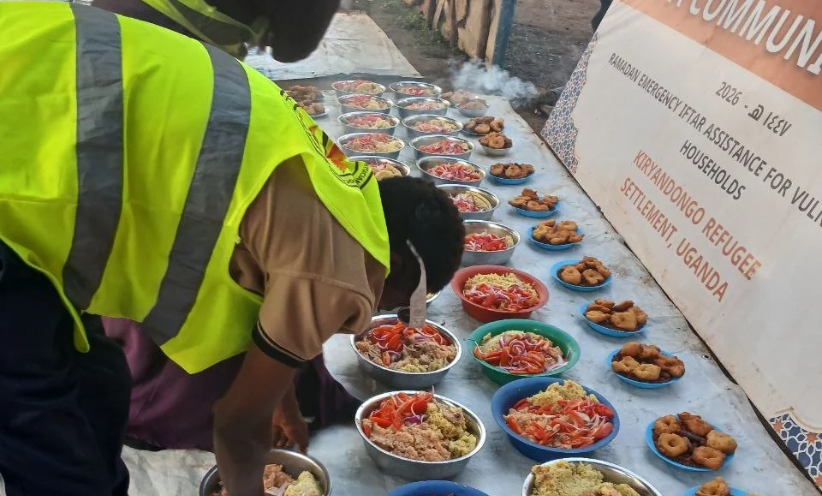
Sudan's community kitchens, known as takaaya, draw on nafeer, a Sudanese tradition of collective voluntary help in hard times, and since the war began in 2023 they have become one of the most important safety nets for uprooted families. Most depend on donations from Sudanese living abroad, and three years into the conflict that money is drying up. Research published by Islamic Relief in April 2026 found that 354 of 844 kitchens, or 42 percent, had closed in six months across seven locations, including Khartoum, Port Sudan and North Darfur. Volunteers told the researchers that every closure leaves the remaining kitchens feeding more people with fewer resources.
Ramadan also carries an economic cost far from any front line. In Nigeria, FEWS NET found that maize and millet prices rose in February 2026 as Ramadan demand climbed, even while annual inflation kept easing. The pressure was visible enough that Kano's emir used his Eid address to urge traders to stop raising prices arbitrarily. For households with little margin, the month that asks them to share is also the month when sharing costs more.
Neighbors Across Faiths in Sierra Leone
Ramadan and Lent fell in the same weeks in 2026, and in Sierra Leone the two fasts ran side by side inside single families. Saidu Saccoh Kargbo observed Lent while his granddaughter, Isatu Kamara, fasted for Ramadan. "I have Muslim friends who bring me porridge for Iftar," Kargbo told Africanews, adding that at Christmas his wife cooks for the neighbors. Sheik Sillah, the chief imam of Masjid Rahman, said churches and mosques in his community leave each other to worship undisturbed.
Eid al-Fitr: New Clothes, a Walk to Prayer and the Last Charity of Ramadan
The month closes with Eid al-Fitr, known in Senegal as Korité and in Hausa as Sallah. New clothes for children are part of Korité, though two days before the 2026 holiday, most clothing sellers Dakaractu interviewed in Grand-Yoff reported weaker sales than expected.
In Kano, the Eid Durbar traditionally brings the emir and his entourage into the streets in a ceremonial procession. In 2026, security restrictions changed the celebrations: authorities restricted horse riding and modified or suspended several processions. Muhammadu Sanusi II walked to the Eid prayer ground, while Aminu Ado Bayero held a separate prayer gathering at his Nasarawa palace. The arrangements reflected the continuing tensions surrounding Kano's traditional leadership.
>> Related Post: Which Charities Are Worth Donating to During Ramadan 2027?
Give This Ramadan
How ARCD Takes Part in Ramadan Traditions in Africa
Across these communities, Ramadan traditions depend not only on shared customs but also on people and organisations helping families access food, gather for iftar and take part in the month's celebrations.
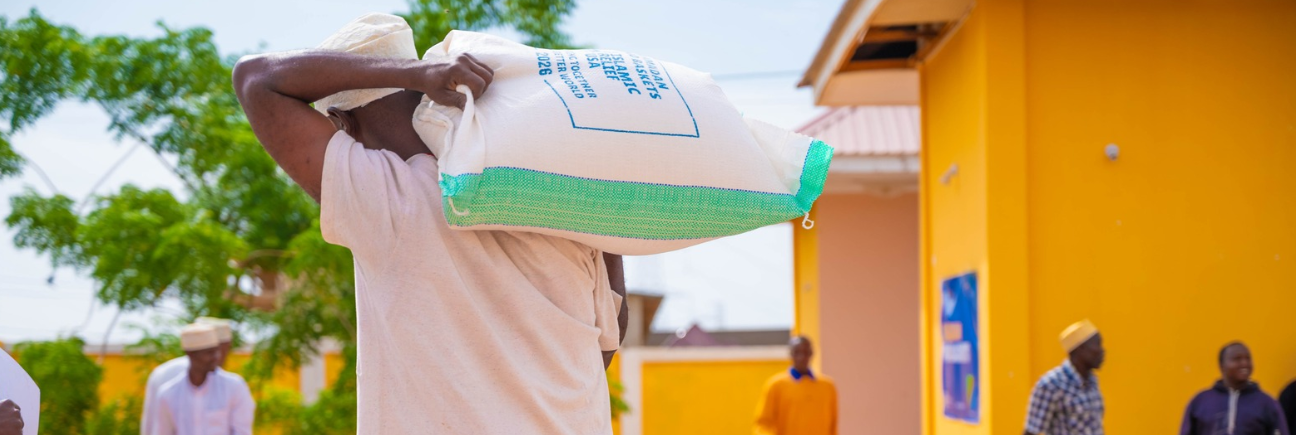
Africa Relief and Community Development (ARCD) is a U.S.-based nonprofit working across Africa, and much of its Ramadan work follows the rhythms traced above. Through its food and nutrition program, families receive Ramadan baskets of staples meant to carry them through the month. ARCD also sponsors community walimas, shared iftar meals where neighbors break the fast together, much as the mats do in Khartoum.
The traditions also need places to happen, and the mosques ARCD has built double as community and educational centers, hosting daily prayers, Quran classes and Eid gatherings. Through its orphan sponsorship program, sponsored children receive Ramadan and Eid gifts, so that the season's celebrations include them.
- 9,050: Ramadan Food Baskets Distributed in 2026
- 63,350: People Reached Through Those Baskets
- 240+: Mosques Built, Also Serving as Community and Educational Centers
- 5,500+: Orphan Sponsorships Funded Since 2020
→ Sponsor an Iftar for a fasting family in Africa this Ramadan.
FAQs
1. Why does Ramadan begin on different days in different African countries?
Communities follow different methods and authorities for confirming the start of the lunar month, so Ramadan can begin or end on different days from one country to the next. Some rely on a local sighting of the crescent moon, while others follow a sighting reported elsewhere or an astronomical calculation.
2. How much does it cost to sponsor a community iftar through ARCD?
$6 helps provide iftar for one person at a community walima, and $300 helps provide iftar for about 50 people. The first suits an individual gift, while the second covers a larger share of a community gathering.
3. Can a Ramadan gift be made in memory of someone?
Yes. A Ramadan gift to ARCD can be dedicated in memory of a loved one, honoring a parent, grandparent or friend.
4. Can non-Muslims give during Ramadan?
Yes. Zakat and Zakat al-Fitr are obligations on Muslims, but a general gift can come from anyone who wants to support families during the month. A general donation to ARCD needs no religious designation.
5. Are Ramadan donations to ARCD tax-deductible?
ARCD is a U.S. 501(c)(3) nonprofit (EIN 46-2568671), so donations may be tax-deductible to the extent allowed by law. Keep the receipt for your records, and check with a tax professional about your own return.


